What a Wood Planer Does In Daily Work
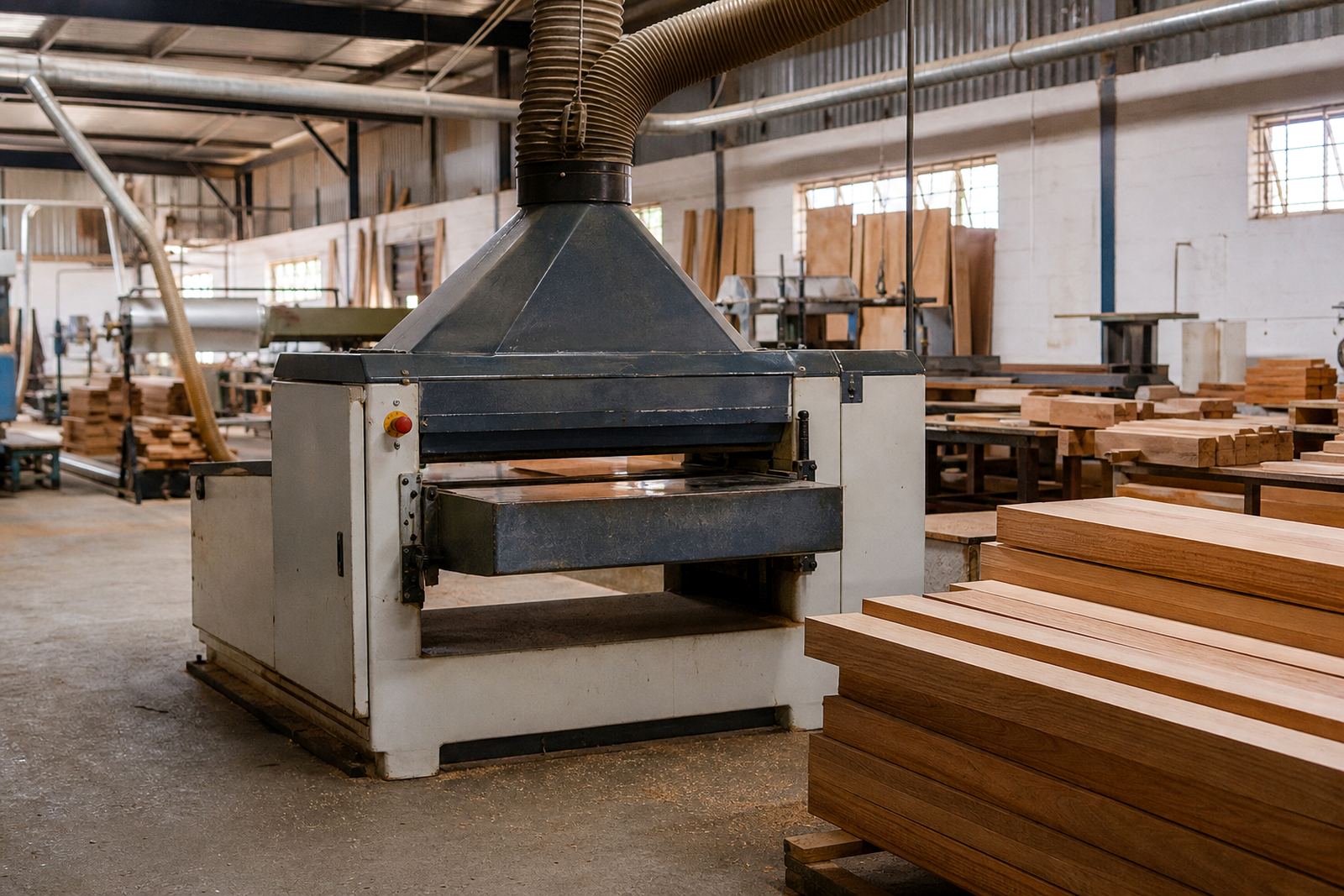
A wood planer, often called a thicknesser, removes a controlled amount of material from boards so the finished pieces match the same thickness. In a workshop it helps with cupboard parts, framing stock, shelving and other timber work where repeat size matters. The machine may be a single-sided thicknesser, a benchtop unit for smaller shops, or a heavy floor-standing model for regular production.
When we assess used machines for auction or disposal, we look at the feed system, cutter block, table wear and the general condition of the body and guards. The right machine for a buyer depends on board width, timber type and how often the unit will run in a shift.
Common Sizes And Options To Compare
Wood planers come in a range of working widths and motor sizes. Smaller units suit site workshops and light joinery, while wider machines are better for board stock and busier manufacturing floors. Some units are basic manual feed machines and others have powered feed rollers, depth stops and extraction ports for dust control.
- Working width: commonly 300 mm, 400 mm or 600 mm
- Planing depth per pass: often 1 mm to 3 mm on used workshop machines
- Motor rating: around 2.2 kW to 7.5 kW on many industrial units
- Feed speed: fixed or variable, depending on the machine build
- Cutter type: straight knives or segmented cutter heads on some models
- Infeed and outfeed tables: important for board support and finish quality
For auction cataloguing, clear measurements matter. Buyers want to know bed length, cutter width, motor size and whether the machine still holds thickness accurately across the full board width.
Where Wood Planers Suit Best
These machines suit cabinet shops, furniture makers, joinery yards, pallet shops and contractor workshops that process their own timber. In Johannesburg and Pretoria, we often see them used in smaller fabrication spaces where floor area is limited but timber output still needs to be steady. In Durban and Cape Town, buyers also pay close attention to corrosion, because coastal humidity can affect tables, shafts and exposed fasteners if a machine has been stored poorly.
For businesses in Germiston, Midrand, Kempton Park and other industrial areas, a planer can be a practical asset when timber arrives uneven and needs final sizing before assembly. On larger sites, the machine is usually paired with dust extraction and a good material flow path so boards do not get damaged during handling.
- Joinery and cabinet manufacturing
- Furniture production
- Shop fitting and carpentry yards
- Maintenance workshops with timber repair work
- Small scale production where uniform thickness is needed
Power, Installation And Site Requirements
Most used industrial planers need a stable electrical supply and proper earthing. Smaller units may run on 220V single phase, while larger floor machines often need 380V three phase power. Before purchase, it is worth checking the motor plate, starter arrangement and whether the site can handle the start-up load during load-shedding recovery. If the workshop has a generator or inverter backup, the motor draw still needs to be checked carefully.
Installation also needs enough floor space for infeed, outfeed and safe operator movement. The machine should sit level on a solid floor, with space for timber stacks and dust extraction. Air supply is not usually required for the planer itself, but pneumatic clamping or auxiliary systems on nearby equipment may matter in a full production line.
- Check voltage, phase and amperage before moving the machine
- Allow clear space at both ends of the table for long boards
- Fit dust extraction where possible to reduce build-up and fire risk
- Confirm access for forklift, pallet jack or crane offloading
- Use level flooring to prevent vibration and uneven cut marks
Care, Servicing And Storage Between Jobs
A good used planer should show regular cleaning, sharp knives and sensible table care. Resin build-up on the rollers, rust on the bed and worn bearings can all affect finish quality. We often see better values where the machine has been serviced on a schedule and the drive belts, guards and electricals are still tidy. If the unit has been idle for a long time, the buyer should inspect for seized parts, corrosion and missing safety covers.
Service checks usually include cutter sharpness, feed roller grip, belt condition, table alignment and the condition of the electrical starter. On coastal sites, it helps if the machine has been kept covered and dry, because humidity can cause surface rust and sticky feed action. A machine that has been stored indoors and greased properly is usually easier to place in the market.
What To Check When Ordering Or Bidding
When buying through auction or private disposal, the main point is to match the machine to the work. A planer that is too small for the timber size will slow the job down, while an oversized unit may be more power hungry than the site can support. Ask for the exact working width, motor size, power supply, feed arrangement and whether the knives and rollers are complete. If the machine is being sold for parts or as seen, that should be clear before bidding.
For seller representation and auction planning, we prepare lotting, viewing days and photo listing prep so buyers can inspect the unit properly. A fair valuation is an opinion of value based on the machine's condition and the market at the time, not a promise of what it will fetch on sale day. That distinction matters, especially when the machine has wear, missing guards or signs of repair.
- Confirm width, depth of cut and motor rating
- Check whether knives, guards and extraction ports are present
- Ask about running condition, not just visual appearance
- Look for table scoring, rust, damaged rollers and electrical faults
- Review transport access before collection or removal
Key facts
| Machine type | Used wood planer, thicknesser or combined workshop unit |
|---|---|
| Working width | Commonly 300 mm to 600 mm |
| Power supply | 220V single phase or 380V three phase, depending on model |
| Typical use | Sizing boards to a set thickness and improving finish quality |
| Site fit | Joinery shops, furniture makers, cabinet work and light production |
| Key checks | Cutter wear, roller condition, table flatness, motor and guards |