What A Plastic Granulator Does In A Production Line
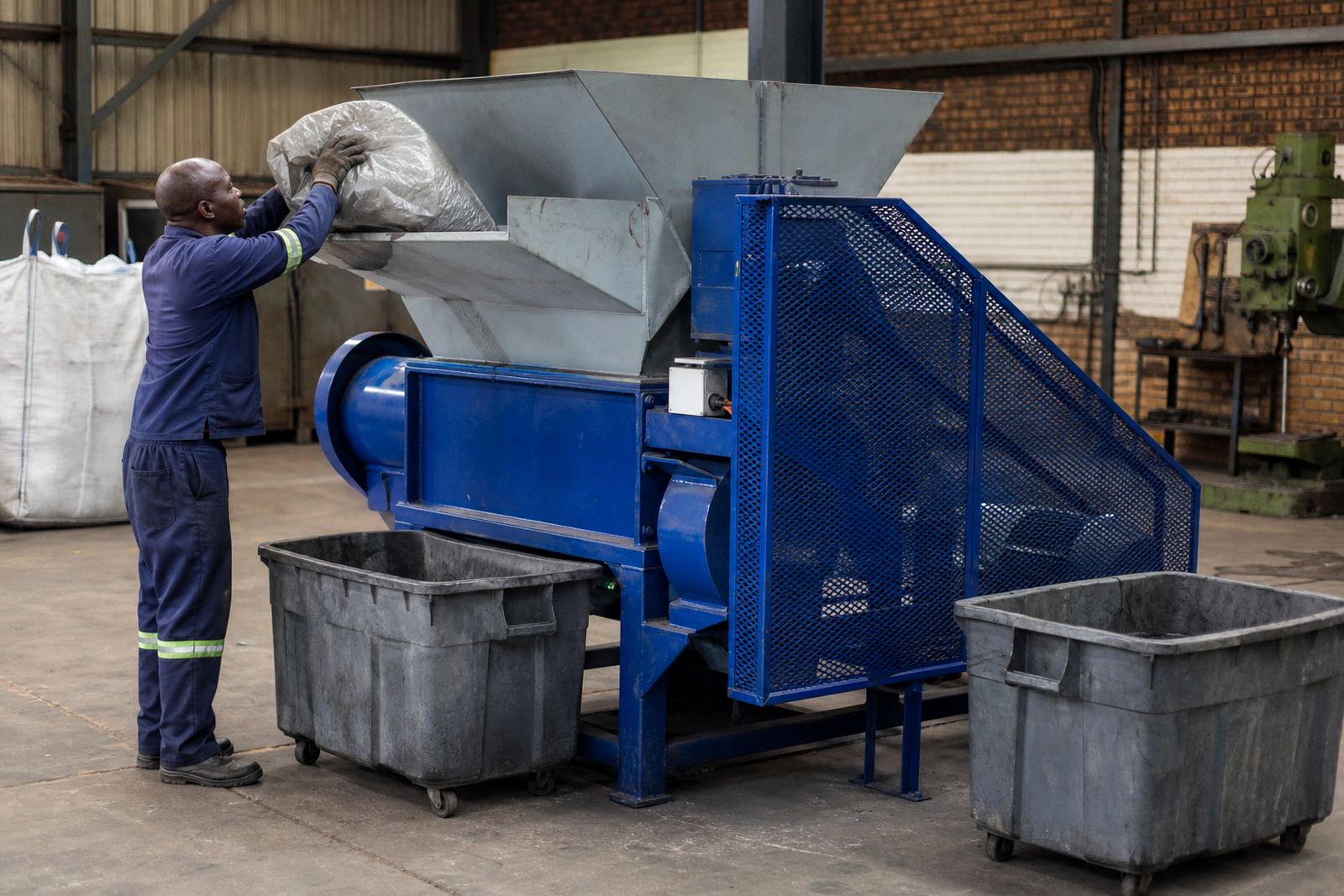
A plastic granulator cuts and reduces plastic material into smaller, uniform pieces that can be reprocessed, blended back into production, or sold as regrind. In recycling yards and processing plants, these units are often placed after sorting, trimming or defect removal, so the machine needs to keep up with the pace of the line without choking on mixed feed. For many operations in Gauteng, KZN and the Western Cape, the main concern is not only output, but how consistently the machine handles dusty material, labels, thin film offcuts and harder engineering plastics.
When we assess a used granulator, we look at the practical side first: the cutting chamber, rotor condition, screen fit, bearing play, motor health, electrical cabinet, safety interlocks and the general wear pattern on knives and housings. That gives a buyer a clearer opinion of value before auction, and it helps sellers present the machine properly. A valuation is an opinion of value based on condition, demand and market evidence, not a guarantee of sale price.
Common Sizes, Drive Ratings And Build Options
Plastic granulators come in a wide range of sizes, from small floor-standing units for trim recovery through to larger machines fitted for continuous plant use. Smaller machines can suit bagging areas, moulding rooms and light recycling work, while heavier units are better for bulk feed and mixed production waste. In our work across Kempton Park, Germiston and Midrand, buyers usually ask first about rotor width, motor size and feed opening because those three points tell you a lot about daily output.
Options can include open or sound-reduced housings, different rotor knife patterns, fixed and adjustable bed knives, screen plates with varying hole sizes, and belt driven or direct drive arrangements. Some units are built for general purpose plastics while others are better suited to softer material, thicker moulded parts or fibre reinforced plastics. If the machine has been sitting unused, check whether the knives have rust marks, whether the rotor turns freely and whether the bearings sound clean under load.
Typical used machines may be found with rotor widths from about 300 mm to 1 200 mm, motor ratings from roughly 7.5 kW to 75 kW or more, and screen sizes selected to produce the required regrind. The right size depends on feed rate, the type of plastic, and the space available around the line. In tight sites, access for knife removal and cleaning matters just as much as raw capacity.
Where A Granulator Fits Best On Site
These machines suit recycling depots, injection moulding shops, extrusion plants, packaging operations and processors that generate clean plastic waste. They are often placed near the source of scrap so material does not travel far, which helps keep floors clear and reduces double handling. In Durban and Gqeberha, where humidity can be higher, site layout and storage matter because moisture, corrosion and dirty feed can shorten service life if the machine is left exposed.
For buyers, the important question is whether the machine matches the site environment. A machine in a hot factory with poor extraction will need different care from one in a cleaner indoor plant. If the material includes fines or abrasive fillers, wear will be quicker on knives, screens and housings. For this reason, auction lots should be viewed with the feed history in mind, not only the nameplate details.
We also consider whether the unit can work alongside existing conveyors, hoppers, cyclones or collection bins. A granulator that looks good on paper may still be awkward if the feed height is wrong or the discharge point forces manual lifting. Good auction planning includes that kind of practical check before lots are grouped or offered.
Power, Installation And Utility Requirements
Most plastic granulators need a stable electrical supply and proper motor protection. Smaller units may run on standard three phase supply, while larger machines need stronger supply capacity and correct starter gear. In South Africa, load-shedding and weak site power can cause nuisance trips, so buyers should confirm the condition of the control panel, overload protection and emergency stop functions before moving a machine. If the plant uses a generator or backup system, it must be sized properly for starting current as well as running load.
Installation usually requires a level concrete base, safe guarding around moving parts, enough space for knife access and a clear route for material feed and discharge. Extraction or dust control is often needed, especially when the granulator handles dry or brittle plastics. Some installations may also need isolation switches, correct cable sizing and compliance with site safety rules. The machine should be positioned so operators can feed it safely and clear jams without awkward reaches.
When inspecting a used unit for auction or private sale, we check for cut cables, damaged isolators, heat marks in the panel, cracked guards and signs that the machine has been overworked on unstable power. These are simple things, but they often tell the truth about how the machine has been used.
Care, Servicing And Wear Points To Watch
A used granulator can last well if it is serviced on time and fed correctly. Knives should be checked for edge wear, chip damage and uneven setting, because poor knife condition pushes up power draw and gives uneven output. Bearings, belts, shafts, screens and the cutting chamber need regular attention, and the machine should be cleaned out before material builds up around the rotor. For coastal areas or dusty sites, corrosion and contamination are major issues, so storage conditions matter too.
Good servicing records help during a valuation, but the physical condition still matters more. We look for machine noise, vibration, heat, loose fasteners, signs of rubbing inside the chamber and missing covers. If the machine has been used on abrasive plastics or contaminated feed, expect faster wear on the chamber and knives. A buyer should always budget for recommissioning, minor repairs and possible knife replacement even when the unit appears tidy.
For sellers, a proper clean, safe isolation, basic testing and accurate photos can make the lot easier to assess and easier to sell. Lotting and cataloguing should note what is present, what is missing, and whether the machine was run recently or stood idle for some time.
What To Check Before You Order Or Bid
Before buying a plastic granulator, confirm the material type it was used on, the working width of the rotor, motor rating, screen size, feeding method and the condition of the chamber. Ask whether the machine was used continuously or only on shifts, because duty pattern affects wear. It also helps to know if the unit comes with spare knives, screens, starters or discharge equipment, since these can change the total cost of putting the machine back into service.
At auction, the best approach is to inspect in person where possible, review the catalogue notes carefully and understand that all sales are generally on the basis of the stated condition. If a machine is bought as seen, the buyer must allow for transport, loading, installation and recommissioning. That is standard in industrial sales and it is why accurate valuation, lotting and viewing days matter. It avoids confusion later and gives both buyer and seller a fairer process.
Machine Africa supports used granulator sales from our Kempton Park base and assists sellers and buyers across Johannesburg, Pretoria, Durban, Cape Town and Gqeberha. We handle on-site valuations, inspection support, reserve guidance, catalogue prep, viewing days, collection coordination and closure support, so the process stays organised from first look to final handover.
Key facts
| Typical rotor width | 300 mm to 1 200 mm depending on model |
|---|---|
| Motor rating | About 7.5 kW to 75 kW or higher |
| Power supply | Commonly three phase industrial supply |
| Feed material | Sprues, offcuts, rejected parts and light scrap plastic |
| Main wear items | Knives, screens, bearings, belts and chamber liners |
| Common site use | Recycling plants, moulding shops and processing lines |