

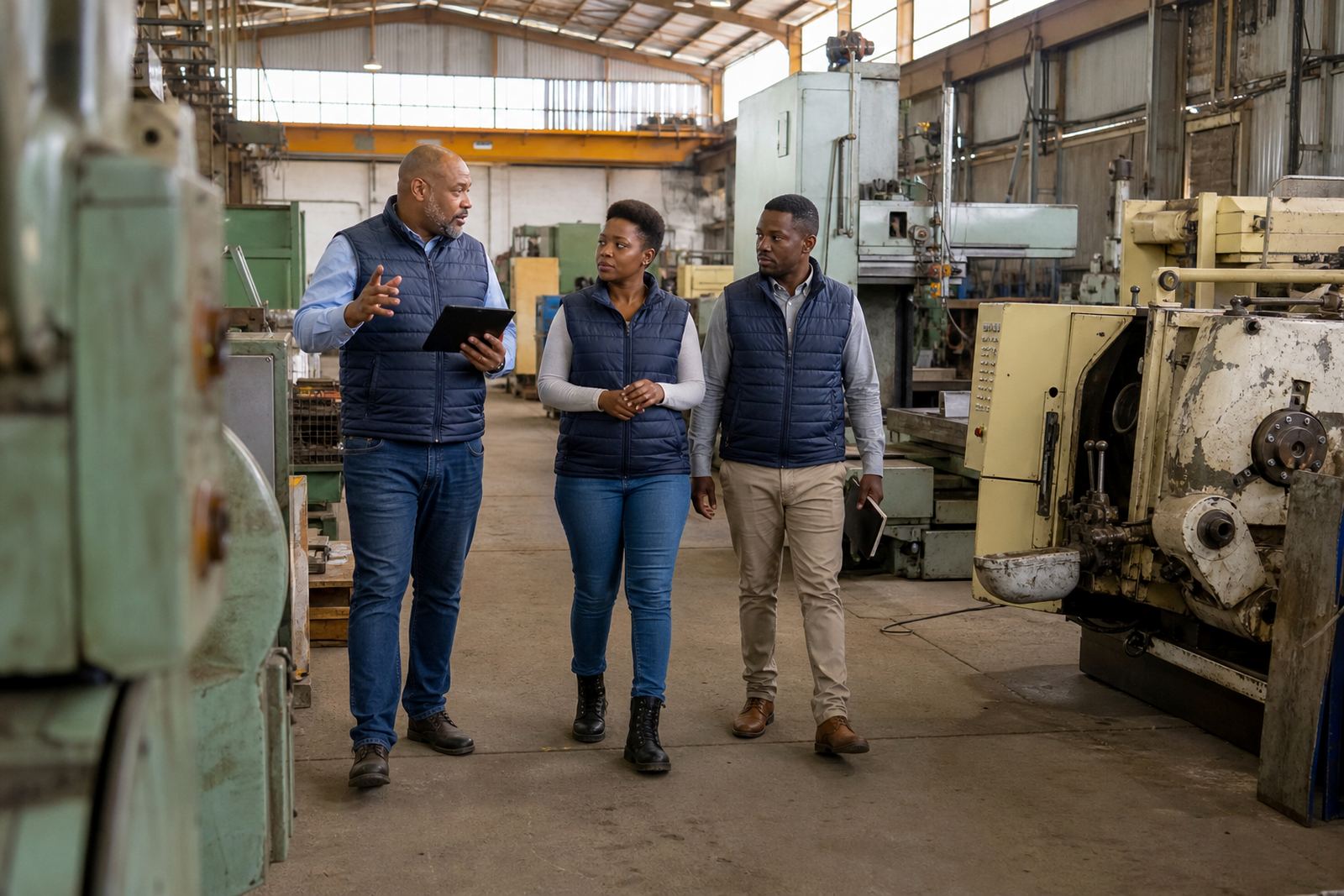
Built in Kempton Park for real industrial work
Machine Africa was founded in 2008 in Kempton Park, where industrial yards, workshops and transport routes meet every day. That local base matters. It means we understand the pace of Gauteng industry, the pressure of keeping plant moving, and the practical issues that come with moving machinery between sites in Johannesburg, Pretoria, Germiston, Midrand and further afield to Durban, Cape Town and Gqeberha.
We work with used industrial machinery because that is where careful judgement counts. A machine’s condition, age, maintenance history, hours, attachments, power requirements and site access all influence value. A valuation is an opinion of value based on the information available at the time, not a promise of what a buyer will pay. That distinction is important, and we explain it plainly so sellers can make informed decisions.
From small workshop equipment to larger plant, our role is to assess what is there, document it properly and guide the next step. In some cases that means a private sale plan, in others a timed auction or a clearance process after closure or restructuring. Either way, the aim is to keep the process orderly and fair.
How we assess machinery before it goes to market
Every job starts with inspection. Depending on the site and the asset, we can do on-site valuations, plant appraisals and asset inspections before any sale method is chosen. We look at visible wear, completeness, operating condition, safety points, and whether the equipment has been properly isolated for inspection. If a machine has been stored outdoors near the coast, moisture and corrosion can affect condition more than the age alone would suggest. In inland sites, dust and intermittent load-shedding can leave a different pattern of wear.
We then compare the asset against market demand, not just book ideas or assumptions. A machine that is common and easy to move may attract more interest than a similar unit that needs specialised transport or heavy lifting. Our senior valuer, Pieter van der Merwe, leads this work with a practical eye on what buyers usually ask about first: condition, configuration, power supply, spares availability and whether the machine is ready for removal. There is no guesswork for the sake of it. The point is to build a fair picture from the evidence at hand.
- Physical condition and visible maintenance issues
- Age, usage pattern and service records where available
- Access, lifting and transport constraints
- Market interest for similar machinery
- Any safety, electrical or site compliance factors
Auction planning that keeps sellers in control
When an auction is the right route, we plan it carefully. That means choosing the right lot structure, preparing catalogues, setting viewing days, and making sure the sale conditions are clear before bidding begins. Naledi Khumalo manages the auction side of the process so that sellers and buyers know what to expect at each stage. Good auction planning is not only about getting items listed. It is about preparing the whole sale so the market can respond properly.
We guide reserve discussions where needed, but reserve guidance is still guidance. It helps a seller decide on a minimum acceptable position, yet it does not guarantee a result. Markets move, interest changes and machinery can draw different levels of attention depending on timing. We keep that reality front and centre because transparency matters more than overpromising. If a lot needs clearer photos, extra checks or better description before listing, we deal with that before the sale rather than after.
For sellers dealing with closure, relocation or replacement of plant, the process can feel busy and personal at the same time. Our job is to keep it organised, steady and visible. Thabo Molefe coordinates operations, Johan Botha handles site logistics, and Lerato Nkosi prepares photo listings and catalogue material so the record of each asset is as clear as it should be.
What buyers and sellers can expect from the process
People often come to us at different stages. Some are selling a single machine, others are clearing an entire plant. Buyers may be looking for a specific item or for general workshop capacity at a sensible level. We work across both sides of the market by keeping the process structured and the communication direct. A buyer should know what is being sold, where it is, how it is described and what needs to happen for collection. A seller should know how assets are being grouped, how viewings work and what support is available during the close-out phase.
Ayesha Ismail leads client relations, which is important because clear communication can save time and avoid unnecessary site visits. Once an enquiry comes through our contact page, we follow up with the relevant next steps based on the asset type and location. That may include a valuation visit, a viewing day, lotting support or coordination for removal after sale. We also help with closure support and collection coordination where the site requires a neat handover.
- Initial enquiry through the contact page
- Site visit or document review for assessment
- Catalogue preparation and lotting
- Viewing day arrangements where needed
- Sale process, closure support and collection coordination
Why industry knowledge matters in used machinery
Used industrial machinery is not all alike. A lathe, compressor, generator, press, forklift or production line component each has its own buying logic. Some items need a full power check, others need measured inspection and some require careful note of missing parts. A valuer who understands the equipment can spot what affects worth and what does not. That knowledge helps avoid both underpricing and unrealistic expectations.
Our team works with the ordinary realities of South African industry: scheduled downtime, municipal rules, access control, loading bays, narrow roads, uneven yards and the practical effect of power cuts on machine condition. A machine in a busy warehouse in Johannesburg may present differently from one in a humid Durban site or a large shed in Cape Town. These details matter when deciding how to present an asset and how to move it safely.
We do not dress the process up. If a machine is incomplete, needs testing, or will be difficult to remove, we say so. If it is in good order and properly documented, we say that too. Buyers and sellers both benefit when the facts are laid out clearly and kept in the record.
The people behind the work
Machine Africa is shaped by a team that knows the operational side of the business as well as the commercial side. Siyabonga Mthembu, our managing director, keeps the focus on practical service and accountable decision-making. Around him, the team brings together valuation skill, auction planning, logistics, catalogue work and client communication so the business can handle a full assignment from first call to final collection.
That structure matters because industrial assets are often tied to urgent timelines. A seller may need space cleared, a buyer may need removal arranged quickly, or a site may need to be handed over in order. We respond best when the work is coordinated from the start, with everyone involved knowing their role. It helps us serve clients in Kempton Park, Johannesburg, Pretoria, Durban, Cape Town, Gqeberha, Germiston and Midrand without losing the detail that each site demands.
Over time, we have learned that people value steadiness more than noise. They want accurate assessments, honest descriptions and a process that does what it says. That is the standard we keep, whether the assignment is a single machine or a larger industrial clear-out.
A practical standard for every instruction
Our values are simple: accuracy, transparency, efficiency and respect for the equipment and the people involved. We do not give financial or tax advice, and we do not make promises about sale prices. What we do is assess, organise and present machinery properly so sellers and buyers can make informed choices. That approach has kept our work grounded since 2008.
We know that industrial assets carry pressure. They may be tied to production, staffing, storage costs or site changes. A careful valuation and a well-run auction process can reduce confusion and help everyone move ahead with clearer information. That is why we keep our wording plain, our records organised and our expectations realistic. If you need machinery assessed, listed or brought to market, we are set up to handle it in a manner that is direct and orderly.
Clients reach us through the enquiry form on our contact page, and from there we take it step by step. No fuss, just the work done properly.