Conveyor Line Valuations For Production Sites
Conveyor lines are usually valued as part of a wider plant or as stand-alone assets, depending on how they are installed and what condition they are in. A valuation is an informed opinion of value based on visible condition, specification, market demand, age, maintenance records and how easy it is to remove and reinstall the line. It is not a guarantee of sale price, because auction demand can change from site to site and from week to week.
We handle conveyor line assessments for food packing rooms, warehouses, bagging plants, bottling lines, automotive parts areas and general light industry. In Gauteng, where some sites run through load-shedding and others rely on generator backup, we also look at drive protection, control panels and restart procedures. On coastal sites in Durban, Cape Town and Gqeberha, we pay close attention to corrosion, motor housing condition and electrical cabinets where humidity can cause trouble over time.
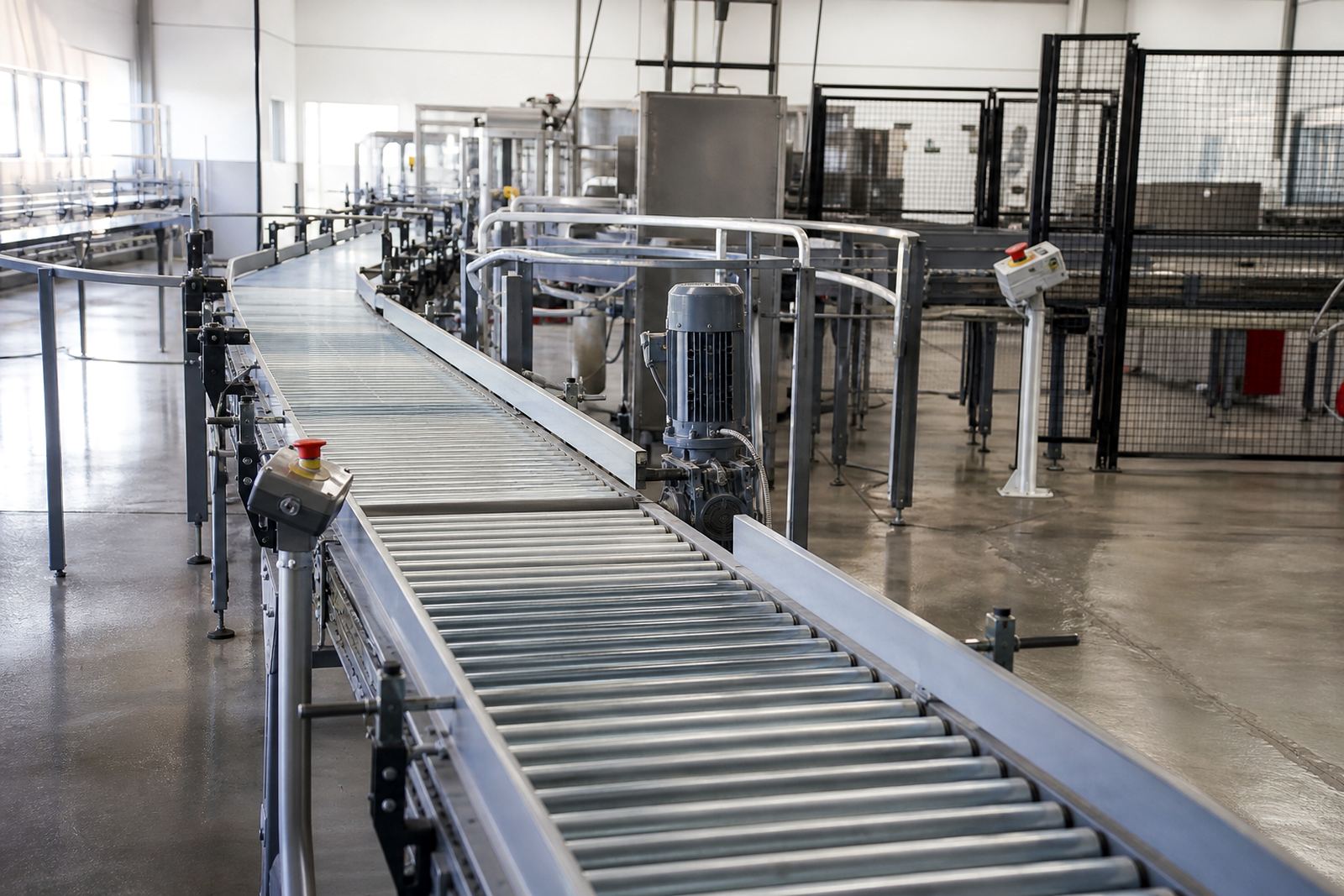
Typical conveyor line factors we assess include length, width, frame type, belt or roller condition, drive arrangement, transfer points and guarding. A line that is neat, complete and easy to lift may suit a wider pool of buyers than a line with missing sections or non-standard parts.
Sizes, Layouts And Options Buyers Ask For
Conveyor lines are built in many layouts, from short transfer runs to longer multi-section systems with bends, merges and elevated sections. The most common units we see range from 3 metres to 30 metres per run, although larger plant layouts can go well beyond that when several lines are linked together. Widths often fall between 300 mm and 1 200 mm, depending on the product being handled.
Options vary by process. Some facilities need flat belt conveyors for cartons, while others use roller lines for cases, chain conveyors for heavier items or modular plastic belt systems for wash-down areas. Incline and decline sections are common where product has to move between floor levels, mezzanines or loading bays. Stainless steel frames are often preferred in wet or hygienic areas, while mild steel is common in dry production spaces.
- Modular or fixed frame construction
- Flat belt, roller, chain or modular belt arrangement
- Straight, curved, incline or decline sections
- Single speed or variable speed drive options
- Manual controls or linked control panels
- Guarding, side guides and transfer plates
Where Conveyor Lines Suit Best
These systems suit businesses that need steady movement of boxes, crates, sacks, trays or parts between work stations. In Johannesburg and Pretoria, they are often used in distribution sheds, assembly areas and packing rooms where space must be used carefully. In Cape Town and Gqeberha, conveyor lines are also common in packing and export preparation areas where clean handling matters.
Before auctioning or buying, it helps to know whether the line was used for light goods or heavier loads. Some conveyor systems are suited to cartons of 5 kg to 25 kg, while others are built for far heavier items. The frame strength, drive size and roller spacing should match the product. A line set up for small boxes may not cope well with heavy drums or uneven loads.
For sellers, a clear layout drawing and a full list of components can make the line easier to lot and market. For buyers, the main point is whether the line fits the available floor space, ceiling height and workflow. A good line in the wrong building is still a difficult fit.
Installation, Power And Utility Checks
Most conveyor lines need a prepared floor, level support, safe access around the sides and a power supply matched to the drive system. Many use electric motors and control panels, commonly with three phase power, though some smaller units can run on lighter supplies. In sites with power interruptions, buyers should check whether the system can restart safely after a shutdown and whether controls retain settings correctly.
Installation details matter when valuing or buying a used line. We check anchoring points, support legs, belt tracking, wiring quality and whether the transfer heights match the other machines around it. Where a line includes sensors, stops or automated sorting points, the controls should be tested as far as possible before sale. If the system has pneumatics, air quality and pressure stability also need to be confirmed.
- Floor space, clear working width and ceiling height
- Power supply and panel condition
- Drive motor size and control method
- Access for lifting, rigging and transport
- Compatibility with existing packing or processing machines
Care, Servicing And Daily Use
Conveyor lines stay valuable when they have had regular cleaning, belt tracking checks and basic mechanical servicing. Worn bearings, noisy rollers, damaged belts and poorly aligned guides are common issues that reduce running quality and can affect value. In dusty plants, cleaning intervals matter. In wet areas, rust control and corrosion checks are just as important.
A sensible servicing record should show motor checks, belt tensioning, lubrication, replacement parts and any breakdown history. We often find that a line with simple maintenance and decent documentation is easier to place at auction than one with unknown service history. Even where a system looks solid, hidden wear in rollers, pulleys or gearboxes can change how buyers view it.
For loading and operation, staff should avoid overloading sections and should keep product centred on the belt or rollers. This reduces edge wear and helps the line run straighter. It also cuts down on unnecessary stop-start strain on the drive units, which is useful in facilities already working around electricity supply interruptions.
What To Check Before You Order Or Lot A Line
Whether you are selling or buying, ask for the full specification of the conveyor line and do not rely only on a general description. Check the overall length, width, height, drive type, frame material, belt or roller condition and whether all supports, guards and covers are included. Missing sections can change the practical value of a line quite a lot.
For auction purposes, clear lotting helps. Decide whether the line should be sold as one complete unit or split into sections. A complete line can suit one buyer, while split lots may attract different buyers for specific parts. The right approach depends on the condition, the layout and how much of the system is matched together. Reserve guidance should be based on the visible state of the asset and current buyer interest, not on wishful thinking.
- Confirm dimensions and drive details from site inspection
- List all modules, supports, rollers, belts and guards
- Check for damage, missing controls or cut wiring
- Note whether dismantling will affect re-use value
- Prepare viewing days with enough access for buyers
Machine Africa supports on-site valuations, auction planning, plant appraisals, photo listing prep and collection coordination from our Kempton Park base. We work with sellers and buyers across South Africa and keep the process practical, clear and properly recorded from inspection through to closure support.
Key facts
| Length range | 3 m to 30 m per run, with larger linked systems possible |
|---|---|
| Width range | 300 mm to 1 200 mm depending on product size |
| Frame materials | Mild steel, stainless steel or mixed fabrication |
| Drive options | Electric motor drive, chain drive or roller drive systems |
| Power needs | Often three phase supply, with control panel and safe restart checks |
| Common uses | Packing rooms, warehouses, assembly lines, bottling and distribution areas |