Used Forklifts for Warehouse and Yard Work
Forklifts are the workhorses of stores, workshops, timber yards, manufacturing plants and logistics depots. They move pallets, crates, drums and packed materials where hand labour would be too slow or unsafe. On auction listings, the type of forklift matters just as much as the hour reading, because a compact 1.5 tonne electric unit suits indoor picking lanes while a diesel rough-terrain unit is better for yards, loading bays and uneven ground.
In South Africa, used forklifts are often sold when a business upgrades its fleet, closes a site, or needs to reduce standing equipment after a move. We prepare valuations and auction listings for individual units or full fleet disposals. A valuation is an opinion of value based on the machine's condition, age, hours, attachments and market demand, not a guarantee of sale price. The final result depends on buyer interest on the day and the quality of the listing and viewing process.
- Typical capacities: 1.5 tonne to 10 tonne and above
- Common lift heights: 3 m, 4.5 m and 6 m mast options
- Power types: electric, diesel and LPG
- Applications: warehouses, yards, factories, stores and depots
Sizes, Mast Types and Power Options That Buyers Compare
When buyers inspect forklifts, they usually start with rated capacity, lift height and the type of drive. A 2 tonne machine may suit a busy warehouse with pallet racking, while a 3 tonne or 5 tonne unit is often chosen for heavier industrial loading or container work. Side shift, fork positioners and fork extensions can improve daily use, but they also need to be checked for wear and service history.
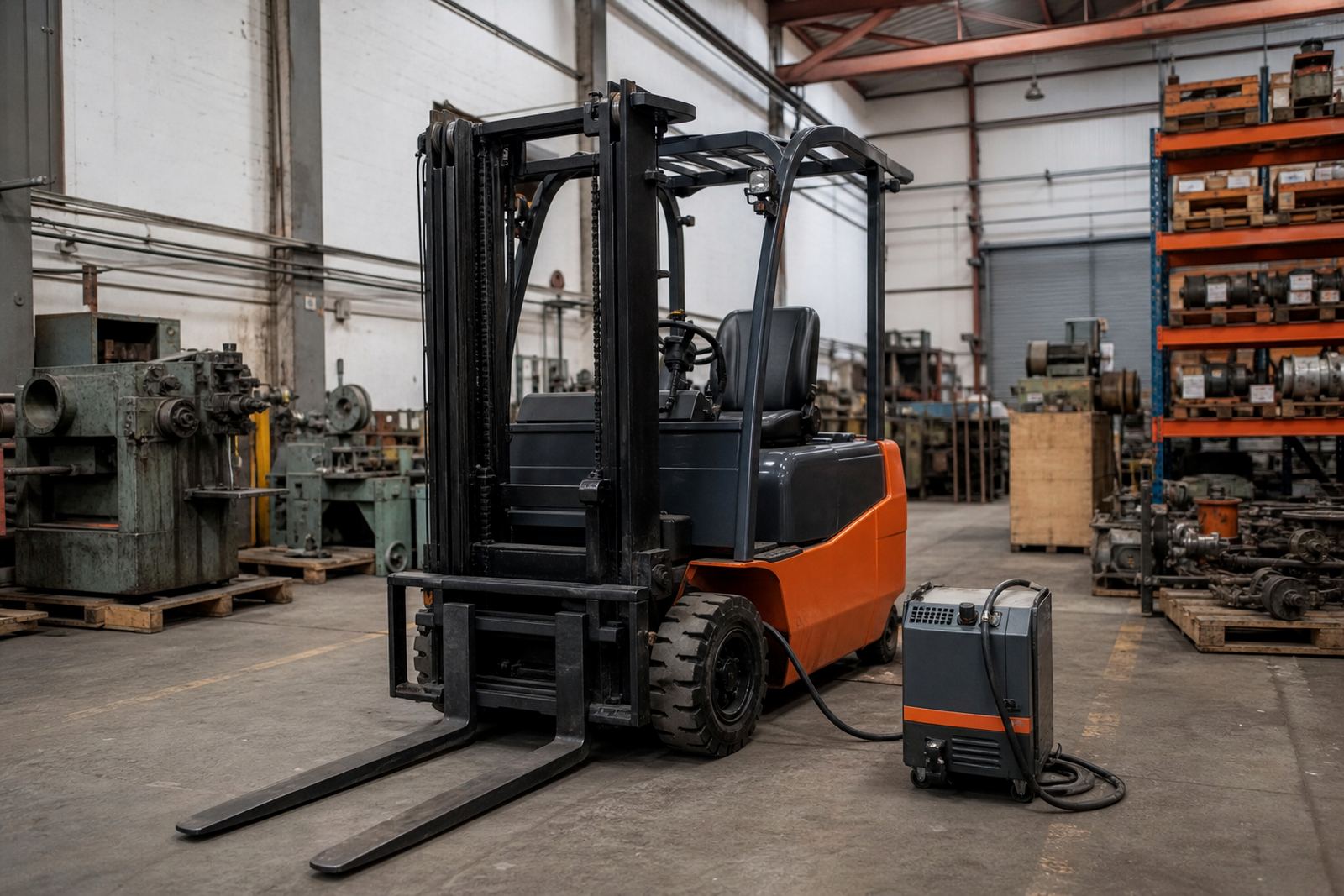
Electric forklifts are common indoors because they run quietly and do not produce exhaust fumes. They need a charging point, clean battery handling and a place to park out of traffic. Diesel and LPG forklifts are better for outdoor use, although diesel units are often preferred in yards with rough surfaces and longer shifts. In coastal towns like Durban or Gqeberha, buyers also look closely at corrosion, battery condition and undercarriage wear, because salt air can be hard on older machines.
- Three-wheel electric models suit tight aisles and small turning circles
- Counterbalance forklifts are the standard choice for general lifting
- Rough-terrain units suit yards, builders' merchants and outdoor storage
- Higher mast options may need clearer stacking space and more operator skill
Where Forklifts Suit Best in South Africa
Forklifts are used in almost every sector that handles palletised goods. In Johannesburg and Germiston they are often found in warehousing, transport and manufacturing. Pretoria depots use them for government stores, engineering yards and distribution centres. In Durban, many buyers need units that can handle port-side movement, container staging and coastal humidity. Cape Town and Gqeberha buyers often want machines that can cope with mixed indoor and outdoor use, plus tighter plant space.
For valuation and auction planning, it helps to know the actual working environment. A forklift that has spent its life on smooth concrete may be in better shape than one used on broken paving or gravel, even if the hour reading is similar. Tyre wear, mast play, hydraulic seepage and steering response all affect how a machine will be viewed by buyers. If a unit has been standing unused, we also look at flat spots, battery health and fuel system condition.
- Warehouses and distribution centres
- Manufacturing plants and engineering shops
- Tyre yards, building materials depots and timber yards
- Ports, logistics sites and storage facilities
What We Look At During a Forklift Valuation
Our on-site valuations focus on facts that matter to both sellers and buyers. We assess the condition of the frame, mast, carriage, forks, tyres, hydraulics, steering, brakes, seat and controls. We also note visible repairs, missing panels, warning lights, battery age on electric units, and any signs of oil leaks or overheating. If the machine has attachments, we check whether they are usable, complete and properly fitted.
Documentation matters too. Service records, manuals, proof of ownership and maintenance notes help support a cleaner listing. A clear model description, serial number and hour reading reduce confusion during bidding. We do not guess at sale price and we do not promise a result. What we provide is a practical opinion based on the machine's present condition and the current market, so sellers can plan the disposal properly and buyers can judge value with less risk.
- Visual inspection of mast, carriage and forks
- Check for tyre wear, leaks and structural damage
- Assessment of battery, charger access or fuel setup
- Review of hour reading and service history where available
Power, Charging and Site Requirements
Forklifts do not all need the same site setup. Electric models need charging space, safe cable routing and enough ventilation around the charging area. Some sites also need battery handling gear or a designated bay for watering and maintenance. Diesel and LPG forklifts need refuelling arrangements and a yard layout that allows safe movement around pedestrians, delivery trucks and loading doors. In load shedding conditions, electric fleet planning becomes even more important, so a buyer may ask whether charging can happen overnight or during available power windows.
Installation is usually straightforward for used forklift placement, but the site must be ready. Floors should be level enough for the wheel load, especially where the machine will operate indoors. Clear ceiling height, doorway width and stacking height should be checked before purchase. If the forklift will be used in a food store, pharma warehouse or controlled area, the buyer may also need to confirm whether the unit's condition and fuel type suit the site rules.
- Electric units need charging space and battery care
- Diesel units suit outdoor work and longer shifts
- LPG units need safe cylinder handling and storage
- Check floor loading, aisle width and lift height before buying
Servicing, Care and What to Check Before You Order
Used forklifts need regular servicing if they are going to work reliably after sale. Buyers should ask about tyre condition, mast lubrication, hydraulic hose age, brake performance and steering play. For electric units, battery health is often one of the biggest cost items, so it is worth asking how long the battery lasts under normal use and whether the charger is included. On older machines, a quick visual check is never enough, because a clean coat of paint can hide tired hydraulics or worn pins.
Before ordering, confirm the rated capacity at the lift height you need, not only the nominal capacity on flat ground. Check fork length, overall width, turning radius and the type of carriage fitted. If you are buying for a yard with uneven surfaces, ask whether the tyres are solid, pneumatic or non-marking. For auction buyers, viewing day is important, because it is the best time to see the machine up close and compare it with similar lots in the same sale.
- Confirm capacity at the height you need
- Check tyres, forks, hoses and mast movement
- Ask whether battery, charger or gas gear is included
- Inspect for leaks, repairs and uneven wear before bidding
Key facts
| Typical capacities | 1.5 tonne to 10 tonne plus |
|---|---|
| Lift heights | Around 3 m to 6 m, depending on mast |
| Power options | Electric, diesel and LPG |
| Common use areas | Warehouses, yards, factories and depots |
| Key checks | Hours, tyres, hydraulics, battery and mast wear |
| Service needs | Lubrication, tyre care, battery checks and hydraulic inspection |