What a Welding Plant Covers in Industrial Use
A welding plant is usually more than one machine. In practice it may include a power source, wire feeder, torch, earth clamp, gas regulator, leads, cooling unit and the bench or frame around it. Some units are set up for MIG, TIG, stick or flux-cored work, while others are simple transformer or inverter machines used for maintenance and light fabrication.
For auction and valuation work, the condition of the power source matters, but so does the full set around it. Missing hoses, worn cables, damaged screens or burnt contacts can affect how a unit is inspected and how it is described in the catalogue. A proper opinion of value is based on what is seen and tested, not a promise of what it will fetch on the day.
Sizes, Outputs and Common Configurations
Used welding plants come in a range of sizes, from portable 180 A inverter units to heavier workshop machines rated around 250 A, 350 A or more. Some are single-phase units that suit smaller premises and mobile jobs, while others need three-phase supply for regular production or thicker material. In Gauteng and the coastal cities, buyers often look for machines that can cope with frequent use and basic voltage variation.
- Portable inverter sets for site work and light steel repairs
- Bench-mounted or wheeled MIG sets for fabrication lines
- TIG machines for cleaner welds on thinner material
- Multi-process units for mixed workshop work
- Fixed plant with wire feeders, cooler units and gas bottle brackets
When valuing these units, we also note whether they are air-cooled or water-cooled, whether the torch package is complete, and if the set has been adapted for the workshop layout. A neat bench set with sound leads and working controls is usually easier to place than a loose machine with missing accessories.
Where Welding Equipment Fits Best
Welding plants suit fabrication shops, vehicle repair workshops, agricultural maintenance yards, structural steel fabricators, municipal depots and plant maintenance teams. In areas like Germiston, Midrand and Johannesburg South, they are often used for gates, frames, brackets, repairs and production runs. In Durban and Gqeberha, buyers also ask about corrosion resistance and storage conditions because humidity can affect contact points and consumables.
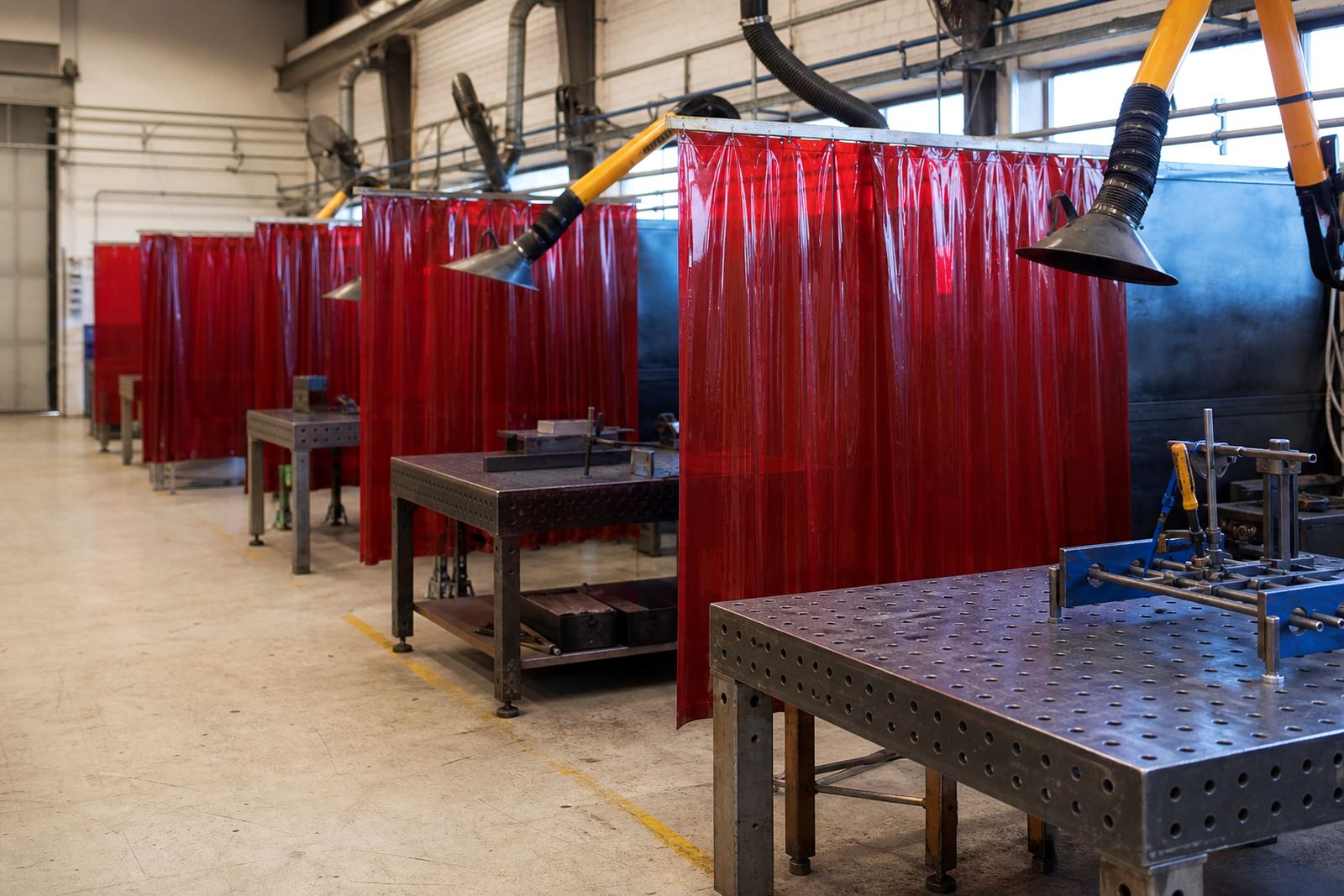
For auction purposes, layout matters. A clean, well-marked area with safe access helps viewing days and asset inspections run properly. If the equipment is still installed, we look at how it is fixed, whether extraction is in place, and if the surrounding benches, jigs or clamps are included in the lotting. That gives buyers a clearer view of what they are bidding on, and it helps sellers present the asset properly.
Power, Gas and Site Setup Basics
Before any welding plant is moved or sold, the power and gas setup must be checked. Many machines need a stable single-phase or three-phase supply, correct breaker protection and sound cabling. Gas-fed systems also need safe cylinder storage, regulators and leak-free hoses. In busy sites around Pretoria and Kempton Park, load-shedding and back-up generation can affect which machines remain practical for daily use.
- Check the input voltage and phase requirement before connection
- Confirm cable length, plug type and breaker size
- Inspect gas hoses, regulators and torch seals for wear
- Make sure cooling fans, pumps and filters are working
- Keep cylinders upright, secured and away from heat or traffic routes
We often see that a machine itself is in fair condition, but the support gear needs attention. That does not mean it has no value, only that the catalogue must reflect the full picture. Clear descriptions help buyers plan transport, installation and any servicing needed after collection.
Care, Servicing and Working Life
Good care starts with basic cleaning, dry storage and regular inspection of leads, torch necks, contact tips and earth clamps. Dust, grinding swarf and moisture can shorten the life of a welding plant. In coastal areas especially, wiping down exposed metal and storing consumables correctly can make a real difference. A machine that has been left outside or exposed to rain will need closer inspection, and sometimes a test by a qualified person before use.
For valuation and auction listings, service history is useful when it is available, but it must be supported by what can be checked on site. We look at the condition of switches, metres, fans, wire feed, cooling unit and visible repairs. Repaired does not always mean bad, but crude repairs, burnt terminals or patched leads can change the opinion of value quite a bit.
What to Check Before You Order or Bid
Buyers should check the exact welding process, output range, accessories included, power requirement and whether the unit is complete enough for immediate use. It helps to confirm if the torch package is present, if spares are available, and whether the machine has been tested under load. If the item is part of a larger fabrication lot, ask whether the bench, clamps, screening or extraction units are included or sold separately.
- Serial number and model plate condition
- Power input, plug type and cable condition
- Output range and process type
- Presence of feeder, torch, earth lead and gas gear
- Signs of overheating, repair work or missing panels
- Collection access, lifting points and transport needs
For sellers, proper preparation means cleaning the unit, gathering service notes and making sure the lot is easy to inspect. For buyers, it means reading the catalogue carefully and asking for clarification before bidding. That approach keeps the process fair and avoids confusion later on.
Key facts
| Process types | MIG, TIG, stick and flux-cored, depending on the unit |
|---|---|
| Typical output range | About 180 A to 500 A and above |
| Power supply | Single-phase or three-phase, subject to machine type |
| Cooling | Air-cooled or water-cooled options |
| Common accessories | Torch, earth clamp, leads, feeder, regulator and cables |
| Typical use | Fabrication, maintenance, repair work and light production |