What a plasma cutter does on a busy workshop floor
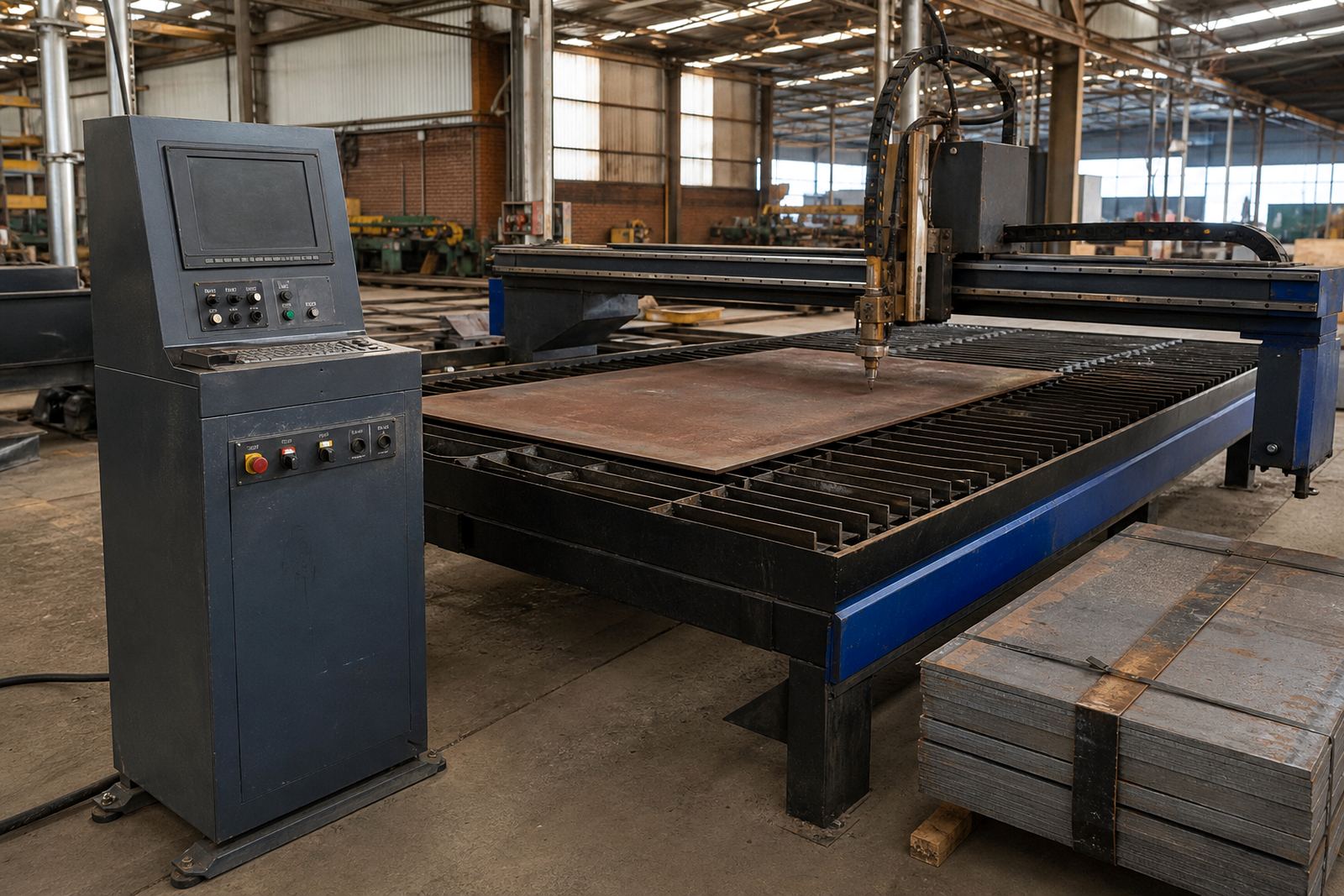
A plasma cutter uses a high velocity ionised gas jet to cut electrically conductive metal such as mild steel, stainless steel and aluminium. In plain terms, it gives a neat, fast cut with less manual marking and grinding than many oxy-fuel jobs, especially on thinner plate and sheet. Used units on the market range from small manual cutters to full cutting tables with CNC controls, extractor systems and edge guides.
For valuation and auction purposes, the important point is not just whether the machine powers on. Buyers and sellers need to know the duty cycle, torch condition, software or control status, table size, compressor requirements, consumables and whether the system has been used in a clean indoor bay or in a rough yard environment. A machine that has cut daily in a fabrication shop may still be serviceable, but it needs proper assessment before it is listed or released for sale.
- Manual hand-held cutters for site work and maintenance teams
- CNC plasma tables for plate cutting and repeat batches
- Portable inverter units for smaller workshops
- Integrated systems with extraction, water tables or gantries
Typical sizes, cut ranges and table options
Used plasma systems come in many sizes, from compact 30 A to 45 A machines for light sheet work through to higher output systems used on thicker plate. Common table formats include 1 200 x 2 400 mm, 1 500 x 3 000 mm and larger gantry tables built for fabrication runs. Some shops use a standalone cutter and hand torch, while others prefer a fixed table with automatic height control and nesting software. The right option depends on the type of work, floor space and the thickness that must be cut most often.
Cut quality is affected by more than amperage. Torch alignment, consumable wear, torch lead length, air quality and earthing all matter. In humid coastal areas like Durban or Gqeberha, poor air drying can shorten consumable life and affect the kerf. In Gauteng, dust and welding fume buildup can also cause problems if the machine has not been serviced regularly. When we assess a unit for auction or buyer review, we look at the full setup not just the nameplate.
- Light duty machines suit maintenance, signage and small fabrication
- Mid range systems suit general steel work and repetitive cutting
- Higher output tables suit plate preparation and production runs
- Used systems may include torch height control, CNC control and extraction
Where plasma cutting systems fit best
Plasma cutting is useful where speed and cleaner edges matter, and where the workshop needs to move quickly between jobs. It suits steel fabrication shops, farm implement repairers, boiler and tank makers, maintenance contractors, trailer builders, structural steel yards and heavy engineering works. Many buyers look for these systems when they want to reduce manual cutting time and keep better control over repeat parts.
For sellers, a plasma cutter can be a strong auction lot if it is presented with clear details and honest condition notes. We often see systems sold after plant changes, workshop downsizing, fleet renewal or closure sales. A complete machine with torch, leads, gas setup and control gear usually attracts better interest than a loose component set. That said, condition and documentation still matter. Buyers want to know what is included and what is missing before they bid.
- Best for conductive metals rather than wood or plastic
- Useful for repair shops and fabrication firms with varying workloads
- Works well where parts need to be cut quickly on short notice
- Less suited to sites without stable power or clean compressed air
Power, gas and site requirements before installation
Before any plasma cutter is installed or sold, check the supply at the site. Smaller units often run on single phase power, while larger table systems may need three phase supply and a suitable breaker arrangement. Stable voltage matters, especially in areas affected by load-shedding or weak municipal supply. Some businesses use a generator, but the generator must be sized properly for the inrush and running load, otherwise the machine may trip or cut poorly.
Air quality is just as important. Plasma units normally need clean, dry compressed air at the correct pressure. Water in the airline can damage consumables and affect cut finish. Some systems may use a gas set-up depending on the process and torch type, so the buyer should check hoses, regulators, fittings and cylinder storage conditions. On site, we also look at ventilation, extraction, floor condition and whether the machine has enough clear space for loading sheets and moving around safely.
- Confirm whether the machine needs single phase or three phase power
- Check compressed air capacity, filtration and dryness
- Allow safe clearance for sheet loading and torch movement
- Make sure extraction or fume control is adequate for the workshop
What our valuation and auction process checks
When a plasma cutter is assessed for auction or disposal, the valuation is an opinion of value based on condition, age, specification, market demand and the practical cost of removal. It is not a guarantee of sale price. We review the machine visually and, where possible, in operation. That includes the torch, control panel, cables, table structure, rails, drives, consumable holders, software, safety guards and any extras that add value or affect usability.
We also consider whether the unit is complete, whether spare parts are available, and whether there are any service records or manuals. A buyer wants clear information, and a seller benefits from accurate lotting and cataloguing. Our team at the Kempton Park base handles viewing days, reserve guidance, photo listing prep, seller representation and closure support. For plant appraisals, we work with practical market evidence and a careful inspection rather than guesswork.
- On-site inspection and asset identification
- Condition notes covering wear, corrosion and missing parts
- Lotting and cataloguing for single items or full workshops
- Viewing day support and buyer enquiry handling
Care, servicing and what buyers should check
Used plasma cutters need routine care if they are going to keep cutting cleanly. Consumables wear out, torch heads can overheat and air filters need attention. Tables should be kept clear of slag build-up and rust, and moving parts need regular lubrication where the maker allows it. In coastal areas, stored machines should be protected from salt air and damp. In inland yards, dust and fine grinding grit can be just as harmful over time.
Before ordering or bidding, buyers should check the serial plate, power requirements, torch type, control system, bed size and what is included in the sale. Ask whether the machine has been tested, whether consumables are fitted, and whether there are signs of previous repairs to wiring, rails or control boards. If the table is included, measure access routes, door widths and crane or forklift access for removal. A machine can look tidy in photos and still have hidden issues, so a proper review is worth the effort.
- Ask for the exact power requirement and torch specification
- Check whether consumables, hoses and leads are included
- Confirm table dimensions and access for collection
- Look for wear on rails, torch carriage and control components
Choosing the right unit for your job and your yard
The right plasma cutter depends on the work you do every week, not only on the price tag. A small repair shop may need a portable unit for occasional plate cutting, while a fabrication yard may need a larger table for repeated parts and better throughput. Buyers in Johannesburg or Pretoria often ask for production consistency, while coastal buyers may focus more on corrosion history and stored condition. In all cases, the machine should match the workshop power supply, available floor space and the quality of compressed air on site.
For sellers, a well presented machine with clear notes and honest history is easier to place in the market. For buyers, the safest approach is to review the specification, ask practical questions and understand that used machinery is sold as assessed, not as a promise of future output. If you need help with a plasma cutter for auction, disposal or buyer review, our Kempton Park team supports clients across South Africa with a straightforward process and careful site coordination.
- Match the unit to the thickness and volume you cut most often
- Allow for power, air and fume control before purchase
- Consider repair history and the availability of consumables
- Use clear inspection notes when buying from auction
Key facts
| Type | Used plasma cutter or plasma cutting table, assessed for sale or auction |
|---|---|
| Typical power | Single phase or three phase depending on model and output |
| Common sizes | Portable units to tables around 1 200 x 2 400 mm, 1 500 x 3 000 mm and larger |
| Main applications | Fabrication, maintenance, sheet cutting, plate preparation and repair work |
| Utilities | Stable electricity, clean compressed air, and in some setups extraction or gas support |
| Condition factors | Torch wear, consumables, control system, rails, table condition and service history |