What a shrink tunnel does in a wrapping line
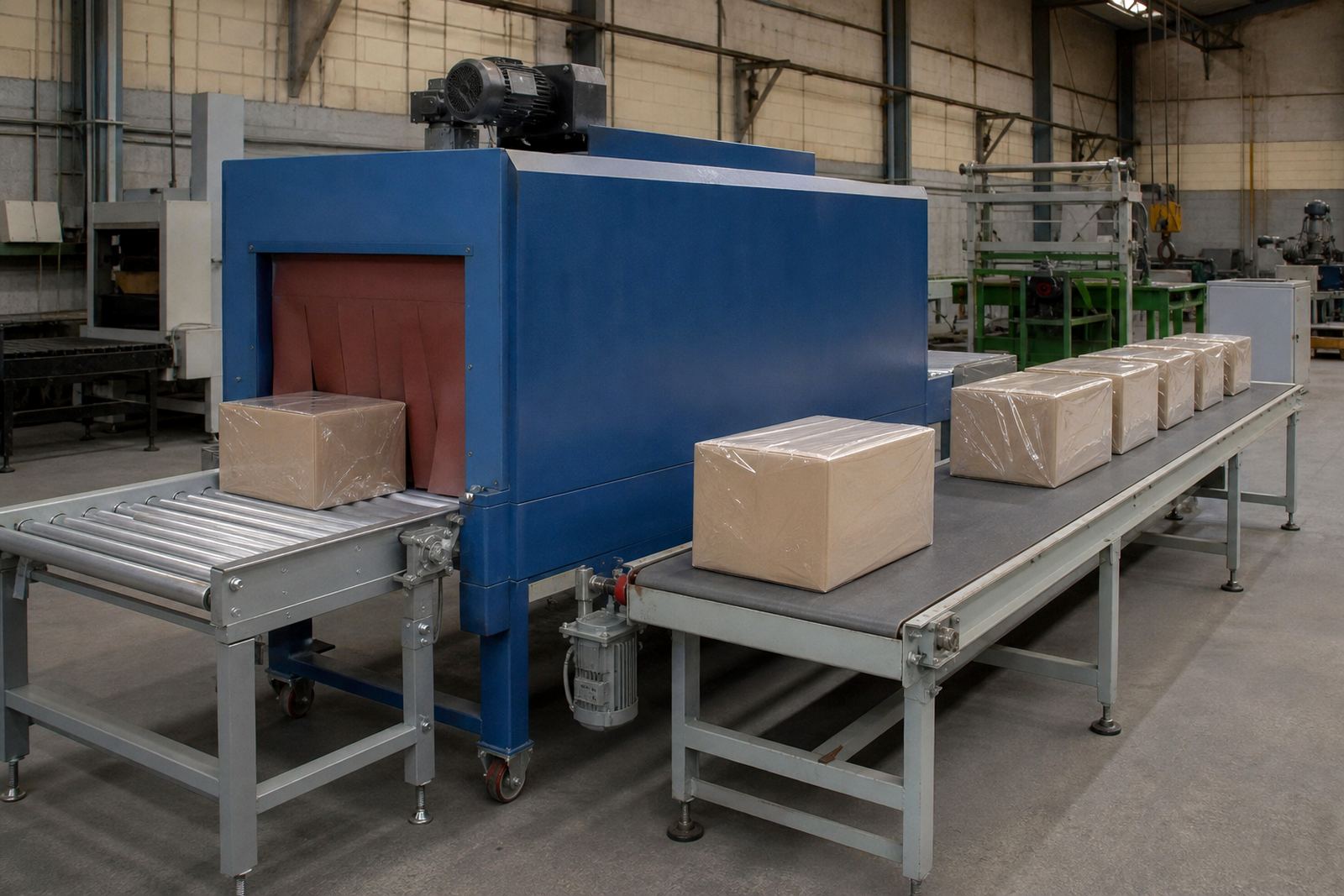
A shrink tunnel uses controlled heat to tighten film around a product after it has been wrapped. It is common in pack lines for bottles, tins, cartons, trays, bundles and other goods that need a neat sealed finish. In many factories the tunnel sits after the sleeve wrapper or overwrapping section, and the conveyor carries the pack through a heated chamber for a short dwell time.
Used units are often sold with the conveyor, blower set, heater bank and control panel as one package, or as part of a full wrapping line. The right tunnel depends on the pack size, line speed, heat demand and the film being used. For auction purposes, a valuation is an opinion of value based on condition, age, completeness and market demand, not a guarantee of the final sale price.
Common sizes and options seen on the used market
Shrink tunnels come in many widths and chamber lengths. Smaller systems suit narrow packs and low to medium throughput, while longer tunnels give the product more time in heat. Some machines are built for light-duty packing rooms, others for continuous production in food, beverages, printing or general manufacturing. We also see tunnel housings with adjustable airflow, variable speed conveyors and digital temperature controls.
- Chamber width: often from about 250 mm to 1200 mm, depending on product size.
- Chamber length: commonly 800 mm to 3000 mm, with longer units used on faster lines.
- Conveyor height: usually adjustable to suit adjoining machinery and pack flow.
- Heat source: electric heated tunnels are common, with gas-heated options on some sites.
- Air movement: side, top or mixed airflow to suit the film and pack shape.
When preparing a tunnel for sale, buyers want to know whether the size matches their current line and whether the machine will fit through doors, loading bays and plant access routes. This matters in older premises in places like Germiston or central Johannesburg where access can be tight.
Where shrink tunnels suit best on site
Shrink tunnels are suited to plants that need a clean, protective finish around products and cartons. They are often used in food packing, household goods, stationery, printing, building products and contract packing. In humid coastal areas such as Durban, buyers may also pay attention to corrosion on frames, fasteners and electrics, while inland sites in Pretoria or Midrand often focus more on throughput and power stability.
These machines suit line layouts where product movement is steady and packaging must stay consistent. If a site runs on variable shifts or has frequent load-shedding, buyers usually check how the tunnel recovers after power interruption and whether the controls retain settings properly. That kind of detail can affect valuation and sale interest quite a bit.
- Good for continuous pack flow rather than stop-start manual packing.
- Useful where packs need tamper evident film or a tight outer wrap.
- Best paired with stable conveyor transfer before and after the tunnel.
- Suitable for plant rooms with enough extraction and service access.
Power, gas and installation checks before a move
Installation needs vary by machine type, but most used shrink tunnels need proper electrical supply, safe ventilation and enough clearance around the unit. Electric models often require a dedicated supply, isolator and correctly rated cabling. Gas-heated tunnels need fuel supply, regulators, burner safety checks and compliance with site rules. Exact ratings must be confirmed from the nameplate and control panel, as models differ widely.
When a tunnel is being moved from one site to another, buyers should check floor loading, forklift access, lifting points and conveyor alignment. It helps to know if the unit is single phase or three phase, whether it runs on 50 Hz supply, and whether it has been stored indoors. A machine that has stood unused for long periods may need wiring inspection, heater testing and belt checks before commissioning.
- Confirm electrical supply, cable size and breaker capacity before installation.
- Check gas fittings, burners and safety cut-outs where gas is used.
- Allow service space for panels, motors and cleaning access.
- Measure entry doors, bay heights and travel route for removal and delivery.
Care, servicing and signs of wear to look for
Shrink tunnels are not complicated, but they do need regular attention. Keep the chamber clean, inspect belts and rollers, and make sure fans and heaters are working evenly. Dust build-up and film residue can affect heat flow and product finish. On older lines, worn bearings, weak fan motors and damaged insulation are common issues. A machine with patched wiring or missing guards should be priced with care.
For auction inspections, we look at general condition, completeness and whether the machine has been left in a usable state. Control panel labels should be clear, heaters should respond, and the conveyor should track properly. If the tunnel has not been used for a while, the buyer will normally want to test run it or at least see it powered and moving. That makes the lot easier to assess and sell.
- Clean out film scraps and residue from the chamber and conveyor.
- Check fan noise, bearing play and belt tracking before listing.
- Inspect heater elements, temperature controls and safety switches.
- Keep manuals, wiring diagrams and spare parts together where available.
What to check when ordering or preparing for auction
Before ordering a used shrink tunnel, check the pack size, line speed, tunnel opening and power requirement against your actual production needs. Ask whether the machine was running on the same product type and film thickness you plan to use. If it came from a site with a different layout, find out whether the conveyor height and direction can be adjusted without major changes.
For sellers, a clear lot description should mention dimensions, supply details, condition, missing parts and any recent repairs. Good photo listing prep helps a lot: show the nameplate, full side view, conveyor, control panel and any wear points. For buyers, that information reduces back and forth and helps with auction planning, removal and site fit. It also supports a more accurate valuation opinion, though it still wont predict the final selling price.
- Match opening size to the product or carton dimensions.
- Confirm whether the unit is electric or gas heated.
- Ask for conveyor width, chamber length and overall machine length.
- Check for missing guards, damaged belts, loose wiring or incomplete controls.
- Confirm dismantling needs, lifting points and transport access at both sites.
Key facts
| Typical chamber width | 250 mm to 1200 mm depending on model |
|---|---|
| Typical chamber length | 800 mm to 3000 mm |
| Power supply | Commonly 3 phase electric, some single phase units |
| Heat source | Electric or gas heated, model dependent |
| Conveyor | Fixed or adjustable speed conveyor with variable height options |
| Applications | Wrapping lines for bottles, cartons, trays, bundles and general packed goods |