What A Surface Grinder Does On A Workshop Floor
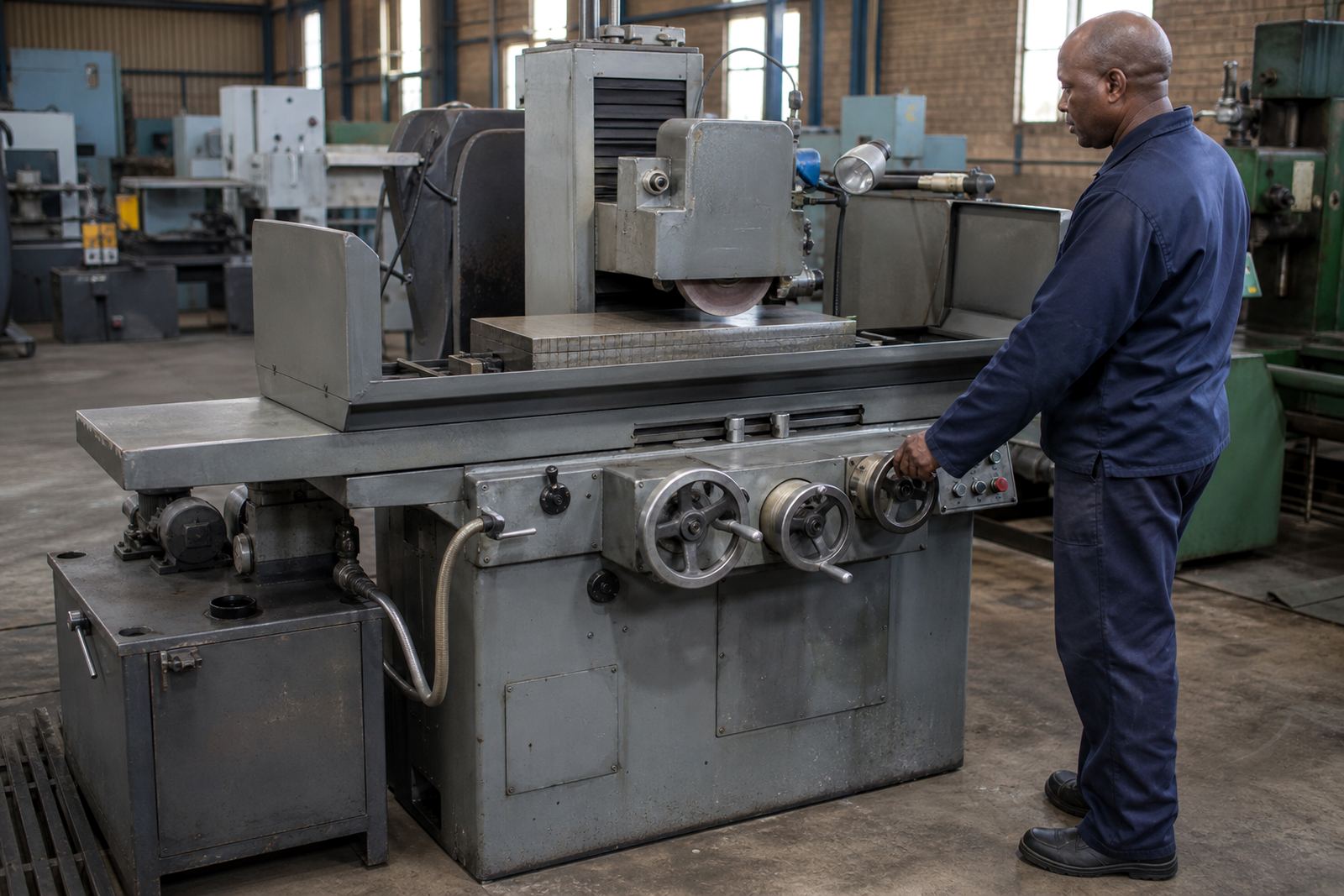
A surface grinder is used to remove small amounts of material and leave a flat, even finish on steel, cast iron and other rigid materials. In many workshops it is used after machining, heat treatment or fabrication when a component still needs accurate finishing. On used machinery, the main value points are the table size, magnetic chuck condition, spindle smoothness and whether the machine still holds tolerance across the full stroke.
These machines are common in toolrooms, repair shops, maintenance departments and contract machining bays where flatness matters. They are also found in plants that work with mould plates, gauge plates, tooling parts and machine components. A well kept grinder can still be useful for years, but wear on the ways, feed screws and electrical system must be checked carefully before any sale or purchase.
Typical Sizes, Table Travel And Machine Styles
Used surface grinders come in several practical sizes, from smaller manual machines to larger hydraulic units with longer table travel and heavier wheels. Table sizes are usually matched to the workpiece size and the space available in the workshop. Buyers in Germiston or Midrand often look for compact units that fit into tighter floorspace, while heavier plants in Durban or Cape Town may need longer tables for bigger plates and dies.
The main options usually include manual or power feed, horizontal spindle or less commonly specialised arrangements, and magnetic or plain workholding. Some machines have automatic cross feed, coolant pumps and fine down feed controls. Others are basic, older units that still do good work if the guides and spindle are sound. When valuing or auctioning a used grinder, the condition of these features often matters more than age alone.
- Compact manual grinders for smaller parts and toolroom work
- Medium table machines for general maintenance and production support
- Long table units for larger plates, dies and fixture work
- Hydraulic feed models for repeatable passes and better output
- Machines with coolant systems for temperature control and finish quality
Where Surface Grinders Fit In South African Industry
Surface grinders suit workshops that need accurate flat finishing rather than heavy stock removal. They are commonly used in engineering firms, manufacturing plants, maintenance yards and rebuild shops across Johannesburg, Pretoria, Durban, Cape Town and Gqeberha. In Gauteng, many buyers want reliable machines that can run through load shedding plans with a generator or inverter backup for controls and lighting, while coastal users often pay close attention to rust, moisture marks and cabinet corrosion.
For auction and valuation work, the machine’s location and site conditions matter. A grinder stored in a dry indoor bay with proper covers will usually present better than one left near open doors, wash-down areas or coastal air. On some sites the biggest issue is not visible damage but long term neglect, such as blocked coolant lines, dirty magnetic chucks or feed mechanisms that have sat idle too long. These details help shape an opinion of value, but they do not guarantee what a buyer will pay on auction day.
- Toolrooms and pattern shops
- Maintenance departments and repair centres
- Die, mould and fixture preparation areas
- General engineering and contract machining workshops
Installation, Power Supply And Site Requirements
Most surface grinders need a level concrete base, good access for moving equipment in, and a clean area free of grinding dust where possible. Larger machines may need a forklift, pallet jack or crane for offloading, especially where the machine must be placed through a narrow doorway or up a ramp. Before setting up, the floor should be checked for cracks, uneven patches and oil contamination that can affect stability. If the machine is going into a working plant, allow enough clearance for the table to travel fully without obstruction.
Power requirements vary by model, but many used industrial grinders run on three-phase supply. The buyer should confirm the motor rating, control voltage and any cooling pump needs before collecting the machine. Some units also need a separate coolant tank and proper earthing. In coastal towns, cabinet seals and electrical panels should be checked for moisture ingress, as humid air can cause contact faults over time. Gas is normally not required for a surface grinder, but compressed air may be used on some setups for cleaning or ancillary systems.
- Check the voltage, phase and motor plate details before installation
- Confirm table size and overall dimensions for door and gate access
- Allow for lifting gear and transport clearance on site
- Make sure the floor is level and strong enough for the machine weight
Care, Servicing And Common Wear Points
A used grinder should be inspected for wheel spindle noise, table movement, backlash in the handwheels and condition of the magnetic chuck. Bearing wear can show up as heat, vibration or poor surface finish. Ways and slides should move smoothly without tight spots, and the feed should operate in a steady manner. If a machine has sat for a while, dried oil, dust and surface rust can make it look worse than it is, but that still needs proper checking before any valuation or sale.
Good care starts with clean tracks, correct lubrication and regular wheel dressing. The coolant system should be flushed and the pump tested if present. Electrical panels need to be dry and free of grinding dust. Blunt wheels, damaged guards and poor chuck holding are all warning signs. A buyer should also ask whether the machine comes with its wheel flanges, dressing tools and manuals, since missing items can mean extra cost after collection. Small details like this are easy to overlook, yet they affect how ready the machine is for use.
What To Check Before You Place A Valuation Or Bid
When Machine Africa inspects a used surface grinder for valuation or auction, the focus is on condition, completeness and how the machine presents on site. An opinion of value is based on what is visible and testable at the time of inspection, not on any promise of sale price. Buyers should ask for clear photos, serial number details where available, and confirmation of whether the machine was recently in use. Sellers should be honest about faults, because missing information can delay a sale or lead to disputes later on.
If you are ordering a grinder through an auction process, use the viewing day to check the travel, listen to the spindle, inspect the chuck face and ask about any parts that are not included. Clearance and collection arrangements should also be confirmed early, especially if the machine is in a plant with strict access rules or loading times. For sellers, proper lotting and catalogue notes help buyers understand exactly what is being offered and keeps the process moving efficiently.
- Table travel, cross feed and down feed operation
- Spindle noise, vibration and smooth start-up
- Magnetic chuck grip and surface condition
- Coolant system, guards and electrical panel condition
- Included accessories such as wheels, dressers and chucks
- Transport access, lifting points and collection timing
Auction Support For Surface Grinder Sellers And Buyers
Machine Africa supports surface grinder transactions from our Kempton Park base, working with sellers and buyers across South Africa. The team handles on-site valuations, auction planning, lotting and cataloguing, asset inspections, reserve guidance, viewing days, seller representation, collection coordination, clearance sales, closure support, plant appraisals and photo listing prep. That makes it easier to move a single grinder or several workshop assets through one controlled process.
Our experience across Johannesburg, Pretoria, Durban, Cape Town, Gqeberha, Germiston and Midrand helps us judge what is practical for each site and each machine. For a surface grinder, the goal is simple: document the condition properly, present the equipment clearly and keep the process transparent for both sides. If you need a used grinder assessed or listed for auction, send the details through the enquiry form on our contact page and we will follow up from there.
Key facts
| Machine type | Used surface grinder, inspected for valuation and auction purposes |
|---|---|
| Common table sizes | Approx. 300 mm to 1,000 mm table travel, depending on model |
| Workholding | Magnetic chuck or plain table setup, model dependent |
| Power supply | Usually three-phase industrial supply, confirm motor plate details |
| Typical options | Manual feed, hydraulic feed, coolant system, fine down feed |
| Best use | Flat finishing, toolroom work, plate grinding and precision maintenance |