What a radial drill is used for in a workshop
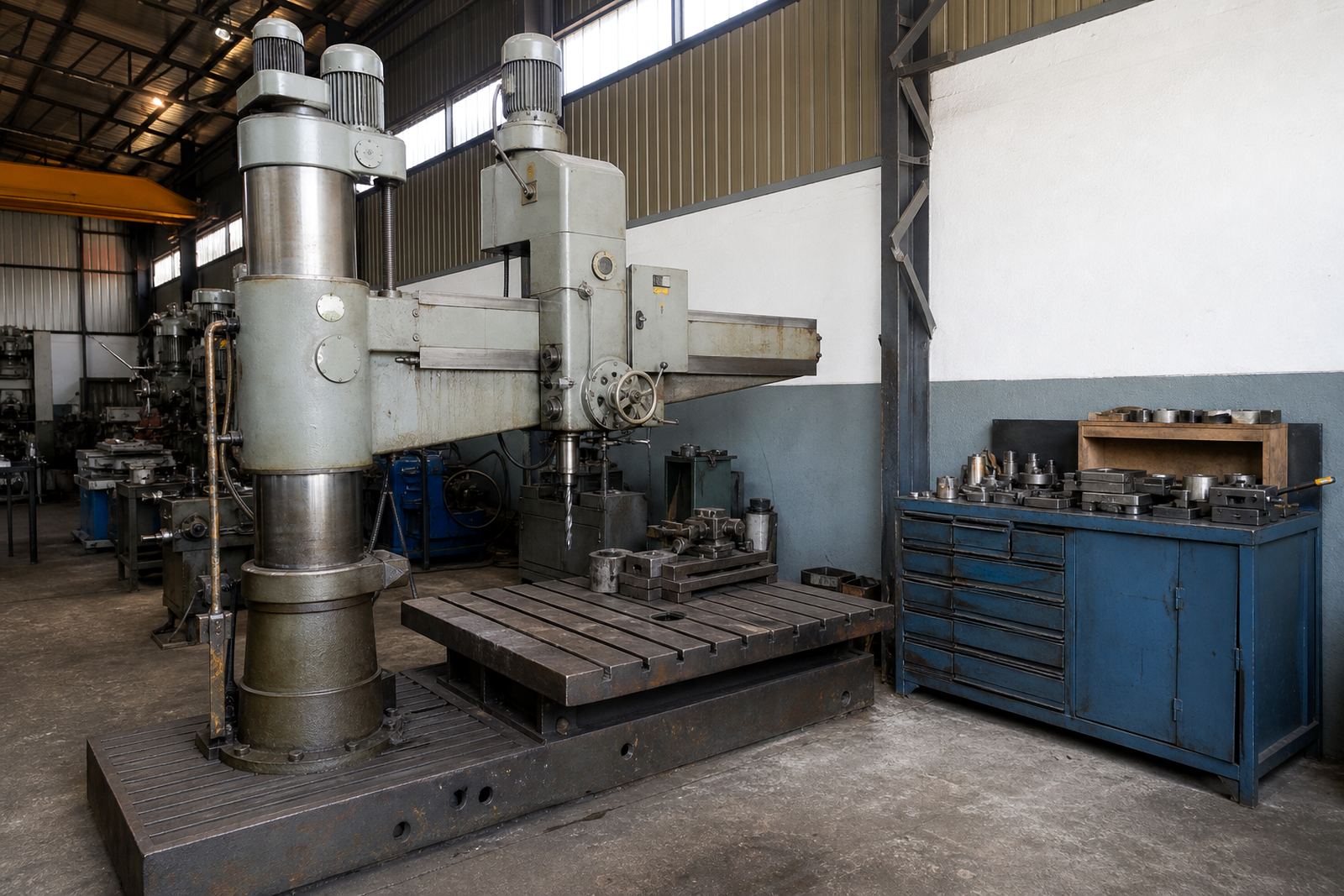
A radial drill is a drilling machine with a movable arm that swings over a fixed base, allowing the spindle to reach different points on a large workpiece without moving the job every time. That makes it useful for plate work, frames, structural steel, heavy fabrication and maintenance shops where large items are awkward to reposition.
These machines are common in plant rooms, steel fabrication yards and repair workshops across Gauteng, Durban and Cape Town. They are valued for hole making, tapping, light boring and repeat drilling on components that are too bulky for smaller bench or pillar machines. In auction terms, buyers often look at the full assembly, not just the spindle, because table travel, arm condition and clamping all affect real-world use.
Typical sizes, reach and drilling capacity
Radial drills come in a range of sizes from compact workshop units to heavy floor-mounted machines with long arm travel. A smaller unit may suit general maintenance work, while larger machines are better for structural steel, trailer parts, pressure plate work and production runs. The key measurements are arm length, column diameter, spindle taper and maximum drilling capacity in mild steel.
- Arm reach can range from about 800 mm on smaller units to more than 2 000 mm on larger machines.
- Spindle speeds may be single range or stepped through several gear settings, depending on age and build.
- Common chuck or taper sizes include MT3, MT4 and larger tapers on heavy models.
- Drilling capacity is often quoted in mm for mild steel, with different results in stainless, cast iron or hardened material.
When assessing an older machine, buyers should also check whether the arm lifts and traverses smoothly, whether the head locks properly and whether the gearbox engages cleanly. A machine can look complete yet still need bearing work or electrical attention, so physical condition matters a great deal.
Where radial drills suit best in South Africa
Radial drills are suited to fabrication shops, fleet maintenance depots, engineering plants, agricultural repair sites and municipal workshops. In places like Germiston, Midrand and Pretoria, they are often used for repetitive hole patterns in steel plates and structural assemblies. In coastal areas such as Durban and Gqeberha, rust protection and regular cleaning matter more because humidity can affect exposed surfaces and electrics.
They are particularly practical where the workpieces are large or irregular shaped. Instead of lifting a beam or frame onto a smaller drill, the operator can swing the arm into position. That saves time and reduces handling risk. For auction buyers, this sort of machine is often considered when a yard needs dependable drilling capacity but not necessarily a full machining centre.
- Useful for fabrication yards handling plates, beams and brackets.
- Suitable for maintenance teams working on pumps, trailers and plant frames.
- Handy where load-shedding has pushed businesses to keep essential manual machines in service.
Power supply, floor space and setup needs
Most radial drills are electrically driven and require a suitable three phase supply, though exact requirements depend on the motor fitted. Before buying, confirm the voltage, motor rating and starter arrangement, especially if the machine will be moved from one site to another. Some older machines may have been wired for a specific workshop setup, so a qualified electrician should check the supply before commissioning.
These machines need a level floor, enough headroom for arm movement and clear access around the base. They also need proper anchoring where recommended, because vibration can affect alignment and drilling accuracy. In humid coastal towns or uncovered yards, it is wise to keep the machine under cover and away from standing water. If the machine is to be installed in a busy plant, plan for safe cable routing, emergency stop access and enough working room for longer steel sections.
- Check if the motor is 380V three phase or another supply arrangement.
- Allow space for arm swing, column rotation and loading from cranes or forklifts.
- Keep the base level to avoid uneven wear on the column and feed system.
Condition checks before bidding or ordering
When ordering a used radial drill, inspect the spindle, bearings, feed handles, head lock, column movement and gearbox sound. Look for excessive play in the arm, damaged gears, oil leaks and any signs of hard impact. The table or base should be free from serious cracks or warped mounting points. A machine with clean metalwork and functioning controls is usually easier to return to service, but surface wear alone does not tell the full story.
Also ask whether the machine has been tested under power and whether all movements were observed during inspection. Photos should show the motor, control panel, electrical box, spindle nose and nameplate if available. On auction lots, good catalogue notes and clear pictures help buyers judge condition properly. It is better to know upfront if a machine has missing guards, worn electrics or a noisy gearbox than to discover it on collection day.
- Ask for spindle runout checks where possible.
- Confirm whether the feed works on all settings.
- Look for missing handles, damaged guards or non original wiring.
Care, servicing and auction presentation
Regular care helps a radial drill hold value and remain safe in use. Keep the column clean, grease the moving parts on schedule and drain any old oil if the gearbox has been standing for long periods. Dust, swarf and cutting fluid should be removed after use. In many workshops, a machine that has been covered and serviced properly will present far better at inspection or auction than one left exposed to rain and grinding dust.
For seller preparation, the machine should be cleaned, loose items removed and all attachments grouped clearly. If there are extra chucks, vises, tooling or manuals, list them with the lot. Good presentation does not change the machine itself, but it helps buyers assess it properly and can improve interest. At the same time, condition must be described honestly. A solid machine with worn paint is still a different prospect from one with worn bearings, so accurate description matters.
- Clean and oil exposed surfaces before viewing days.
- Label any spare tooling, clamps or accessories clearly.
- Make sure the machine can be started safely for inspection if power is available.
How Machine Africa handles valuations and auction listing
Used radial drills are valued by looking at make, age, condition, size, utility and market demand, then setting an opinion of value for auction or private sale planning. A valuation is not a guarantee of sale price. It is a professional view based on visible condition, working status and how similar machinery is likely to be received by buyers at the time. For sellers in Johannesburg, Pretoria, Durban, Cape Town and Gqeberha, the process usually starts with an inspection or a detailed photo review, then moves into lotting, catalogue notes and sale preparation.
Our base in Kempton Park supports sellers and buyers across South Africa with on-site valuations, auction planning, reserve guidance, viewing days and closure support. The team under Siyabonga Mthembu includes valuation, logistics and catalogue support, so machines can be assessed, described and presented in a practical way. Whether the drill is going through a clearance sale or a planned auction, the aim is clear information and straightforward handling from first enquiry to collection. No guesswork, no overstatement, just a proper look at what the machine is and what it can do.
Key facts
| Machine type | Radial drilling machine, used industrial equipment |
|---|---|
| Typical power | Commonly electric, often three phase |
| Reach range | Approx. 800 mm to over 2 000 mm depending on model |
| Drilling capacity | Varies by model, material and spindle setup |
| Common uses | Plate work, structural steel, maintenance and fabrication |
| Typical locations | Workshops, plants, yards and municipal maintenance sites |