What A Hydraulic Press Is Used For
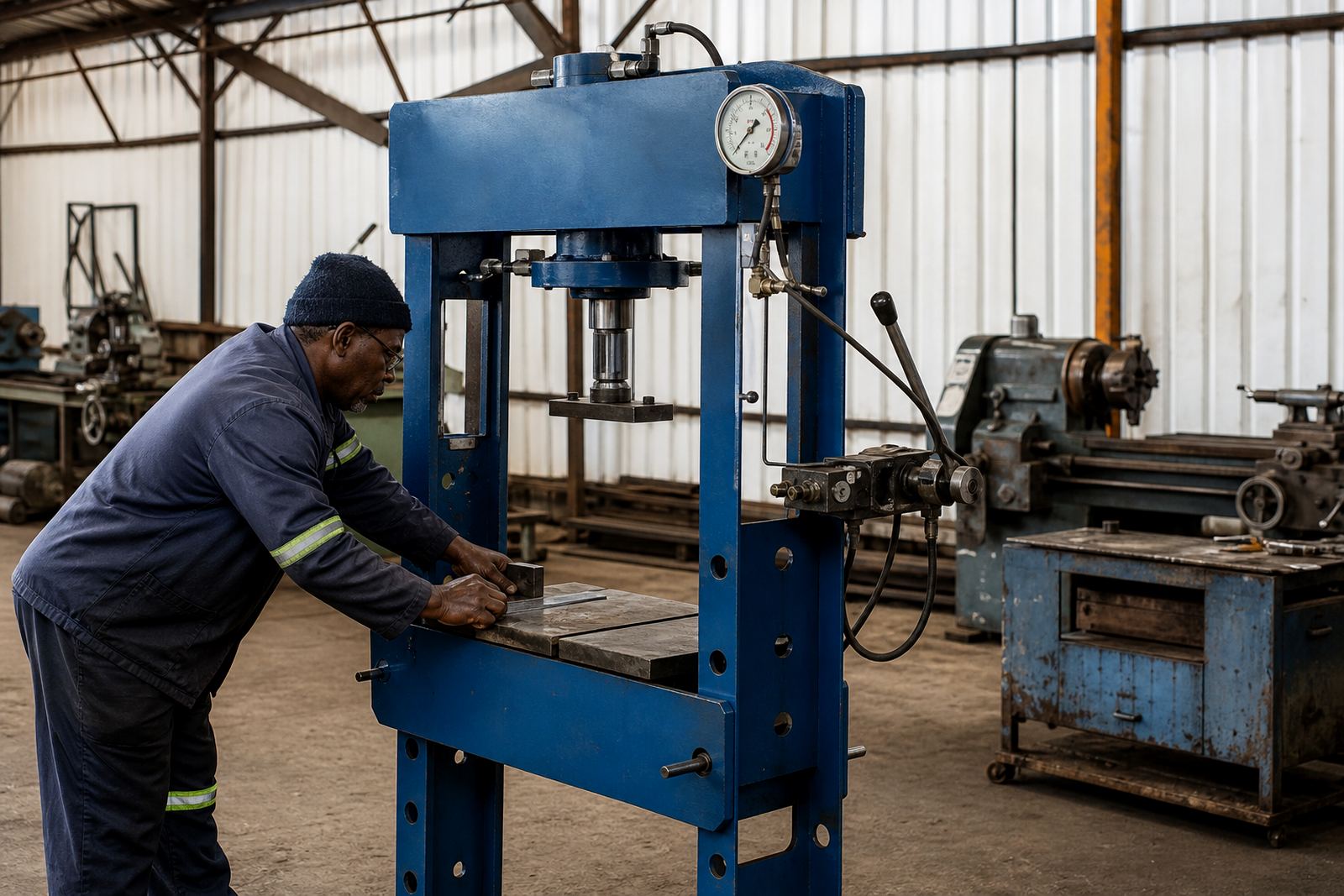
A hydraulic press is a machine that uses fluid pressure to apply controlled force for bending, straightening, forming, punching, pressing bearings, or compacting materials. In workshops and factories, these presses are chosen for steady force rather than speed, which makes them useful where repeatable pressure matters and where manual methods would be inconsistent.
Used hydraulic presses are found in repair shops, fabrication yards, maintenance stores, automotive rebuild facilities and general engineering plants. When we inspect a press for valuation or auction, we look at the frame, ram, platen, hydraulic system, controls, guards and any signs of repair or missing parts. The make, age and working condition all affect the opinion of value, but that opinion is not a guarantee of sale price.
- Common uses include pressing, shaping, assembly and metal forming.
- Suitable for light repair work through to heavy industrial applications.
- Condition and completeness matter more than appearance alone.
Typical Sizes, Types And Press Capacities
Hydraulic presses come in many sizes, from small bench units for workshops to large floor-standing presses used in production lines. Capacity is usually described in tonnes, with smaller units starting at around 10 tonne and larger plant presses reaching 100 tonne, 200 tonne or more. In practice, the working stroke, daylight opening and table size are just as important as the headline capacity.
For auction listing and valuation purposes, we record whether the machine is a C-frame, H-frame, four-column or custom press. A C-frame gives easier side access, while an H-frame is often preferred for stronger guidance and heavier jobs. Four-column presses are commonly used where even pressure across a larger bed is needed. Some presses have manual pump operation, others use motor driven hydraulic systems and some include timed controls or foot switches.
- Check tonnage, stroke length and daylight opening.
- Measure bed size and platen travel for practical use.
- Note if the machine is manual, semi automatic or fully powered.
Where Hydraulic Presses Suit The Job
Hydraulic presses suit workshops that need controlled force for repeated tasks and solid production sites that handle metal work, maintenance or component rebuilding. They are common in Johannesburg, Pretoria, Midrand and Germiston for engineering and repair work, while coastal sites in Durban, Cape Town and Gqeberha often need extra attention to corrosion from humidity and salt air. A press with surface rust may still be serviceable, but frame integrity, cylinder condition and control response must be checked carefully.
When we assess suitability, we also consider floor loading, available space, access for forklift or crane handling, and whether the machine is still relevant to the buyer’s workflow. A press that looks simple can still need proper lifting points and clear access for loading. That matters during sale preparation, collection coordination and site removal. On some premises, municipal or landlord rules may also affect removal times, loading bay access and traffic control.
- Best for workshops, maintenance stores, fabrication and rebuilding work.
- Useful where controlled pressure is needed more than high speed.
- Site access and lifting plans should be checked before removal.
Power, Installation And Site Requirements
Most hydraulic presses need a level concrete floor, enough headroom and safe space around the machine. Smaller units may run on single phase power, while larger presses usually need three phase supply for the motor and hydraulic pump. Some presses are operated by manual pump and do not need electrical power, but they still need secure mounting and safe working clearance. If the machine uses a separate hydraulic power pack, that unit should be inspected as well.
Installation should allow for proper anchoring where required, safe guarding, emergency stop function and clear operator access. If the press has an older control panel, worn wiring or unstable start-up, that is important to record. In load shedding areas, buyers should also ask how the press behaves after power interruption and whether it restarts safely once supply returns. For auction purposes, we note any missing cables, loose hoses, oil leaks or signs of heat damage.
- Confirm whether power is single phase, three phase or manual.
- Check floor level, lifting access and machine footprint.
- Inspect hoses, seals, electrics and emergency stop functions.
Care, Servicing And Working Condition
A used hydraulic press should be serviced regularly to keep pressure consistent and prevent downtime. Hydraulic oil condition, seal wear, cylinder drift and pump noise are all practical checks. Worn bearings, bent platens, damaged guides or uneven ram movement can affect output and safety. If the machine has been standing unused, the oil may need testing and the moving parts may need cleaning before a proper inspection is done.
For sellers, simple preparation helps. Clean the frame, remove loose tooling and identify any spare dies, manuals or service records. Buyers should ask whether the machine has been used under load recently, whether repairs were carried out by a qualified technician and whether any parts are missing. A tidy machine is easier to present, but the inspection still needs to rely on condition, function and completeness, not appearance alone. That is especially true when the press is being catalogued for auction or a reserve guidance discussion.
What To Check Before Ordering Or Bidding
Before a buyer commits to a hydraulic press, it helps to verify the working size and the practical details that affect installation and use. This is where a clear catalogue description matters. For sellers, it also helps to know what information should be captured during on-site valuation so the machine is described accurately and fairly.
Typical points to confirm include the following:
- Rated capacity in tonnes and actual working stroke.
- Bed size, daylight opening and ram travel.
- Power supply, motor size and control type.
- Condition of hoses, seals, cylinder and hydraulic oil.
- Presence of guards, dies, tools and safety switches.
- Loading requirements, access route and removal timing.
When the machine is being prepared for auction, we also note whether it is sold as seen, whether it was tested, and whether any known faults were observed during inspection. That helps buyers make a fair judgement and helps sellers present the asset clearly. If a press is part of a larger line, we record any dependency on other equipment so the lot can be described properly.
Valuation And Auction Support Across South Africa
Machine Africa provides on-site valuations, auction planning, lotting and cataloguing for used hydraulic presses across South Africa, with a base in Kempton Park and support in Johannesburg, Pretoria, Durban, Cape Town, Gqeberha, Germiston and Midrand. Our team works through the enquiry form on the contact page and then arranges the next steps based on the machine, the site and the seller’s requirements.
For each press, we look at inspection findings, age, condition, brand-free technical description where needed, and the local market demand at the time of sale. We also support viewing days, seller representation, collection coordination and closure support. The aim is straightforward: provide a fair opinion of value, describe the machine clearly and help both parties move through the process with less confusion and fewer delays.