What an extrusion line includes
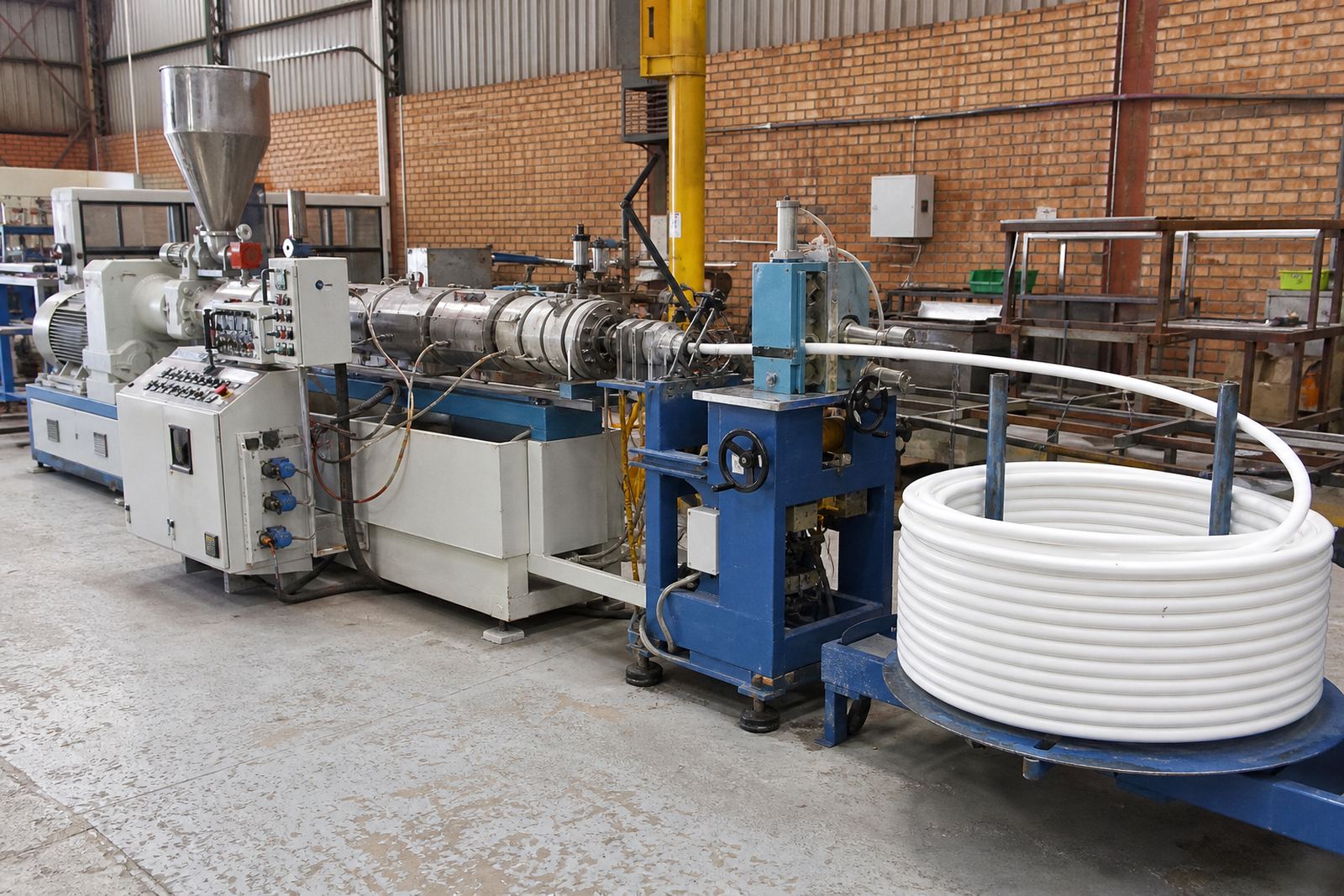
An extrusion line is usually sold as a working set of machines rather than as one item. Depending on the process, it may include a feeder, hopper, screw or twin screw extruder, barrel heating zones, temperature controls, die head, calibration or cooling section, puller, cutter, winder or take-up unit, and downstream handling such as conveyors or stacking tables. Some lines are for plastics, while others are set up for rubber, cable sheathing, food products or compound processing.
When valuing a used line, the main point is not only whether the extruder turns on. The question is whether the whole line matches the product it was built for, whether the controls still work properly, and whether the downstream equipment is complete enough for a buyer to put it into service without major rework.
For sellers in Johannesburg, Pretoria, Durban, Cape Town or Gqeberha, a clean equipment list matters. A line with missing panels, no control drawings, or a worn screw and barrel will be viewed differently from a full setup with guarding, motors and spares on hand.
Typical sizes, layouts and options
Extrusion lines come in many sizes. Small pilot lines may sit on a light steel frame and use lower motor ratings, while production lines can stretch across a long floor bay with cooling troughs, haul-off units and winding stations. Single screw lines are common for general processing, while twin screw units are often used where mixing, compounding or more precise control is needed.
Options also change the value. A line may have vacuum venting, gravimetric or volumetric feeding, inline printing or coding, automatic reel changes, screen changers, laser measurement, or water cooling with closed-loop tanks. The more integrated the line, the more important it is that every section is matched and serviceable.
- Common widths and capacities are usually set by the product, not just the machine frame.
- Many buyers ask for the screw diameter, motor size, control type and working hours.
- Downstream equipment often adds more value than sellers expect, especially if it is complete and aligned.
For valuation purposes, we treat the whole line as a system. A good extruder with poor downstream handling may still need a price adjustment if the line cannot run at its intended speed or output.
Where extrusion lines suit and how they are used
Used extrusion lines suit factories that want steady continuous output and repeatable product quality. They are common in packaging, building products, wire and cable, film, pipe, sheet, profile and compound work. In Gauteng, many buyers want equipment for industrial parks with three phase power and warehouse space. In coastal areas like Durban and Cape Town, buyers also need to think about humidity, corrosion and storage conditions.
An extrusion line can be a good fit where production needs are regular and changeovers are not constant. It is less suitable for short, one-off runs unless the line was built for quick product changes and has the right tooling. If a buyer is planning to move the line between sites, they should also consider floor loading, access for rigging and whether the building can handle the footprint.
- Check if the product range matches the line speed and die set.
- Allow for material storage, drying and finished goods handling.
- Make sure there is room for maintenance access on both sides of the line.
Installation, utilities and site requirements
Before buying or moving an extrusion line, the site should be checked for power supply, compressed air, water and drainage. Many lines need stable three phase power, correct breaker sizing and enough capacity for heaters, motors and auxiliaries. Some installations also need chilled water, process water or air lines, plus space for cable routing and control panels.
In South Africa, load-shedding and voltage dips can affect production, so buyers often want to know whether the line has memory backup, safe shutdown functions or a way to restart without losing settings. If the line uses gas heating or a thermal oil system, those utilities must be checked against the site conditions and local safety requirements. Floor level, access doors and rigging points matter too, especially where the line must pass through a narrow factory entrance or be installed on a mezzanine.
For valuation work, we look at the machine as it stands and the cost of making it usable again. That includes dismantling, transport, reassembly, alignment, commissioning and any missing auxiliaries. A line that looks complete on site may still need major work once it is moved.
Care, servicing and condition checks
Regular care helps preserve value. Screws, barrels, heaters, thermocouples, drives and gearboxes should be inspected for wear. Guards, emergency stops, control buttons and cabling should be intact. Feeders and hoppers should be clean and dry, and downstream rollers, cutters and bearings should not show excess play or noise. On older machinery, rust, oil leaks and damaged wiring can reduce both operating confidence and resale appeal.
Good service records help buyers judge the machine properly. If a line has had screw refurbishment, gearbox work, new heaters or control upgrades, that should be noted in the file. Even simple things like alignment checks, lubrication records and last service dates can help during a viewing day or auction inspection.
- Ask whether the line has been run under load, not only powered up.
- Check for missing dies, tooling, covers and control components.
- Review any damage from moisture, dust or long storage periods.
In humid coastal locations and in dusty inland yards, stored machinery can age faster than expected if it is left uncovered or unpowered for long periods.
What to check before ordering or auctioning
When ordering a used extrusion line, confirm the product type, output range, screw size, motor rating, heating zones and all included auxiliaries. Ask whether the line is complete as a matched set or made up of mixed equipment from different installations. Buyers should also check the serial details where available, the condition of the control system, and whether the change parts, manuals and spare tooling are included.
For auction preparation, a clear catalogue description is essential. It should state what is being sold, what is not included, and whether the machine has been tested. Valuations are opinions of value based on inspection and market evidence, not guarantees of a sale price. Reserve guidance, where used, should be realistic and based on current demand, location and condition.
- Confirm power requirements before transport is booked.
- Check if the line needs rigging, fork lift support or crane lifting.
- Make sure site access allows safe removal without damaging floors or door frames.
Machine Africa supports sellers and buyers with on-site valuations, auction planning, lotting, cataloguing, inspections, viewing days, collection coordination and closure support from our Kempton Park base.
Key facts
| Typical machine type | Single screw or twin screw extrusion line with feeder and downstream handling |
|---|---|
| Common screw sizes | About 30 mm to 150 mm, depending on product and output |
| Power needs | Usually three phase power, with motor and heater loads set by line size |
| Utilities | Compressed air, water or chilled water, and sometimes gas or thermal oil |
| Layout length | Compact pilot lines to long production lines exceeding 20 metres |
| Main valuation factors | Condition, completeness, control system, wear, installability and market demand |