What a Panel Saw Does in a Busy Workshop
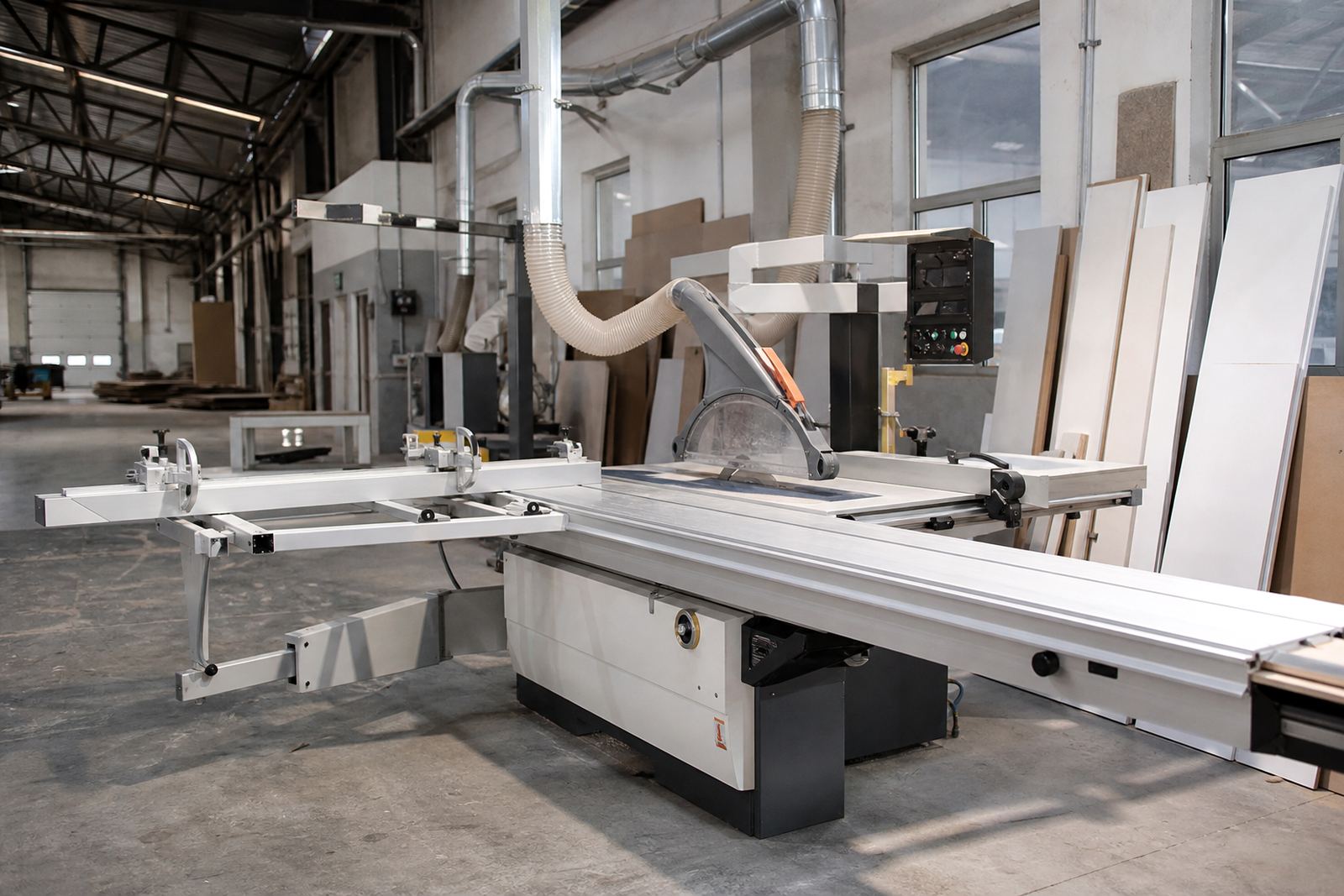
A panel saw is used to break down sheet material such as board, ply, MDF and laminated panels into straight, repeatable cuts. In many shops it is the machine that sets the pace for the rest of the day, especially where kitchens, built-in cupboards, shopfitting or furniture parts need accurate sizing before edging, drilling or assembly.
Used panel saws come in different forms. Some are simple sliding table machines for manual cutting, while others include scoring units, riving knives, digital readouts or powered rise and fall adjustments. When we assess a machine for valuation or auction, we look at what it can still do in practice not only what is written on the plate.
- Manual or powered sliding table layouts
- Single blade or blade plus scorer setups
- Fixed table, tilting blade or tilting carriage options
- Workshop machines and heavier production units
Typical Sizes, Capacities and Layout Options
Panel saw sizes vary a great deal, from compact workshop units to longer sliding table machines used in production. The right size depends on the sheet sizes you cut, the floor space available and the volume of work. A shorter machine can suit a small joinery shop, while larger plants often need a longer carriage to support full sheets safely.
Common specifications include a blade diameter of around 300 mm to 350 mm, cutting depths that suit board and ply, and sliding table lengths that may range from about 1.6 metres to 3.2 metres or more. Many machines also have fence systems for repeat cuts, scoring blades for clean bottom edges on laminated board and extraction ports to manage dust.
- Sliding table lengths from compact to full production sizes
- Cutting capacity for full sheets and smaller offcuts
- Fence stops for repetitive ripping and cross cutting
- Scoring blade on many cabinet and board cutting units
Where Panel Saws Suit Best in South African Operations
Panel saws suit cabinet makers, furniture shops, shopfitters, interior joinery businesses and commercial woodworking plants. They are also found in schools, training workshops and maintenance yards where board needs to be cut on site. In Gauteng, KwaZulu-Natal and the Western Cape, many buyers look for machines that can handle mixed workloads and cope with dust, power interruptions and tight space.
When we inspect a saw for auction, we note the type of work it has been doing. A machine used for light weekend production may show less wear than one used every day in a busy plant, but age alone is not enough. Alignment, bearings, fence condition, table movement and blade carriage smoothness all matter. In valuation work, the opinion of value is based on condition, market demand and known use, it is not a guarantee of sale price.
- Cabinet shops and kitchen manufacturing
- Furniture and joinery production
- Shopfitting and display work
- Training rooms and technical colleges
Installation Needs, Power Supply and Workshop Setup
Before a panel saw is moved into service, the site must be ready for size, weight and electrical load. Many machines need a three phase supply, proper isolator protection and enough room for sheet infeed and outfeed. In some premises the biggest issue is not the machine itself but the route through doorways, loading bays and low beams. For coastal areas, corrosion protection and dry storage are important too, especially where humidity affects steel parts and bearings.
Because load-shedding can interrupt a cutting run, buyers often ask about restart behaviour and motor condition. A machine with a healthy electrical panel, clean cabling and sound motors is easier to keep in use. Dust extraction should also be planned from the start, because fine board dust builds up fast and affects visibility, moving parts and air quality.
- Check three phase or single phase requirements before collection
- Allow space for full sheet handling and safe operator movement
- Provide dust extraction and clear access around the machine
- Inspect cables, isolators, motors and emergency stops on arrival
What We Check During Valuation and Auction Preparation
For sellers, a good auction outcome starts with a proper inspection and accurate lotting. We check the frame, carriage, fence, guards, blade area, motor operation and general wear. If there is a scoring unit, we look at whether it is present, complete and working. We also note missing parts, cracked guards, damaged tops, rust, loose controls and anything that could affect the buyer’s view of the machine.
Photo listing prep is important because buyers need clear information before viewing days. Straight, well lit photographs help show the saw bed, control panel, carriage length and serial markings. When a machine has been standing for some time, we will also look for storage damage, belt wear and any signs of seized movement. The aim is to present the asset clearly so buyers can make informed bids.
- Frame and carriage condition
- Fence accuracy and movement
- Blade area, guards and scorer where fitted
- Electrical panel, motors and safety controls
Care, Servicing and Checks Before You Buy
A used panel saw should be treated as a working machine, not a decorative item. Regular cleaning, lubrication and alignment checks help maintain cut quality and reduce strain on moving parts. Dust should be cleared from tracks, bearings and housings, while blades and scoring units should be checked for wear, damage and proper setting.
Before ordering, ask for the exact machine dimensions, power details, included accessories and any known faults. If you plan to move the saw between branches in Johannesburg, Pretoria or Gqeberha, consider dismantling needs and transport access. Buyers should also confirm whether the machine is still connected, whether it has been tested under power and whether all safety items are present.
- Ask for electrical specification and motor details
- Confirm slide length, blade capacity and footprint
- Check whether scoring, stops and guards are included
- Inspect for rust, wear, missing parts and repair history
How Machine Africa Handles Panel Saw Sales
Machine Africa supports sellers and buyers from Kempton Park across Johannesburg, Pretoria, Durban, Cape Town, Gqeberha, Germiston and Midrand. Our team handles on-site valuations, auction planning, lotting and cataloguing, reserve guidance, viewing days, seller representation and collection coordination. We also assist with clearance sales, closure support, plant appraisals and photo listing prep for woodworking equipment.
For panel saws, our approach is practical. We record the model details, note condition honestly, and help present the machine in a way that reflects its real working value. If you are clearing a workshop, upgrading equipment or releasing assets from a closed site, we can guide the process from first inspection through to handover. Clients reach us through the enquiry form on our contact page.
- On-site valuation and asset inspection
- Auction planning and lotting for mixed workshop assets
- Viewing day support for buyers and sellers
- Collection coordination and closure support
Key facts
| Machine type | Used panel saw for woodworking and board cutting |
|---|---|
| Typical blade diameter | Around 300 mm to 350 mm depending on model |
| Common power supply | Usually three phase, subject to machine rating |
| Typical cutting use | Sheet material, ply, MDF, laminated board and timber panels |
| Optional features | Sliding table, scoring unit, fence stops, tilting blade, digital readout |
| Common workshop fit | Cabinet making, joinery, furniture production and shopfitting |