What a Mixer Kettle Does On Site
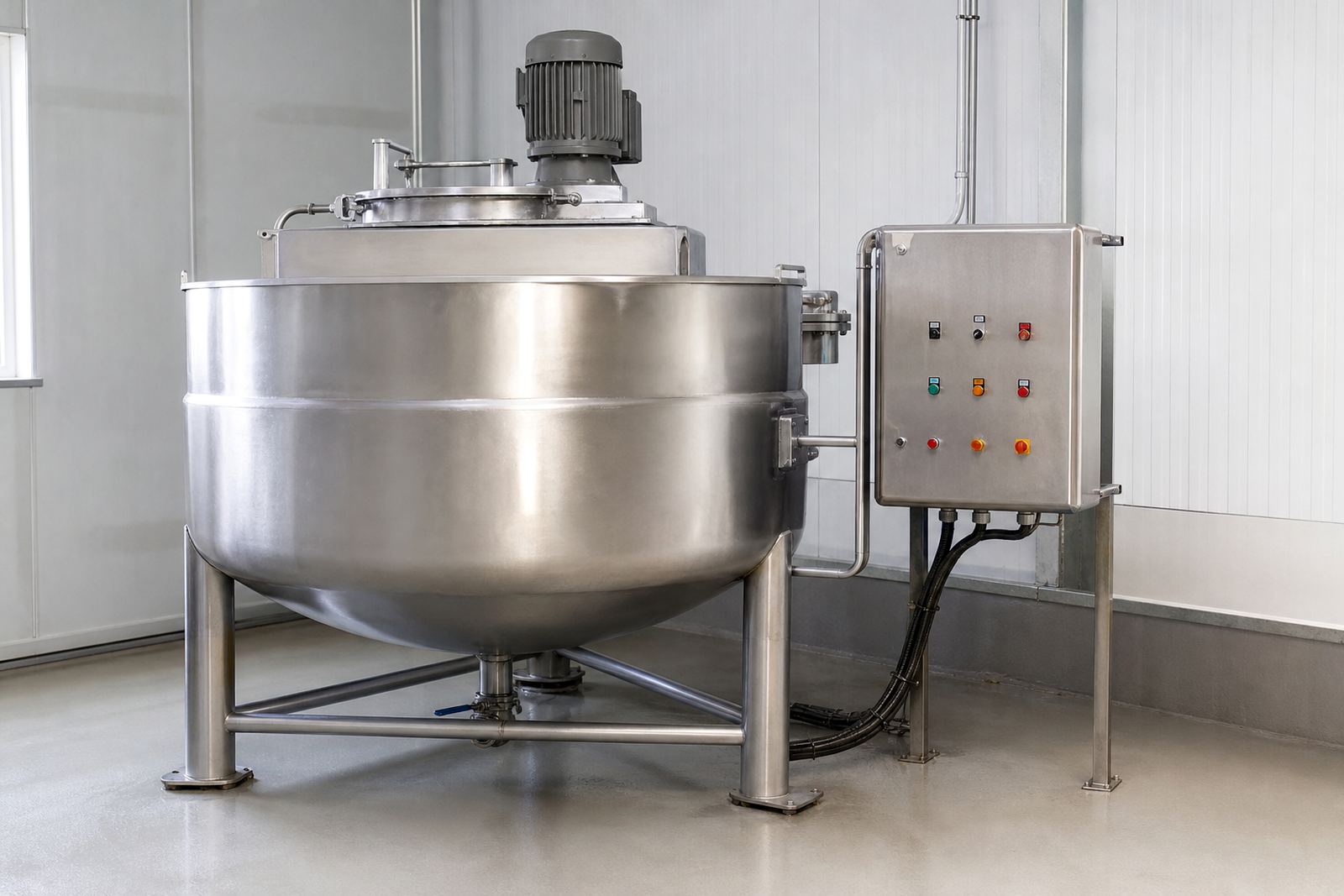
A mixer kettle combines a vessel, heating method and agitator so material can be warmed, blended and held in one place. In used plant, these units are common in sauce rooms, confectionery lines, dairy plants, cosmetic mixing, soap making and other batch processes where temperature control matters. When we assess one for valuation or auction review, we look at the kettle body, the mixing action, the drive system, the heating arrangement and the general condition of the frame and fittings.
Used mixer kettles vary quite a lot. Some are simple open-top stainless steel kettles with a slow-speed mixer, while others are jacketed pressure vessels with lids, scrapers, temperature controls and discharge valves. Capacity may be small enough for pilot batches or large enough for production runs in a factory that still needs flexibility. For valuation purposes, the machine is assessed as a working industrial asset, not a guarantee of sale price. Condition, completeness, age and market demand all matter.
- Batch mixing for viscous products
- Heating and holding during processing
- Blending ingredients before filling or packing
- Handling food, chemical and general industrial recipes
Common Sizes, Drives and Build Options
There is no single standard size for mixer kettles. Small units may carry 50 to 200 litres, while larger floor-mounted kettles can run into several hundred litres or more. The right choice depends on batch size, product thickness and whether the unit must be tipped, pumped or manually discharged. Some vessels are atmospheric, others are jacketed for steam, hot water or oil heating. The mixer itself may use a top entry drive, bottom drive or side drive depending on the design.
Most used units offered for auction review are stainless steel because that material suits food contact and clean-down routines. Mild steel jackets, mild steel frames and insulated cladding are also seen on older plant. For buyers, it helps to check whether the kettle has a fixed lid, scraper blades, variable speed control, and a working tilting mechanism if fitted. A missing agitator shaft or damaged gearbox can affect use and value quite a bit. In some cases the kettle still looks presentable but needs a full mechanical inspecion before it can be put back into service.
- Typical capacities: 50, 100, 200, 500 litres and above
- Agitation types: paddle, anchor, scraper or propeller style
- Materials: stainless steel, mild steel or lined vessel sections
- Mounting: mobile frame, fixed pedestal or skid base
Where Mixer Kettles Suit Best
Mixer kettles are useful where a product must be heated and stirred at the same time. In South African plants they are often found in food production, cosmetics, detergent blending, adhesives, flavour preparation and general processing rooms. They also suit businesses that make smaller production runs and need equipment that can change over between recipes without too much downtime.
For buyers in Gauteng, KwaZulu-Natal, the Western Cape and the Eastern Cape, the real value lies in fit for purpose. A kettle that suits a Johannesburg sauce plant may not suit a Durban coastal operation if the fittings are corroded or the controls are not sealed properly. Coastal humidity can shorten the life of electrics and exposed mild steel parts, while inland plants often deal more with dust and long operating hours. We take these practical conditions into account when reviewing a used unit for auction or private sale.
- Food factories and small batch processors
- Cosmetic and personal care mixing rooms
- Chemical, cleaning and detergent production
- Contract packers and pilot plants
Power, Heating and Installation Checks
Installation needs depend on the kettle design. Some units use electric elements, others use steam jacket heating, gas burners or hot water circulation. The agitator motor may run on 380V three phase supply, which is common in industrial sites around Kempton Park, Germiston and Midrand. Before a buyer plans removal or recommissioning, it is worth confirming the supply voltage, motor size, panel condition and whether the unit has working safety interlocks.
Steam and gas heated kettles need extra care. Buyers should check for pressure vessel markings, intact valves, sound welds and any signs of prior overheating. If the unit has a control box, the wiring should be checked by a competent electrician before start-up, especially where load-shedding has caused repeated stoppages and surges. On older machines, the heater bands, thermostats and temperature probes may need replacement before production use. In some plants the lift or tipping gear also needs retensioning after long storage, which is easy to overlook.
- Confirm power supply and motor rating before removal
- Check heating method: electric, steam, gas or hot water
- Inspect control panels, sensors and safety stops
- Allow for lifting gear, transport height and access routes
Care, Servicing and Working Condition
Used mixer kettles hold value better when they are clean, complete and free from product build-up. Internal residue, burnt deposits and damaged seals can make the unit harder to sell and harder to recommission. Routine care normally includes wash-down after use, checking bearings, lubricating moving parts where required, and keeping the vessel covered when not in use. If the machine sits near coastal air or in a damp store room, surface rust and pitting can start fast.
From a valuation point of view, we look at whether the kettle has been stripped for parts, whether the lid closes properly, whether the agitator runs true and whether the frame is still square. We also check whether sight glasses, temperature dials, valves and discharge fittings are present. Missing small parts can reduce appeal more than many sellers expect, because a buyer often wants a unit that can go back into service with minimal work. This is where a clear auction lot note and honest condition description make a real difference.
- Clean thoroughly after each production run
- Check seals, gaskets and discharge valves regularly
- Store under cover if the unit is not in daily use
- Keep records of repairs, motor changes and service dates
What To Check Before You Order
Before ordering a used mixer kettle, confirm the batch size you need, the product viscosity, the desired heating method and the available floor space. Measure doorways, loading points and ceiling height because many kettles are bulky and awkward to move. Buyers should also ask whether the mixer is left or right hand drive, whether the lid opens fully, and whether the discharge point suits the downstream process.
If the kettle is being bought through auction, the listing should show clear photographs, the serial or asset plate where available, and enough detail to judge completeness. Ask about the condition of the motor, gearbox, heating elements and controls. If there is no live demonstration, factor in testing after collection. For sellers, proper lotting and photo listing prep helps buyers understand what they are bidding on and supports a more accurate assessment. Our team in Kempton Park works with sellers and buyers across Johannesburg, Pretoria, Durban, Cape Town and Gqeberha to keep that process straightforward and fair.
- Batch size and vessel volume
- Heating method and power supply
- Agitator type, speed control and discharge setup
- Access for transport, offloading and installation
Auction Review And Valuation Support
Machine Africa handles used processing kettles and mixers for on-site valuation, auction planning, asset inspections and clearance sales. A valuation is an opinion of value based on the condition, market interest, completeness and removal difficulty of the machine. It is not a guarantee of sale price. For sellers, this helps set sensible reserve guidance and lotting. For buyers, it gives a practical view of what the equipment is likely to require before putting it back into use.
Our team supports closure work too, including collection coordination and site clearance after the sale. That matters on factory sites where access is tight, power is intermittent or the kettle is fixed into a line that needs careful disconnecting. Whether the unit is in Kempton Park, Pretoria, Durban, Cape Town or Gqeberha, the same basic checks apply: condition, completeness, removability and market demand. With mixer kettles, that careful approach usually saves time later on and keeps expectations realistic.
Key facts
| Typical capacity | 50 to 500+ litres, depending on batch size and vessel design |
|---|---|
| Vessel material | Usually stainless steel, with some mild steel framed units |
| Heating options | Electric elements, steam jacket, hot water or gas heated |
| Agitator types | Paddle, anchor, scraper or propeller style mixers |
| Power supply | Commonly 380V three phase for industrial drive systems |
| Common use | Food, cosmetic, chemical, detergent and batch processing plants |