
What A Pallet Wrapper Does In Daily Dispatch Work
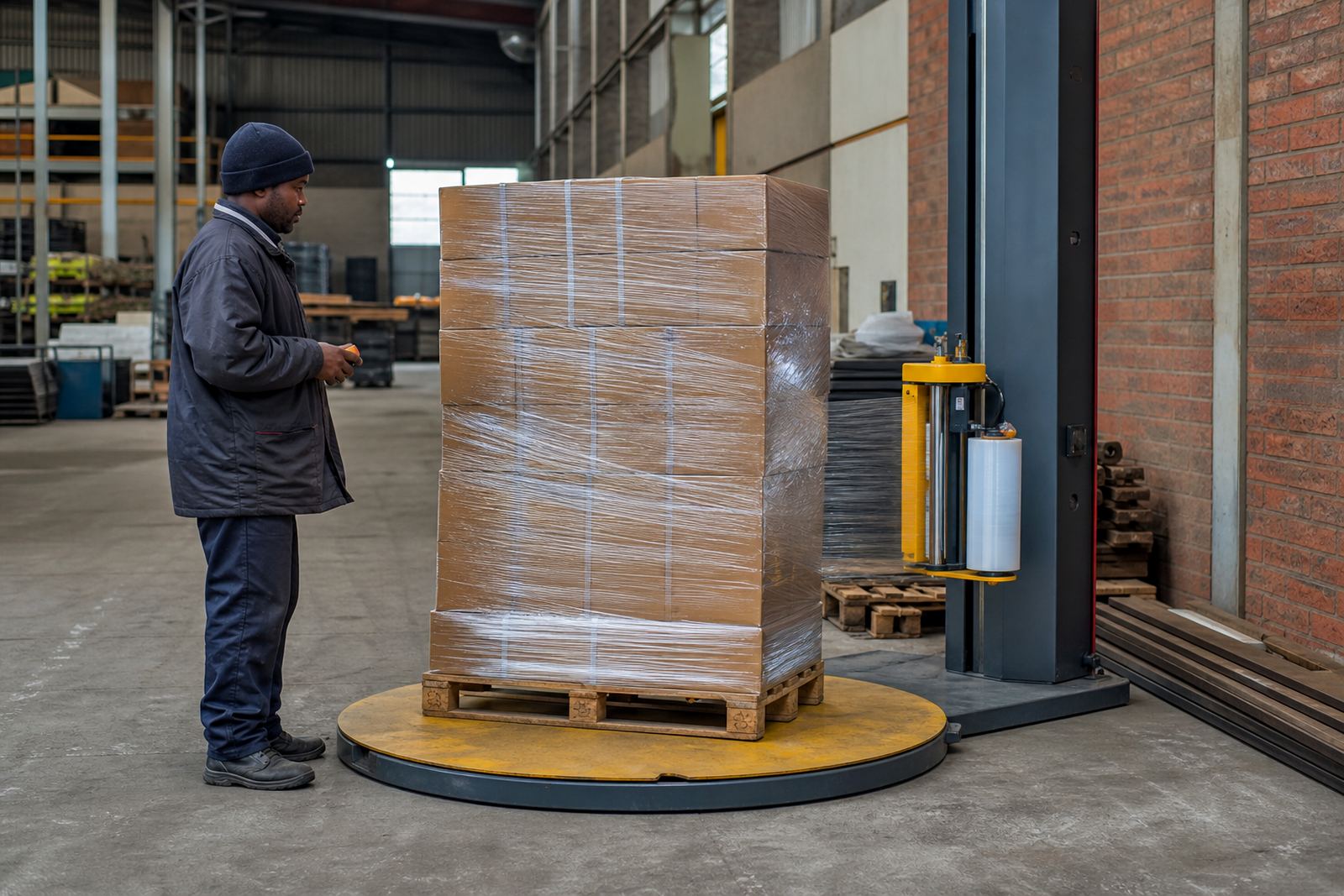
A pallet wrapper, sometimes called a stretch wrapper or stretch system, applies plastic film around loaded pallets to keep cartons, drums, bags or mixed goods stable during movement. In warehouses, factories and distribution yards from Johannesburg and Pretoria to Durban, Cape Town and Gqeberha, these machines save labour and give a more even wrap than hand film, especially where pallets move out in batches every day.
There are several common types. Turntable wrappers spin the load while the film carriage moves up and down. Rotary arm machines keep the pallet still and swing the film around it, which suits unstable or very light loads. Semi automatic units need an operator to place the pallet, attach film and start the cycle, while automatic lines can be linked to conveyors for higher output. For many buyers the key question is not only machine size but whether the unit matches the product, floor space and shift pattern.
Common Sizes, Options And Typical Spec Ranges
Used pallet wrappers vary by deck size, load capacity and cycle controls. A compact semi automatic unit may suit a small packing room in Midrand or Germiston, while a larger turntable or arm wrapper may be more practical for a higher volume site in Durban or Cape Town. When we assess a machine, we look at the working range, table diameter, mast height, film carriage travel and the condition of belts, chains, sensors and guards.
- Turntable diameter: often around 1 500 mm to 1 800 mm, with larger units available
- Load capacity: commonly 1 000 kg to 2 000 kg, depending on frame and drive system
- Wrap height: often 2 000 mm to 2 400 mm, with taller masts for stacked loads
- Power supply: usually 230V single phase or 400V three phase, depending on the unit
- Film carriage: manual, mechanical or powered pre-stretch, with adjustable tension
- Controls: basic timer controls, photoeye load sensing or programmable cycle settings
Some buyers want ramp access, top sheet dispensers or weighing scales. Others need a simple machine that can run through load-shedding conditions with minimal upset. A unit with straightforward controls and readily available wear items is often easier to keep in service, especially where maintenance teams handle several machines on site.
Where Pallet Wrappers Fit Best On Site
Pallet wrappers suit sites where goods are packed on pallets before storage or transport. That includes food distribution, building materials, bottled stock, paper goods, manufacturing, cold rooms and export prep areas. In coastal towns like Durban and Gqeberha, we also see value in machines with cleaner electrical cabinets and corrosion aware maintenance because humidity can affect guards, rollers and sensors over time.
They work best on a level floor with enough space for forklift movement and film loading. A semi automatic turntable needs a safe operator zone around the machine, while a rotary arm wrapper needs clear space for the moving arm and overhead protection where needed. If the site is busy, the route in and out of the wrapper should be planned so forklifts do not reverse across pedestrian paths. That sounds simple but it is where a lot of wear and minor damage starts.
- Warehouses dispatching mixed pallet loads
- Factories wrapping finished goods for storage or transport
- Cold storage and temperature controlled areas
- Bulk suppliers working with frequent outbound pallets
- Sites needing more consistent wrap than hand film can give
Installation, Power And Air Requirements To Check
Before buying a used pallet wrapper, check the site power supply and the physical layout. Most machines need either single phase or three phase electricity, and buyers should confirm the motor rating, control voltage and any air requirements for clamps or hold down systems. If the machine uses compressed air, confirm the pressure needed and whether the site compressor can keep up during longer runs.
Floor anchoring may be required on some models, especially where the machine is fitted with a mast or arm that moves under load. The floor should be level and clean, with enough clearance for the load size and any forklift approach. On sites with frequent power interruptions, operators often want a machine that retains its settings after an outage and starts safely once power returns. We also check whether the installation area has suitable lighting and whether the film loading point is easy to reach without strain.
- Confirm voltage, phase and motor load before purchase
- Check if compressed air is needed for clamping or film cut-off
- Measure floor space, doorway width and pallet approach routes
- Ask whether the unit needs anchoring or a ramp
- Allow for safe access for maintenance and film roll changes
Care, Wear Points And Servicing On Used Units
Used pallet wrappers can last well if they are cleaned, checked and serviced on a regular schedule. The main wear points are usually film carriage rollers, belts, chains, turntable bearings, sensors, limit switches and control buttons. If the machine has a pre stretch system, the rollers and gear train need close attention because poor film stretch leads to wasted wrap and loose loads. That in turn means more stop starts and more strain on the operator.
We look for signs of rough starting, uneven rotation, unusual noise and damaged guards. Rust on the frame, cracked cable insulation and missing covers are worth noting, especially on equipment that has worked in damp or dusty areas. A machine that has been cleaned after use and kept under cover generally gives a better impression than one left exposed to rain and forklift knocks. Routine servicing should include lubrication where needed, sensor cleaning and checks on the emergency stop functions. Small issues caught early are cheaper to fix than a failed wrap cycle in the middle of a dispatch run.
What To Check When Buying Or Ordering For Auction
When we value or list a pallet wrapper for auction, we check the machine type, serial details where available, visible condition, duty cycle, control functions and whether the unit is complete. Buyers should also ask whether the film carriage is manual or powered, what load size the machine handled, and whether any parts have been repaired or replaced. A machine may present well but still need new rollers, switches or a service before it can run properly.
It is also wise to ask about transport and unloading. Some wrappers are easy to move, while others need a forklift and careful rigging because of their weight and shape. Reserve guidance is based on inspection and market interest, but a valuation is still an opinion of value, not a guarantee of sale price. At auction, actual results depend on condition, demand, timing and buyer attendance on the day.
- Ask for the machine type and wrap height
- Check whether it runs on single or three phase power
- Confirm whether any guards, ramps or accessories are included
- Review condition of rollers, sensors, belts and controls
- Plan transport, loading and site access before collection
How Machine Africa Supports Sellers And Buyers
From Kempton Park, Machine Africa supports used industrial machinery sellers and buyers across South Africa, including Johannesburg, Pretoria, Durban, Cape Town, Gqeberha, Germiston and Midrand. Our team handles on-site valuations, auction planning, lotting and cataloguing, asset inspections, reserve guidance, viewing days, seller representation, collection coordination, clearance sales, closure support, plant appraisals and photo listing prep. For pallet wrappers, that means practical inspection notes, clear descriptions and proper handling of the sale process.
Sellers want the machine presented accurately and buyers want enough detail to make an informed decision. That includes the machine’s size, power needs and condition, plus any limitations that affect installation or use. We aim to keep the process straightforward, with proper viewing information and sensible lot descriptions. If a wrapper is part of a larger plant clearance, we can help coordinate the listing and removal plan so the site is not left in a mess.
Key facts
| Machine type | Semi automatic, automatic, turntable or rotary arm stretch wrapper |
|---|---|
| Typical pallet size | About 1 200 mm x 1 000 mm standard, with wider options available |
| Load capacity | Commonly 1 000 kg to 2 000 kg, subject to frame and drive setup |
| Wrap height | Often 2 000 mm to 2 400 mm, with taller masts available |
| Power supply | Usually 230V single phase or 400V three phase |
| Options | Powered pre-stretch, top sheet unit, ramp, photoeye, weighing scale, safety guards |