Used Diesel Generators for Backup and Continuous Power
Diesel generators are used where mains power is unreliable, interrupted, or not available at all. In South Africa that often means load-shedding backup for factories, warehouses, farms, workshops, retail sites, and remote operations, as well as prime power for locations that run off-grid or need a dedicated supply. A generator set normally includes the engine, alternator, control panel, base frame, fuel tank and canopied or open construction depending on the application.
For valuation and auction purposes, the key question is not only whether the unit runs but what it was built to do, how many hours it has worked, and whether the surrounding components are complete. Buyers usually want a clear record of capacity, service history, start-up behaviour, oil condition, smoke, alternator output, and any visible wear. A set that starts easily and carries load properly will usually attract better attention than one with missing parts or uncertain records, even if both are the same nameplate size.
- Standby sets are used for emergency backup and may sit idle for long periods.
- Prime power sets are intended for regular running and can be suited to heavier duty use.
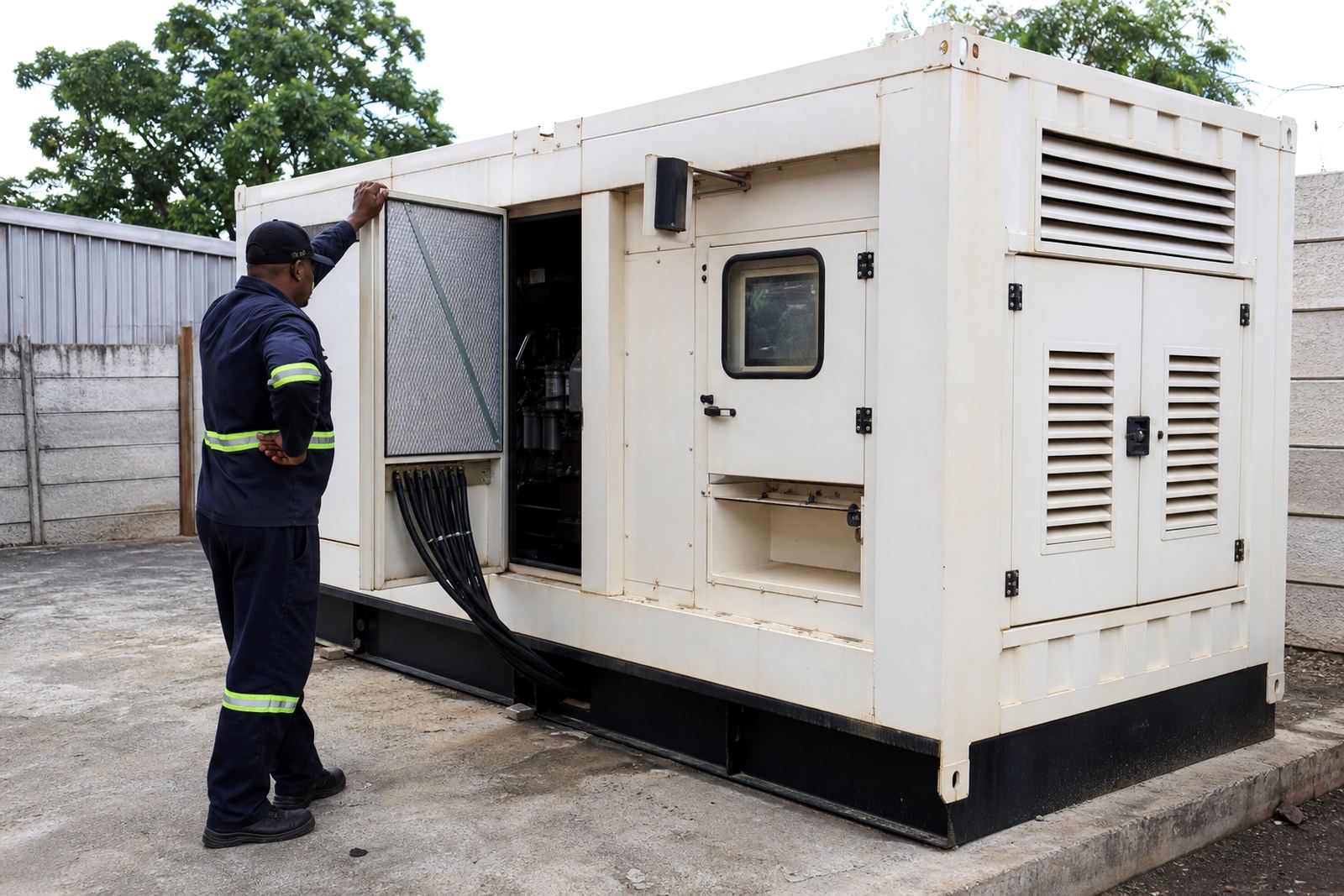
- Open sets suit plant rooms and yards, while canopy units help with weather exposure and noise control.
- Containerised sets are used where security, transport, or site layout matters.
Common Sizes, Fuel Systems, and Control Options
Used diesel generators come in a wide range of capacities, from small site units to large industrial sets measured in kilovolt amperes. In practice, the right size depends on the load you need to carry, starting current for motors, and whether the generator is backing up part of a building or taking a full site load. Smaller sets may suit office backup, pumps, or light machinery, while larger units are used for manufacturing lines, cold rooms, data rooms, and bulk handling plants.
Fuel systems matter as much as output size. Some sets have a base fuel tank, others are linked to a day tank or bulk storage system. Automatic transfer equipment may be fitted for standby use, while manual start panels are common on simpler installations. Control systems can include basic metres or more advanced protection for voltage, frequency, overheating, low oil pressure, and overload. When we inspect for auction, we check whether the control gear is complete and whether the wiring looks tidy and serviceable.
- Typical options include open type, sound-attenuated canopy, and containerised units.
- Common controls include manual start, automatic start, and remote monitoring functions.
- Fuel arrangements may include onboard tanks, external tanks, or pumped supply systems.
- Alternator condition, voltage regulation, and breaker size are important to note.
Where Diesel Generators Suit Local Worksites
Across Gauteng, KwaZulu-Natal, the Western Cape and the Eastern Cape, diesel generators are used wherever power continuity matters. In Kempton Park and Germiston they are often seen in logistics yards, fabrication shops, and industrial warehouses. In Pretoria and Johannesburg, they support offices, light manufacturing and commercial buildings. Durban and Cape Town buyers often look closely at cooling, corrosion protection, and weather exposure because coastal humidity can affect electrical connections, fasteners, and housings over time.
Generators also suit farms, clinics, hospitality sites, workshops, and temporary project work. For auction buyers, the site of use can help determine what matters most. A generator that lived outdoors needs a careful check for rust, cracked hoses, perished insulation, and faded labels. A unit that sat indoors may show lower cosmetic wear but still need testing for seals, battery health, and fuel contamination from long periods of idling.
- Industrial yards often need quick-start standby power for interruptions.
- Construction and temporary sites may need portable or trailer-mounted units.
- Coastal sites should check for salt air corrosion and weathered cable entries.
- Remote operations may need higher fuel autonomy and simpler maintenance access.
Installation, Clearance, and Power Requirements
Before ordering a diesel generator, it is worth checking the physical space, ventilation, access routes, and the electrical connection point. These sets can be heavy and awkward to move, so door widths, yard access, slab strength, and lifting points should be confirmed. A qualified installer normally looks at earthing, protection, cabling, transfer switching, and whether the generator will run as a standby unit or as a prime power source. If the installation is outdoors, weather protection and secure anchoring become important too.
Power requirements should be matched carefully to the site load. Buyers often ask for help understanding nameplate ratings, but the actual duty depends on what is being started and run at the same time. Motors, compressors, welders, and refrigeration systems can all cause start-up spikes. That is why reserve capacity matters. An undersized unit may struggle, trip, or wear faster, while an oversized unit may cost more to run than needed. In valuations, we note the stated rating, configuration, and any load-related comments in the service record.
- Check whether the site needs single phase or three phase supply.
- Confirm the breaker rating, cable size, and transfer arrangement.
- Allow space for servicing, refuelling, and safe exhaust routing.
- Verify noise requirements if the unit will operate near offices or neighbours.
What We Check During Valuations and Auctions
Our valuations are opinions of value based on visible condition, specification, hours, completeness, and market demand at the time of assessment. They are not guarantees of a sale price. For auction work, the aim is to describe the unit accurately so buyers know what is being offered and sellers can make informed decisions about reserve guidance and lotting. We look at the make-up of the set, service records where available, and whether the unit is suitable for continued use, repair, or spares recovery.
Typical checks include cold start behaviour, smoke at idle, oil leaks, coolant condition, alternator condition, battery age, panel functions, and signs of poor storage. If a generator has been standing for months or years, fuel varnish, blocked filters, and seized components can all affect value. A set with a clean history and sensible storage generally gives a better impression than one with missing panels, cut cables, or uncertain hours.
- Serial plates, model markings, and rated output should be readable where possible.
- Hours, service tags, and maintenance notes help support the description.
- Accessories such as tanks, battery chargers, silencers, and controllers should be listed.
- Any faults, missing parts, or non-running conditions should be stated clearly.
Care, Servicing, and What to Check Before You Buy
Generators that have been properly serviced tend to hold interest better at auction and are easier to place with the right buyer. Routine care usually includes oil changes, filter replacement, battery checks, cooling system maintenance, fuel quality control, and regular test runs under load. On standby sets, long idle periods can cause problems if the machine is never exercised. On prime power units, the workload and service intervals matter even more, because continuous running exposes weaknesses faster.
When ordering or bidding, ask for the unit’s rated kVA or kW, fuel type, hours, start mode, and whether the set is open or enclosed. Check if it includes the base tank, day tank, transfer gear, exhaust system, and control panel. If you are buying for a site with load-shedding, it helps to know exactly what equipment must stay online, because that affects the size and specification you need. If the set will be moved between sites, transport height and weight are important as well. Our team in Kempton Park, including Siyabonga Mthembu, Pieter van der Merwe, Naledi Khumalo, Ayesha Ismail, Thabo Molefe, Johan Botha, and Lerato Nkosi, handles valuation and auction support across Johannesburg, Pretoria, Durban, Cape Town, Gqeberha, Midrand and Germiston.
- Ask for the latest service history and note any long storage periods.
- Confirm the generator has the correct fuel system for the site.
- Check that panels, covers, exhaust parts, and cables are complete.
- Match the unit to the real load, not just the nameplate rating.
Key facts
| Power type | Standby or prime power diesel generator sets |
|---|---|
| Output range | Small site units through to large industrial kVA ratings |
| Construction | Open set, canopy enclosure, or containerised build |
| Fuel system | Onboard tank, external tank, or pumped supply arrangement |
| Control options | Manual start, automatic start, and monitoring panels |
| Common uses | Backup power, remote sites, manufacturing, warehousing, and pumps |