CNC milling machines: what they do on site
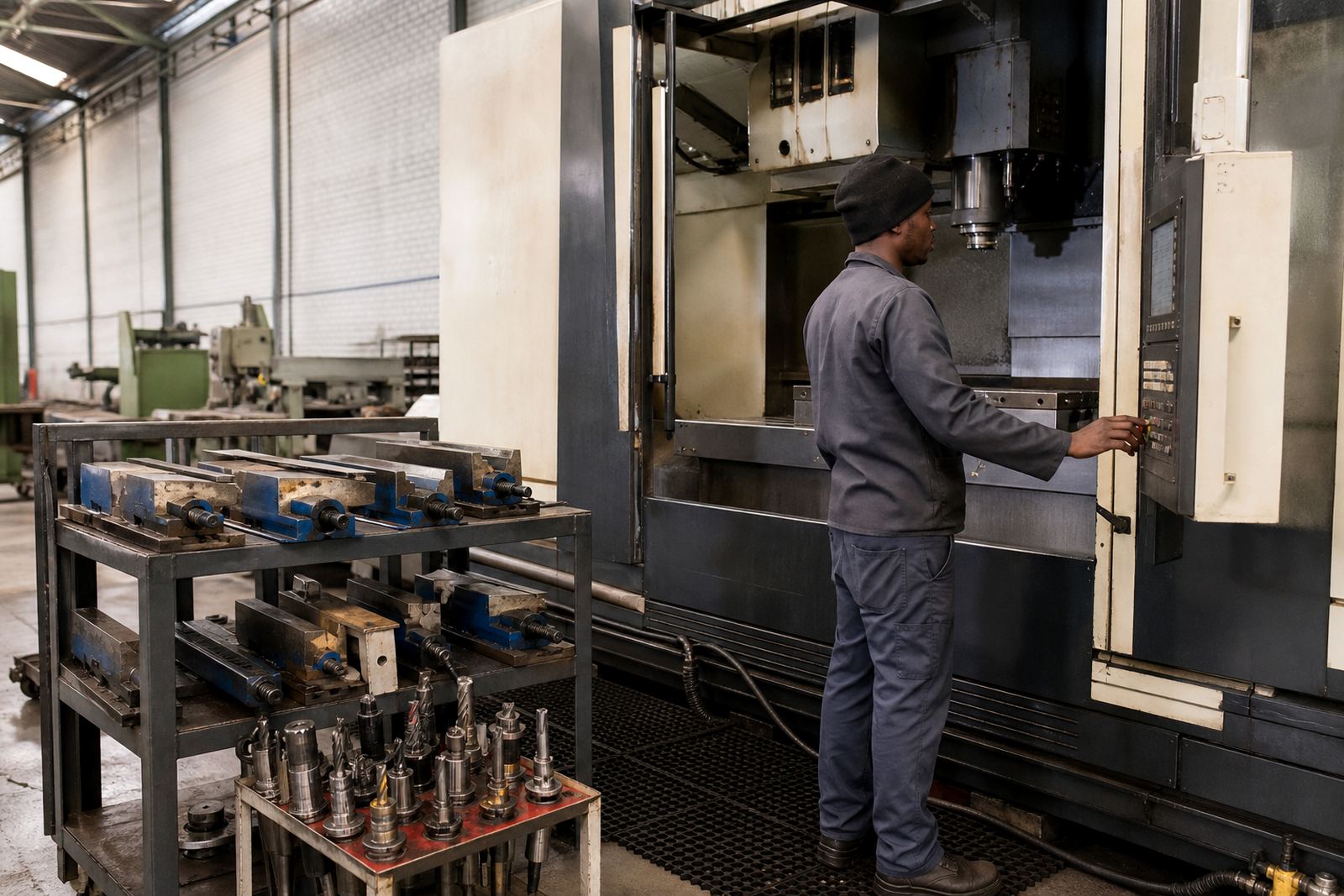
CNC mills are used to cut, drill, bore and shape metal parts with repeatable accuracy. They are found in machine shops, fabrication plants, toolrooms and maintenance departments, from small 3 axis vertical machines to larger 4 axis and 5 axis centres with automatic tool changers.
For sellers, a proper valuation looks at the make, age, control system, spindle hours, table size, travel distances, tool changer condition and whether the machine is still under power. For buyers, the same details help show whether the mill suits production work, one-off jobs or training use. An opinion of value is not a guarantee of sale price, and the final auction result depends on demand, condition and timing.
- Common formats include vertical machining centres, horizontal mills and bed mills
- Table sizes often range from about 800 x 400 mm to 2000 x 1000 mm or more
- Spindle speeds can vary widely, from lower speed roughing units to high speed finishing machines
- Axis travel, control type and tooling matter as much as age
Sizes and options buyers ask about most
CNC mills are not one-size-fits-all. A compact 3 axis vertical machine may suit a workshop in Germiston that is tight on floor space, while a heavier 4 axis or 5 axis centre is better for repeat work on multiple faces of a part. Some machines have enclosed guarding for cleaner production, while others are open framed for easier loading of large components.
When planning a sale by auction, lotting should group machines in a way that makes sense for buyers. Matching the mill with its tooling, vice, rotary table, coolant system and chip conveyor can improve interest because buyers can judge the full package, not just the base machine.
- Axis setup: 3 axis, 4 axis or 5 axis
- Control type: older numeric controls or newer conversational and G-code capable systems
- Tool capacity: manual changer, carousel or larger automatic tool magazine
- Extras: probing, mist extraction, coolant tanks, chip conveyors, workholding
Where CNC mills fit best in South African industry
These machines suit general engineering, mould and die work, automotive suppliers, aerospace subcontract work, maintenance shops and small batch production. In Johannesburg and Pretoria, many buyers want machines that can run daily under pressure and still hold tolerances. In Cape Town and Gqeberha, coastal humidity can affect stored machines, so condition and protection history are worth checking closely.
For auction sellers, the best outcome often comes when the machine is listed with clear photos, measured specs and honest notes on faults or missing parts. Buyers in Durban, Midrand or Kempton Park often want practical information first: can it be powered up, does the spindle run true, and what service work is likely after collection.
- Good for repeat machining where accuracy must stay consistent
- Useful for parts manufacturing, repair work and prototyping
- Can handle steels, aluminium, alloys and many engineered plastics
- Best where trained operators and planned maintenance are available
Power, air and floor needs before installation
Most CNC mills need a level concrete floor, enough headroom for loading, and access for forklifts or cranes during delivery. Larger machines can be very heavy, so floor loading and access routes should be checked before moving day. Some machines run on 380V or 400V three phase power, and the exact supply should be matched to the machine plate and electrician's advice. In load-shedding conditions, buyers often ask about restart safety, backup supply and clean shutdown procedures.
Compressed air may be required for tool release, spindle seals, enclosure doors or air blast, depending on the model. Coolant, mist extraction and chip handling also need space. If the machine has a chiller or hydraulic unit, that adds to the power and maintenance load. A bad install can cause problems later, so site prep matters more than many people think.
- Check three phase supply and isolation requirements
- Allow space for doors, maintenance access and crane lifting points
- Plan for coolant, air, chip removal and safe cable routing
- Confirm floor strength and levelling before commissioning
How to judge condition before a sale or bid
Condition is not only about paint and appearance. A clean machine can still have spindle play, worn guideways, a damaged control screen or servo faults. A valuation should include inspection of the power-up sequence, axis movement, lubrication system, alarms, coolant pump, tool changer and any signs of crash damage. If a machine is under power, test cuts and live movement help confirm what is working and what needs attention.
Buyers should check service records where available, but also inspect the machine in person at a viewing day. The best guide is still a proper hands-on inspection. Look for oil leaks, rust, belt wear, chipped ball screws, noisy bearings and excessive backlash. If the machine has sat idle for a long time, expect recommissioning work and maybe replacement batteries or seals too.
- Ask whether the machine is still under power and ready for inspection
- Check spindle sound, axis smoothness and tool changer operation
- Review alarms, manuals, backups and maintenance notes
- Inspect for moisture damage, rust and electrical age-related faults
Auction support from valuation to clearance
Machine Africa supports sellers and buyers with on-site valuations, auction planning, lotting and cataloguing, asset inspections, reserve guidance, viewing days and seller representation. For a CNC mill, that process starts with a visit to the site, then a written assessment of the machine's condition, setup and likely market interest. The valuation is an informed opinion of value, not a promise of what the hammer price will be.
Once the sale is planned, clear lot descriptions, photos and viewing arrangements help buyers make decisions quickly. After the auction, collection coordination, clearance sales and closure support help the site move on with less disruption. Our Kempton Park base supports clients across Johannesburg, Pretoria, Durban, Cape Town, Gqeberha, Germiston and Midrand, and the process is kept straightforward from first enquiry to final handover.
- On-site valuation and plant appraisal
- Photo listing prep and cataloguing
- Viewing day coordination and reserve guidance
- Collection, clearance and closure support
Key facts
| Machine type | Used CNC milling machine, including vertical, horizontal and multi-axis models |
|---|---|
| Typical power | Commonly 380V or 400V three phase, model dependent |
| Common axes | 3 axis, 4 axis and 5 axis |
| Typical table size | About 800 x 400 mm up to 2000 x 1000 mm or larger |
| Typical uses | General engineering, tooling, batch work, mould and die, maintenance |
| Support services | Valuations, inspections, auction planning, lotting, viewing days and collection coordination |