
What a press brake does in a sheet metal workshop
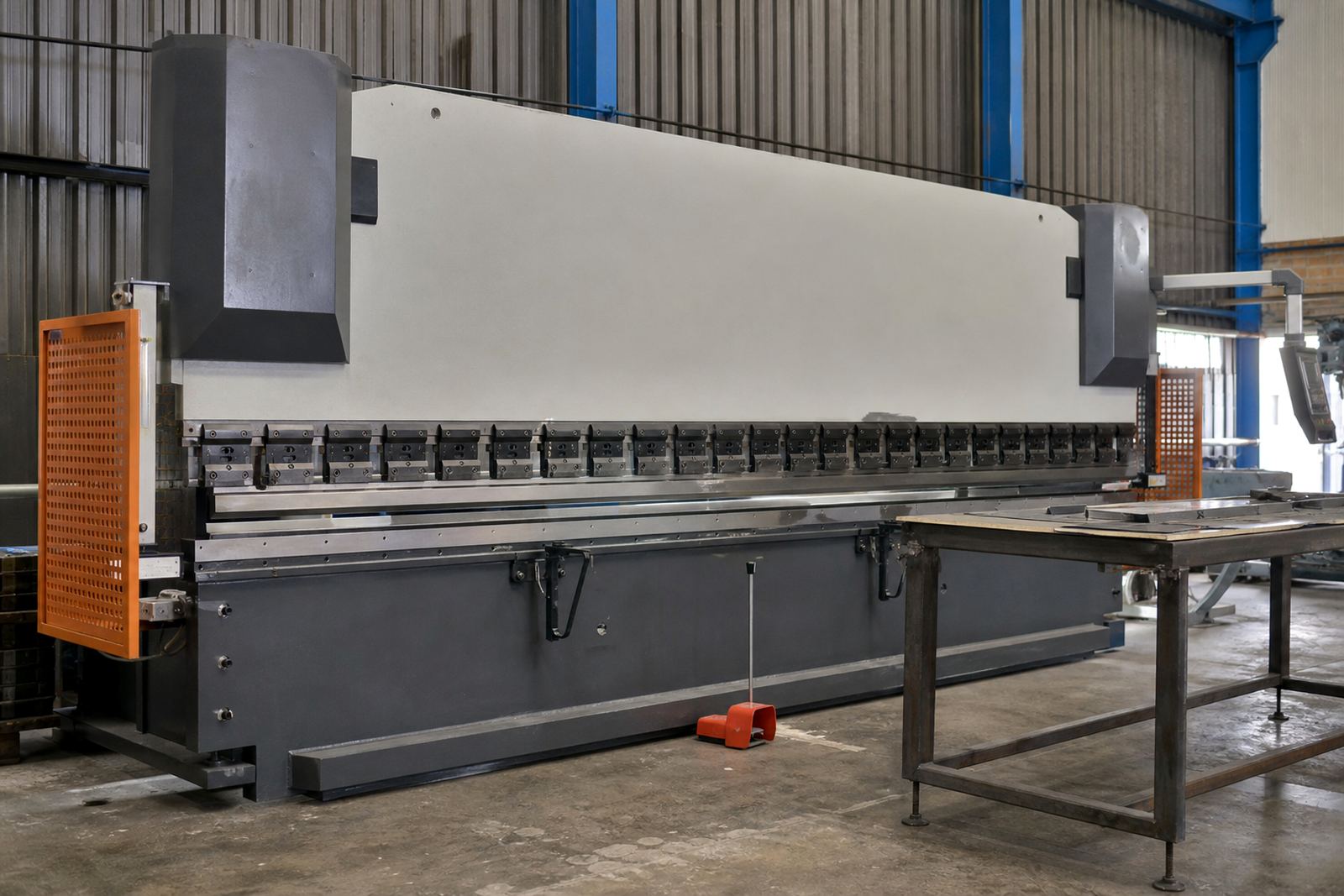
A press brake is used to bend sheet metal into accurate angles and formed shapes. In practice, it sits at the centre of many fabrication shops, from cabinet work and ducting to farm equipment parts, enclosures and general steel fabrication. The machine works by pressing a punch into a die to create a controlled bend, so the frame, ram alignment and tooling all matter when assessing value.
Used press brakes are commonly found as manual, hydraulic or CNC controlled units. Older machines may still give years of service if the bed is straight, the hydraulics are healthy and the electricals have been kept in order. In a valuation we look at the machine as it stands, not as it was when new, and not as a guarantee of sale price.
Common sizes, tooling and control options
Press brakes are sold in a wide range of lengths and tonnages. Smaller shop units may handle short runs and light gauge work, while larger machines are used for heavier plate and longer bends. Buyers usually want to know the working length, bending capacity, throat depth, daylight opening and backgauge range. Those details affect both usefulness and auction interest.
- Working length from about 1.2 m to 6 m, depending on the machine
- Tonnage ranges from light shop capacity to heavy industrial forming
- Manual, hydraulic and CNC controls available
- Backgauge options, often with mechanical or powered adjustment
- Tooling sets may include punches, dies and segmented tooling
For auction preparation, we note what tooling is present, whether it is matched to the machine, and if any parts are missing. A complete set can help buyers assess the unit more quickly, while missing tooling can reduce convenience and interest.
Where press brakes suit local production work
Press brakes are a strong fit for Gauteng fabrication shops, Durban coastal production yards, Cape Town industrial areas and Eastern Cape manufacturing sites. They are commonly used where repeat bends, brackets, cabinets, trays, panels and formed sections are needed. Some buyers look for a compact machine that can fit into a smaller workshop in Germiston or Midrand, while others need a larger unit for higher throughput in Johannesburg or Pretoria.
In coastal areas such as Durban and Gqeberha, humidity can affect electrical panels, tooling and exposed steel if the machine has stood idle. In inland areas, dust and poor storage can also cause wear. We take those practical factors into account during inspection because they influence how the machine presents at auction and how much work may be needed before it goes back into service.
Power, installation and workshop requirements
Installation needs depend on the make-up of the machine. Many used press brakes need three-phase power, a level concrete floor and enough clear space for loading, operation and maintenance access. Larger hydraulic units may need a forklift, overhead crane or suitable loading equipment for safe positioning. Some machines also need a permit or formal site approval where a buyer is bringing in heavy plant, especially in regulated industrial premises.
- Check the incoming power supply and motor ratings before purchase
- Confirm floor loading and available workshop space
- Allow room for material handling at the front and rear of the machine
- Make sure lifting and transport plans suit the machine weight
- Test emergency stops, guards and electrical isolation points
Press brakes do not need gas for normal operation, but some related cutting or workshop processes may. Buyers should still confirm all utilities on site, including power stability during load-shedding, since power interruptions can affect production planning and machine testing.
How we assess condition for valuation and auction prep
Our valuation work is based on an opinion of value supported by inspection, not a promise of what the auction will return. For a used press brake we review the frame, ram movement, hydraulics, electricals, seals, cylinders, tooling, backgauge, controls and general presentation. We also note whether the machine starts, runs and cycles correctly, and whether there is evidence of oil leaks, misalignment or excessive wear.
For auction preparation, the goal is to present the machine accurately and fairly. That means describing the model type, capacity, dimensions and condition in plain language, then adding photographs that show the main working areas. If the machine is still installed on site, we can assist with lotting, viewing day planning and collection coordination so buyers know what to expect.
Care, servicing and storage before sale
A press brake that has been cleaned, serviced and made easy to inspect usually attracts better attention than one that is left with dust, scrap and old tooling lying around. Basic care before sale helps buyers see the machine properly and reduces disputes later. Even a machine that has not been used for a while can present well if it is drained, wiped down and checked for obvious leaks or electrical faults.
- Remove loose offcuts, tools and scrap from the work area
- Clean oil residue and dirt from the frame and controls
- Check hydraulic oil condition and look for leaks
- Secure loose panels, guards and covers
- List any known faults, missing parts or service history
Storage matters too. A machine standing outside in rain or salt air will often need more attention than one kept under cover. If the press brake has been idle after power issues or a shutdown, it helps to state when it was last used and what work it was doing at the time.
What to check when ordering a used press brake
Before buying, confirm the practical details that affect fit and performance. Measure the available space at your site and compare it with the machine footprint, ram travel and loading route. Ask about the tonnage, length, power supply, control type and tooling included. If the machine is coming from a site in another province, factor in transport, offloading and any local access limits on collection day.
It is also sensible to ask whether the machine can be viewed under power, whether it has been tested recently, and whether there are any service records. A used press brake can be a good asset for a growing workshop, but only if the buyer knows what is included and what work may still be required before commissioning.
Key facts
| Machine type | Used press brake for sheet metal bending and forming |
|---|---|
| Capacity range | Light shop units to heavy industrial tonnage |
| Working length | Approx. 1.2 m to 6 m, depending on model |
| Control options | Manual, hydraulic or CNC control systems |
| Power needs | Often three-phase electrical supply |
| Typical applications | Panels, brackets, enclosures, trays, ducting and formed sections |