What a cylindrical grinder does in a workshop
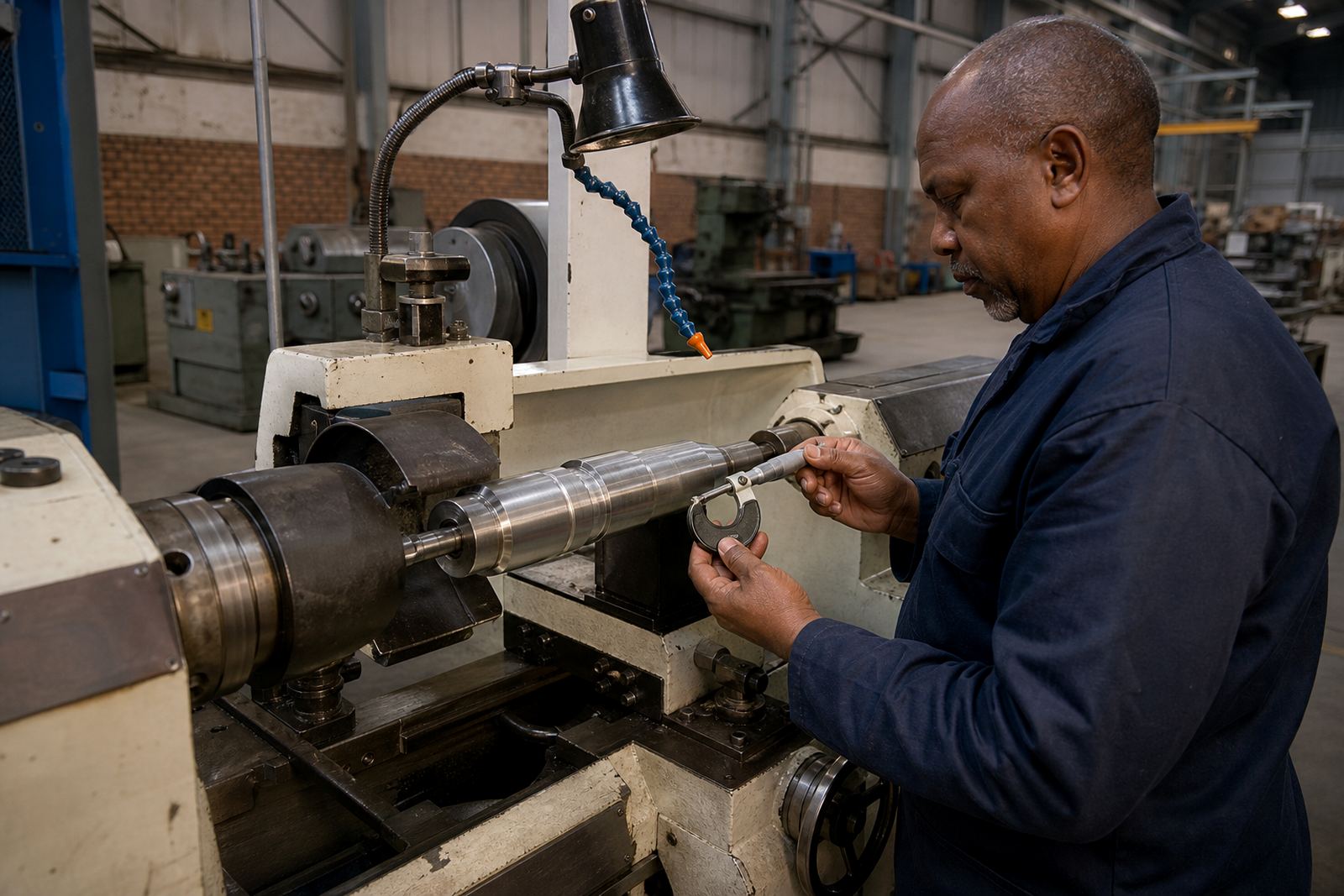
A cylindrical grinding machine is built to finish external or internal round surfaces to a fine size and surface quality. It is commonly used on shafts, rollers, spindles, sleeves and other components that need consistent diameter control, often after turning, heat treatment or hardfacing. In a precision shop the grinder sits between machining and final inspection, where a few microns can matter.
Most used machines are either universal models for outside and inside work, or plain grinders for straight cylindrical parts. Between centres machines are common for long shafts, while chuck work suits shorter parts and repeat batches. When we assess one for auction or sale, we look at the machine type, table length, swing, wheel head arrangement and the general wear on the ways, spindle and controls. A tidy machine can still need attention, so condition matters more than paint.
Typical sizes, setups and capacity points to compare
Used cylindrical grinders come in a practical range of sizes, from small toolroom units to heavier production machines. Buyers in Johannesburg, Pretoria and Durban often ask for the centre height, distance between centres and maximum work diameter first, because those figures decide whether the machine fits the job. If a machine is too short or the wheel head travel is limited, it may be no use for your part range.
- Centre height: often from about 100 mm to 250 mm on smaller and mid-size machines
- Distance between centres: commonly 500 mm to 2 000 mm, sometimes more on long-bed units
- Table travel: enough for the full work length plus run-on and run-off
- Wheel size and spindle speed: matched to material and finish required
- Workhead and tailstock: fixed, swivelling or adjustable depending on the model
- Internal grinding attachment: useful for bushings and bores if included
Some machines are manual, others have hydraulic table feed, automatic infeed or CNC controls. A manual grinder can suit repair work and smaller batches, while automated models suit repeat jobs and tighter output targets. In coastal areas like Cape Town and Gqeberha, we also check for rust marks on exposed ways and electrics, because salt air can leave hidden wear if the machine has been stored badly.
Where cylindrical grinding suits best
These machines suit precision workshops, maintenance departments, reconditioning shops, shaft repair firms and general engineering plants. They are also useful in industries that work with pumps, gearboxes, motors, automotive parts and rotating equipment. If a site in Germiston or Midrand handles repair work in bursts rather than constant production, a used cylindrical grinder can be a sensible addition without the cost of a new unit.
For sellers, the right auction plan depends on whether the machine is still in production, partly dismantled or standing idle in a plant closure. Lotting and catalogue notes should show the machine size, tooling included, whether the coolant system is present, and if the grinder was last used for external work only or also for internal jobs. That detail helps buyers know what they are looking at, and it cuts down on call backs after viewing. It also keeps the process more straight forward when several grinders are being sold at once.
Installation, power and site needs before the move
Cylindrical grinders need a stable floor, good levelling and enough access for loading and setting in place. Even a smaller unit is heavy and awkward to move, with the wheel head and bed needing careful handling during collection. For auction planning, we check whether the machine can be removed through a door, roller shutter or side yard without stripping it down completely.
Most used machines run on three-phase power, often 380 V to 415 V, though exact requirements vary by model and controls. Buyers should confirm motor ratings, starter type and whether any transformer or control voltage is needed. If the machine has coolant, make sure the tank, pump and pipework are included and cleaned out before transport. On some sites in Pretoria and Cape Town, old workshops have power dips and load-shedding history, so it is worth checking whether the machine has been tested after a stop-start cycle.
- Confirm supply voltage and phase before moving the machine
- Check floor loading and access width at the new site
- Allow space for wheel dressing, coolant drums and inspection tables
- Plan a proper earthing point and safe cable run
- If coolant is used, check for leaks and stale fluid before start-up
Care, servicing and common wear points to inspect
When we inspect a cylindrical grinder, we look at the bed, carriage movement, headstock, tailstock and wheel spindle first. A machine may look fine on the outside but still show play in the feed screws, chatter marks on the ways or noise from the spindle bearings. Grinding wheel flanges, guards and dresser units should also be complete, because missing parts add cost after purchase.
Routine care is basic but important. Keep ways clean, dress the wheel properly, change coolant when needed and protect the machine from dust and moisture. In humid coastal areas a machine that sits unused for months can suffer surface corrosion, so covers and regular run checks help. If the grinder has hydraulic feed, inspect hoses and seals for leaks. Electrical panels should be dry, tidy and free from burnt contacts, especially after power outages or rough changeovers. A small fault can turn into a full stop if it is ignored.
For valuations, condition is one part of the picture, but we do not treat a valuation as a promise of sale price. It is an opinion of value based on the machine’s make, age, setup, condition, market demand and sale method at the time of inspection. In auction work that matters, because reserve guidance and viewing day interest can shift how buyers behave.
What to check before you buy or send a grinder to auction
Good auction results begin with clear information. Sellers should have the machine cleaned, photographed and listed with its main dimensions, power needs and any known faults. Buyers should inspect the grinder under power where possible, ask about accessories and check whether the machine is complete. A set of steady rests, internal grinding attachments, wheel guards and centres can add practical value, while missing change gears or damaged controls can reduce usefullness.
- Check the serial plate, motor details and bed length
- Ask whether the grinder can hold tolerance on a test piece
- Inspect wheel head noise, vibration and heat after running
- Confirm if toolholders, arbors, centres and coolant kit are included
- Look for repairs on the bed, table or guards
- Make sure the machine is released safely for collection and clearances are arranged
Machine Africa supports sellers and buyers with on-site valuations, auction planning, lotting and cataloguing, asset inspections, reserve guidance, viewing days, seller representation, collection coordination, clearance sales, closure support, plant appraisals and photo listing prep. From Kempton Park, we work across Johannesburg, Pretoria, Durban, Cape Town and Gqeberha, with practical attention to site access, removal timing and the paperwork that comes with used industrial machinery.
Key facts
| Machine type | Cylindrical grinder, external or universal depending on model |
|---|---|
| Work capacity | Commonly 500 mm to 2 000 mm between centres |
| Centre height | Often about 100 mm to 250 mm on used units |
| Power supply | Usually three-phase 380 V to 415 V |
| Typical uses | Shafts, rollers, bushes, spindles and repair work |
| Common options | Hydraulic feed, internal grinding attachment, coolant system, DRO or CNC controls |