Used bakery ovens and what they are used for
Industrial bakery ovens are the heart of many bake rooms, from plant bakeries and wholesale bread lines to pastry, roll and confectionery operations. They are used for batch baking, continuous baking, proof and bake workflows, and for products that need consistent heat control through long shifts. In practice, the right oven depends on output, product type, floor space, power availability and how often the line runs during peak trading. If the unit has been standing idle, or moved between sites, that history matters when it comes to valuation and sale planning.
For auction purposes, bakery ovens are usually assessed as working equipment with known dimensions, configuration and service condition. That means checking the frame, chamber lining, doors, seals, burners or elements, controls, fans, conveyor sections and any accessories that belong with it. A proper inspection also considers access for removal, because a large oven can be valuable yet expensive to take out, shift and recommission.
Common oven sizes, formats and options
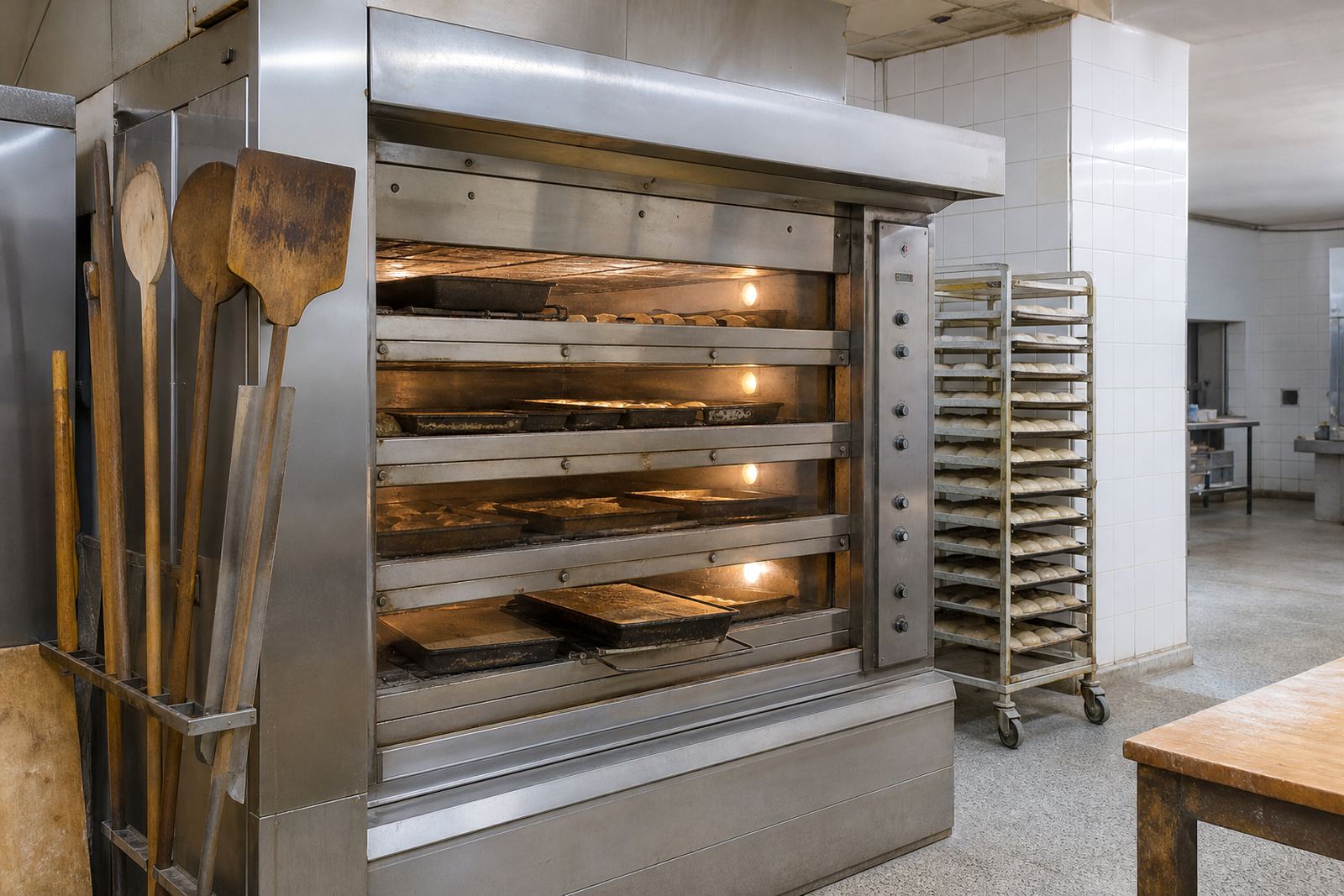
Bakery ovens come in a range of configurations. Some are compact deck ovens for a small production room, while others are multi-deck units, rack ovens, rotary ovens or tunnel-style systems for higher throughput. The size that suits a site in Germiston may not suit a plant in Durban or Gqeberha, especially where access, humidity or utility supply creates extra constraints.
- Deck ovens for breads, rolls and pastries where batch control matters
- Rack ovens for mixed production and tray-based baking
- Rotary ovens for larger volumes and even heat distribution
- Convection ovens for faster air movement and shorter bake times
- Tunnel or continuous ovens for high-output lines
Options can include steam injection, digital timers, separate bake zones, viewing windows, insulated doors and programmable controls. When valuing a used oven, these features help, but only if they are complete and functioning. Missing trays, damaged stones, corroded frames or faulty control panels can reduce buyer interest, and sometimes by a lot.
Where bakery ovens fit best in South African operations
These ovens suit commercial bakeries, supermarkets with in-store bake facilities, hotel kitchens, catering units, mill-linked bakeries and contract producers. In Johannesburg and Pretoria, buyers often look for dependable equipment that can support long operating hours and spare parts availability. Along the coast, including Durban, Cape Town and Gqeberha, corrosion resistance becomes more important because salt air can affect panels, fasteners and housings over time.
Load-shedding changes the picture as well. A gas-fired oven may suit some sites better than electric-only equipment, while others need backup generation sized for fans, controls and conveyors. If the oven is tied to a proofer, extractor, or feed system, the whole line should be listed and inspected together where possible. That helps buyers understand the real setup, not just the oven shell on its own.
- Wholesale bakeries needing repeatable output
- Retail bake rooms with limited floor area
- Food manufacturers replacing ageing equipment
- New site setups that need known capacities
Power, gas and installation details to confirm
Before any sale, buyers should confirm the oven’s power requirements, fuel type and installation needs. Electric ovens may require single or three-phase supply depending on size, while gas-fired units need correct burner setup, gas pressure, isolation and ventilation. Some ovens require flue routing, heat extraction, water supply for steam or floor loading checks where the unit is heavy. If the machine was moved and reinstalled badly, that can show up in the valuation too.
Installation should never be treated as a small detail. Oven footprint, door swing, ceiling height, service clearances and delivery access all affect whether a buyer can put it to work quickly. In older industrial buildings around Midrand or Johannesburg South, narrow doors and low beams can mean extra lifting gear is needed, which adds cost and time. A clear site inspection helps avoid surprises and supports a cleaner auction listing.
Condition checks that matter at valuation stage
When Machine Africa prepares a valuation or auction listing, the goal is to describe the oven honestly and in enough detail for the market to judge it. That means looking at visible wear, service history if available, and whether the oven has been tested under power or heat. A working light or clean exterior is not enough on its own. The internal condition matters just as much, sometimes more.
- Chamber insulation and heat retention
- Door seals, hinges and latching points
- Burners, elements, fans and thermostats
- Control panel function and display accuracy
- Belts, trays, racks or trolleys if included
- Corrosion, rust, soot buildup and heat damage
For used equipment, a valuation is an informed opinion of value based on condition, demand and market context. It is not a promise of what the oven will sell for. That distinction matters to both buyers and sellers, especially when a unit has been idle, modified or partially stripped.
Auction planning, lotting and sale support
Bakery ovens are often sold as single lots, but sometimes they are grouped with mixers, proofers, slicers, trays, racks and packaging equipment. Good lotting can help the sale by matching the oven to the rest of the production flow. Our team handles auction planning, catalogue preparation, photo listing prep, reserve guidance where needed and viewing day coordination. Sellers across Kempton Park, Germiston, Pretoria, Durban, Cape Town and Gqeberha can use that support to present the equipment properly and keep the process orderly.
Removal and clearance also need attention. Ovens can be awkward to disconnect, especially where gas, electrical supply or ducting is involved. A careful handover process helps reduce confusion at closing and can make site clearance easier for everyone. For buyers, it is worth checking what is included, what must be disconnected, and whether lifting equipment will be needed for collection. A short site meeting can save a lot of back-and-forth later.
What to check before you place an order
If you are considering a used industrial bakery oven, ask for the exact model type, overall dimensions, chamber size, fuel source and any accessories included. Confirm whether the oven has been tested, when it was last serviced, and whether any parts are missing. You should also ask about access for loading and final placement, because a good deal can become awkward if the machine cannot get through the door. Small detail, big difference.
Buyers should also check the condition of seals, controls and heating components, and whether the oven matches the products you plan to bake. A unit that suits rolls may not suit large loaves or pastry output. If you are buying for a site with uneven power supply or limited gas infrastructure, that needs to be considered before the hammer falls. For sellers, clear information leads to better buyer confidence and a cleaner sales process.
Key facts
| Product type | Used industrial bakery ovens and baking equipment |
|---|---|
| Typical formats | Deck, rack, rotary, convection and tunnel-style ovens |
| Common fuel or power | Electric, gas, or combined systems depending on model |
| Typical uses | Bread, rolls, pastry, confectionery and mixed bake production |
| Key checks | Doors, seals, burners or elements, controls, fans and insulation |
| Service area | Kempton Park, Johannesburg, Pretoria, Durban, Cape Town, Gqeberha, Germiston and Midrand |