What A Guillotine Shear Does On Site
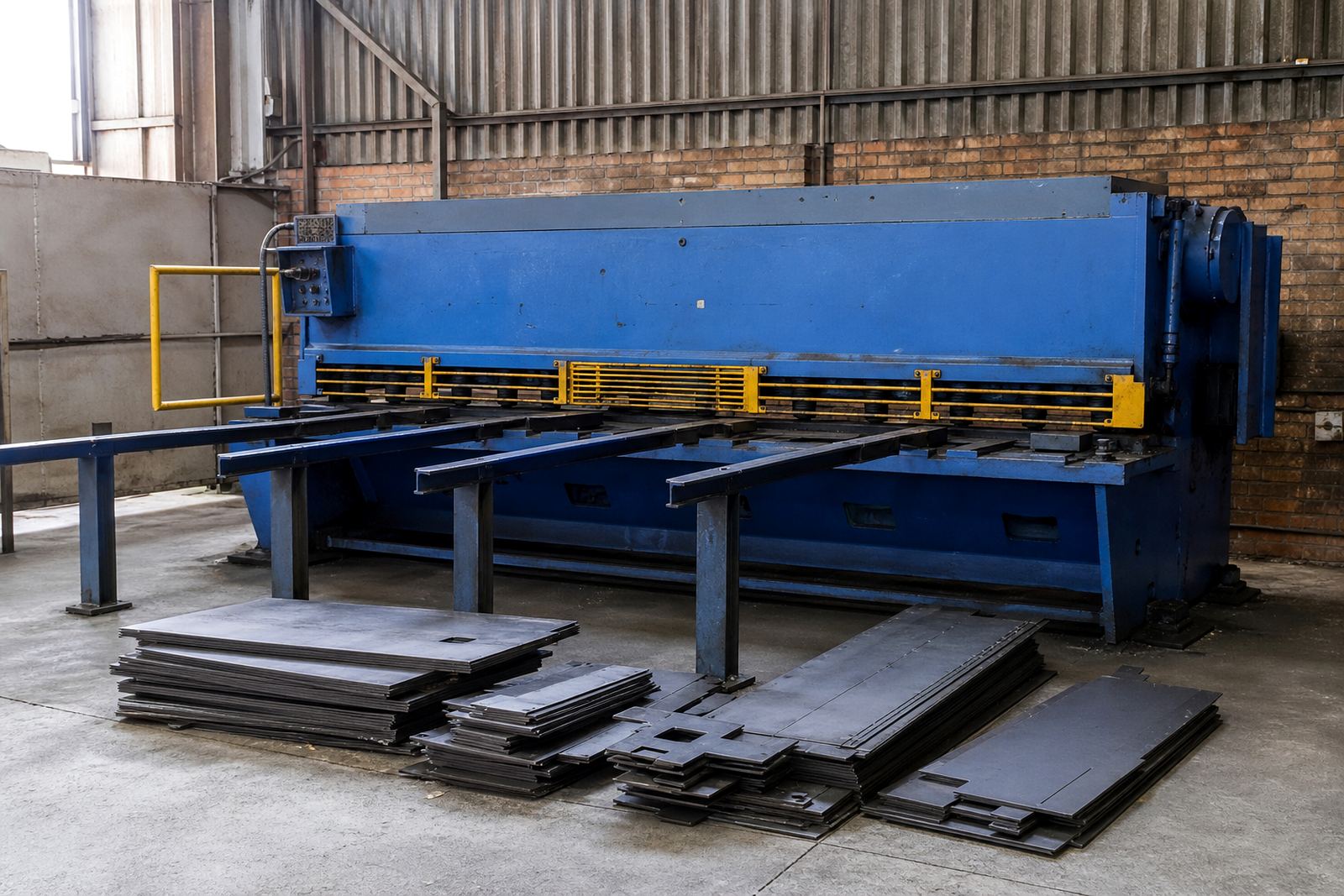
A guillotine shear is used to cut sheet metal, plate, and in some cases flat stock to length with a straight blade action. It is common in fabrication shops, maintenance yards, roofing lines and general industrial plants where repeat cutting is needed and the workpiece must stay square. On a valuation inspection we look at the machine as a working asset, not just a nameplate, so bed size, back gauge travel, blade condition, hold down system, and the general state of the frame all matter.
Used shear values are usually affected by age, cut length, maximum thickness rating, power type, safety equipment, and whether the machine is complete. A machine with a good blade path and tidy electricals can be more practical to a buyer than a larger unit that needs major attention. We record the facts and give an opinion of value, not a guarantee of sale price, because auction results depend on demand, timing, and how the lot is presented.
Common Sizes, Configurations And Cutting Capacity
Guillotine shears come in a range of working widths and capacity ratings. In the used market, buyers often ask about 1.5 m, 2.5 m, 3 m and 4 m machines, with cutting capacities that may suit thin sheet or heavier plate depending on the model. Mechanical, hydraulic and manually assisted units all appear in the market, and the right type depends on the material, volume, and the skill level of the team running it.
- Cutting length: commonly 1 500 mm to 4 000 mm
- Capacity: usually specified by mild steel thickness at a stated tensile strength
- Back gauge: manual, motorised or programmable on some machines
- Blade gap and rake adjustment: important for cut quality and wear
- Safety features: guards, foot pedal controls, light curtains or two-hand controls on some units
When comparing two shears, the rated thickness alone does not tell the full story. Blade sharpness, alignment, footplate wear and control condition can make a well-used machine more valuable than a larger but neglected one.
Where Guillotine Shears Suit South African Operations
These machines suit workshops that process sheet material for ducting, roofing, signage frames, cladding, agricultural repair work, and light fabrication. They are also found in heavier industrial settings where routine trimming of plate or sheet happens every day. In Gauteng, many buyers want equipment that can work through load-shedding interruptions with manageable restart procedures and dependable control panels. In coastal areas like Durban, Cape Town and Gqeberha, corrosion resistance and storage conditions carry extra weight because humidity and salty air can shorten service life if machines are left exposed.
For buyers in Johannesburg, Pretoria, Germiston or Midrand, access and floor space often shape the decision. A shear must be moved in safely, set on a level base, and used with enough clearance for infeed and outfeed handling. If the machine was previously installed on a pit or raised plinth, that detail should be checked before transport is arranged.
Installation, Power Needs And Site Checks
Before a guillotine shear changes hands, the buyer should confirm the machine dimensions, approximate mass, foundation needs and electrical supply. Many used units are three phase and require a suitable supply at the new site. Some older machines have straightforward controls, while others may need a control cabinet check, new wiring, or an electrician to confirm motor condition and isolators. If the machine uses a hydraulic system, seals, hoses and oil condition should be inspected before recommissioning.
- Check the available floor loading and door opening sizes
- Confirm the electrical supply, motor rating and starter arrangement
- Allow for lifting equipment, skates or a crane during removal and set down
- Inspect the blade area for damage, scoring or uneven wear
- Test the back gauge, hold downs and safety stops where possible
For auction planning, these site checks help with lotting and with clear catalogue notes. They also reduce surprise on viewing days, which is useful for both sellers and buyers.
Care, Servicing And Day To Day Use
Regular care keeps a guillotine shear saleable and serviceable. Blades should be kept sharp and adjusted correctly, guides lubricated, and the machine cleaned of swarf, dust and oil build up. On hydraulic units, oil level and leaks must be watched. On mechanical units, bearings, drive parts and brake components should be checked by a competent technician. A machine with regular service records and orderly maintenance is easier to present at auction, and usually draws more informed interest.
Where a machine has stood idle, a buyer should ask how it was stored. Rust on the table, seized fasteners, damaged guards and stale hydraulic oil can all affect start up. In some plants, power interruptions also mean that operators restart equipment more often than ideal, so control gear and motor protection should be checked after each outage. Small issues left unattended can become bigger issues quickly, especially if the machine is already near its service limits.
What To Check When Ordering Or Listing For Auction
When a seller or buyer is preparing a guillotine shear for valuation or sale, the following points matter most. They help frame the condition of the machine and the likely level of interest from the market.
- Make sure the serial plate is visible and legible
- Record the cut length and maximum rated thickness
- Note whether the machine is mechanical, hydraulic or manual
- List any missing parts, control issues or blade wear
- Confirm whether manuals, tools and spare blades are available
- State if the unit is still installed, disconnected or already lifted out
At Machine Africa we support sellers with on-site valuations, auction planning, viewing days, reserve guidance, lotting and cataloguing, plant appraisals, and collection coordination. Buyers benefit from clear descriptions and practical site information, while sellers get an orderly process that is straightforward to manage.
Key facts
| Machine type | Used industrial guillotine shear or cutter |
|---|---|
| Typical cutting length | 1 500 mm to 4 000 mm |
| Typical power | Three phase electric supply on many units |
| Common drive types | Mechanical, hydraulic or manual |
| Best suited for | Sheet metal, plate trimming and fabrication work |
| Inspection focus | Blades, back gauge, guards, frame, controls and service history |