What a CNC Lathe Does on the Shop Floor
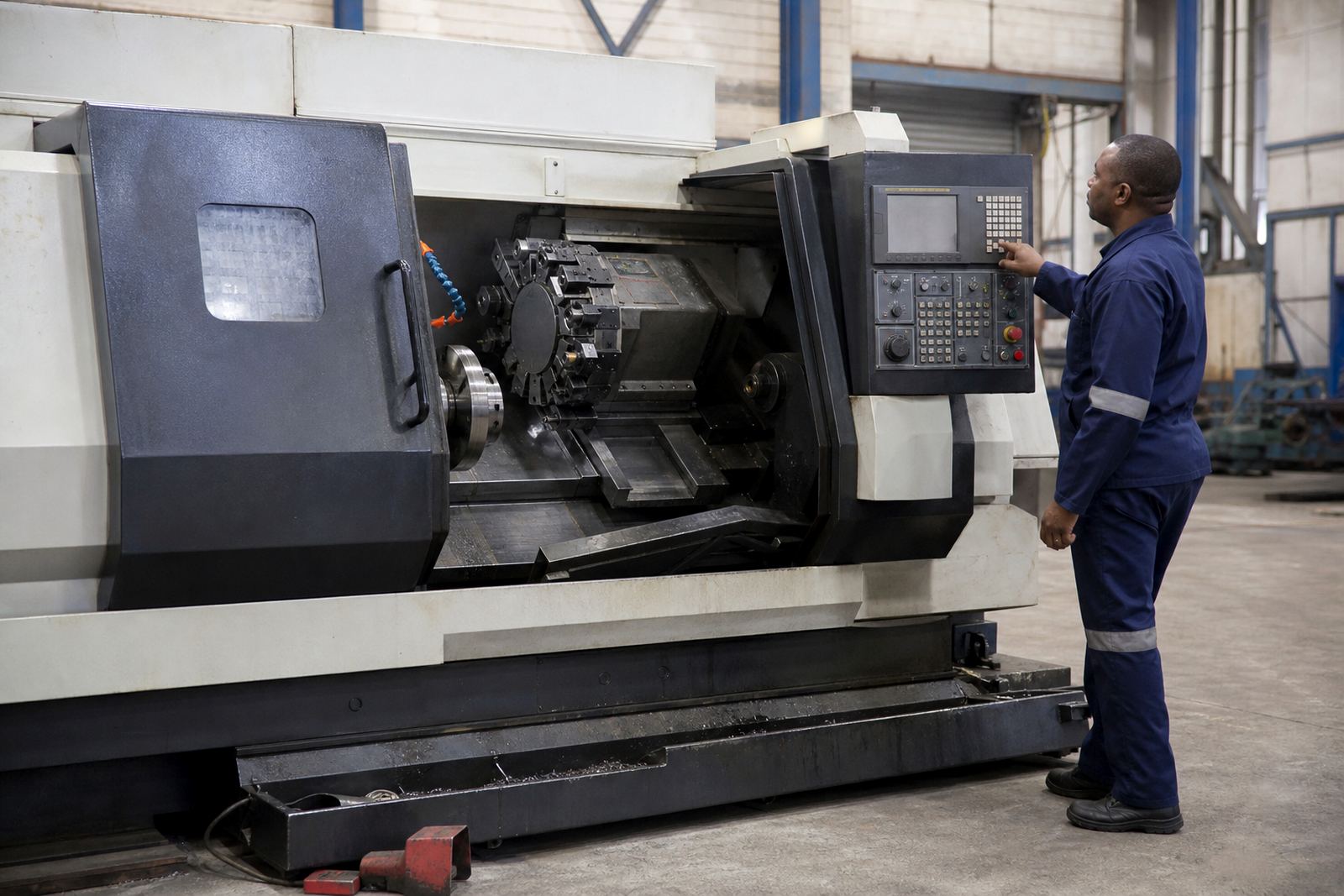
A CNC lathe is a computer-controlled turning machine used to machine round parts accurately and repeatably. It is used for shafts, bushes, flanges, threaded components, tool parts and many other turned items. In a production environment, the machine may run bar feed, chuck work, live tooling or simple two-axis turning depending on the setup.
When we assess a used CNC lathe, we look at the machine as a working asset not just a badge on the side. A clean machine with good ways, sound drives and a straight spindle usually presents better than one that has sat unused in a damp bay or near coolant splashes for years. Age matters, but service history, hours and visible wear often matter more.
Common Sizes, Configurations and Options
CNC lathes come in many sizes, from small bench-mounted training units to heavy production machines with long beds and large chuck sizes. Some have a single spindle and manual tailstock, while others include sub-spindles, turret stations, live tooling, parts catchers and bar feeders. The right model depends on the component size, cycle time and how often the job changes.
- Chuck sizes commonly range from about 160 mm to 400 mm, sometimes larger on heavy-duty units.
- Turning lengths can run from short-bed machines of under 500 mm between centres to long-bed machines well above 1 500 mm.
- Motor sizes vary widely, often from about 7.5 kW on smaller units to 30 kW or more on larger production lathes.
- Many machines need three-phase supply, with controls and drives that prefer stable voltage and clean earthing.
If you are buying at auction, check whether the machine is set up for bar work, chuck work or mixed production, because that affects how quickly it can go back into service.
Where CNC Lathes Suit Best
CNC lathes suit engineering shops, maintenance departments, agricultural repair workshops, general jobbing shops and production lines that need repeated turned parts. They are also used in automotive work, pump repair, mineral processing support and component manufacturing. A lathe with the right tooling can reduce handling and keep tolerances steady over longer runs.
In coastal areas like Durban or Gqeberha, storage conditions matter because humidity can cause surface rust on exposed slides, chucks and tooling. In Gauteng and other inland areas, dust and power interruptions can be the bigger problem. During load-shedding, a machine may need proper shutdown procedures, battery-backed controls or a generator sized for the full starting load if the site expects continuous operation.
For sellers, a site inspection helps establish whether the machine is better suited for auction, private treaty sale or as a clearance lot with limited testing. For buyers, the key question is whether the machine matches the work already being done on the floor.
What We Look at During a Valuation
A valuation is an opinion of value based on inspection, market knowledge and the condition of the machine at the time of assessment. It is not a guarantee of sale price. When we assess a CNC lathe, we look at the spindle, bed wear, turret condition, hydraulics, chuck, tailstock, control system, cabling and the general state of the enclosure and guards.
- Check for backlash in the axes and listen for unusual bearing noise during spindle start-up.
- Inspect coolant leaks, oil staining and signs of poor maintenance around pumps and filters.
- Review alarms, screen condition and whether the control boots correctly.
- Confirm that the machine still has its manuals, parameter backups and tooling where available.
- Look for crash marks, bent sheet metal and evidence of overtravel or tool turret damage.
We also note access issues on site, because a machine in a basement workshop or tight bay can take more effort to remove than one standing in an open workshop with a roller shutter door.
Auction Planning, Viewing Days and Sale Readiness
Good auction results often start with correct planning. That includes lotting the machine properly, capturing clear photographs, preparing a factual catalogue entry and arranging viewing days where buyers can inspect the lathe in person. Buyers want to know the make, model, serial number where available, bed length, chuck size, control type and whether the machine is under power.
For sellers, it helps to clear loose tooling, old swarf, broken inserts and unrelated stock before photography and viewing. A neat presentation makes it easier for buyers to understand what they are looking at. If the machine is still connected, it should be isolated safely and tested by someone competent. We also guide on reserve levels where appropriate, but the reserve should still reflect the market not wishful thinking.
Clearance sales and closure support often need tighter timeframes, so the collection plan, lifting points and removal route should be confirmed early. In industrial parks around Kempton Park, Midrand or Germiston, access times and gate rules can affect removal day more than people expect.
Installation, Power and Site Requirements
Before a used CNC lathe goes onto a new site, check floor loading, door widths, turning space and where the control cabinet will sit. Many lathes need a solid level floor and enough room at the rear for electrical and maintenance access. If the machine is to be moved upstairs or into a confined bay, the route should be measured carefully and the rigging plan confirmed in advance.
Most CNC lathes run on three-phase electricity. Some smaller machines may have lower supply requirements, while larger turning centres can need substantial current and proper protection. Stable power, good earthing and surge protection are important, especially where municipal supply fluctuates. If the machine uses hydraulic clamping, coolant pumps or chip conveyors, those ancillaries must be included in the electrical plan too.
- Confirm supply voltage and phase before transport.
- Measure overall machine height, width and shipping weight.
- Check for crane points, fork pockets or lifting lugs.
- Allow space for coolant tanks, chests and chip disposal.
Care, Servicing and What to Check Before You Order
A CNC lathe holds value better when it has regular lubrication, clean coolant, correct alignment and routine cleaning of slides, filters and chip trays. On older machines, service records are useful for showing spindle work, ball screw replacement or electrical repairs. If the machine has been idle, ask whether batteries have been maintained and whether parameters are still intact.
Before ordering or bidding, check the following: the control version, tool capacity, spindle bore, chuck type, tailstock travel, motor condition and whether all guards are fitted. If the machine comes with tooling or bar feed equipment, confirm that each item is included in the lot description. Missing parts can be expensive to replace and may delay commissioning.
Machine Africa works from Kempton Park with clients across Johannesburg, Pretoria, Durban, Cape Town and Gqeberha, supporting sellers and buyers through inspections, valuations, cataloguing and closure. If you need a practical view on a used CNC lathe, our team can assess the machine and guide the auction process with clear facts.
Key facts
| Machine type | CNC lathe for turning cylindrical and threaded parts |
|---|---|
| Typical chuck size | About 160 mm to 400 mm, with larger options on heavy units |
| Turning length | Often under 500 mm on compact models to more than 1 500 mm on long-bed machines |
| Power supply | Usually three-phase electrical supply, with voltage and load checked per machine |
| Common options | Tailstock, sub-spindle, live tooling, parts catcher, bar feeder, coolant system |
| Best use | Engineering, production, repair work and repeated turning jobs |