Bottle Fillers We Assess For Sale Or Purchase
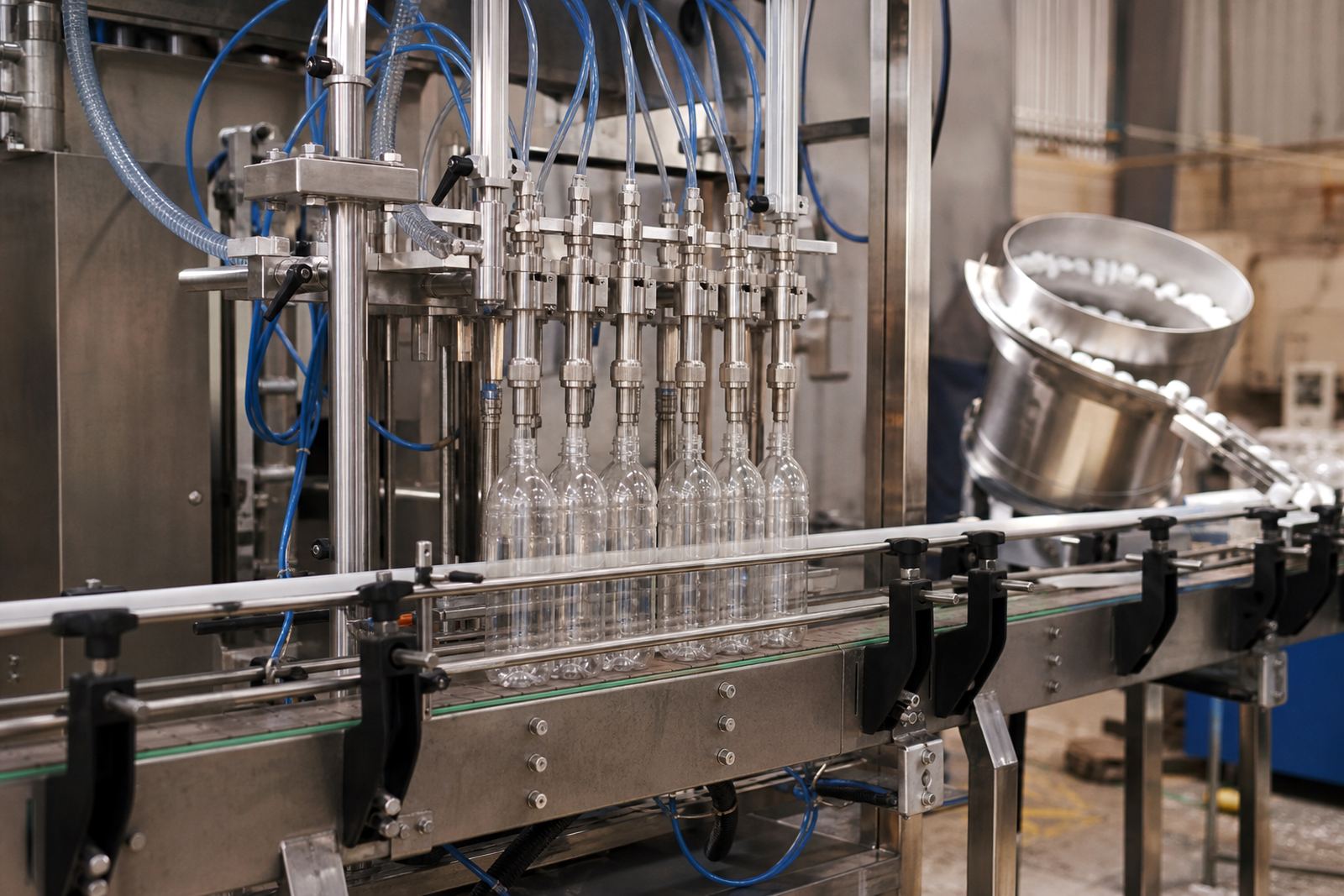
Bottle fillers are used across beverage, water, dairy, edible oil, chemical and personal care lines to metre product into glass or plastic containers at a steady rate. They may be stand-alone fillers, part of a larger monoblock, or linked to capping and labelling equipment, depending on the product and the pack size. In our valuations and auctions, the main point is to identify what the machine can do today, not what it did when it was first installed. A used filler can still have solid value if the contact parts are sound, the controls work and the frame has not suffered from corrosion or poor cleaning.
We commonly see gravity fillers, pressure fillers, overflow fillers, piston fillers and vacuum style units, plus inline and rotary setups. Some lines suit still water and low viscosity liquids, while others are made for thicker products or foamy fills. When we inspect a machine, we look at the filling heads, pump arrangement, product path, change parts and the state of any guarding or electrical panels. For auction purposes, this helps us place the equipment correctly for buyers who need an honest picture of its working condition.
Typical Sizes, Options And Line Formats
Bottle fillers come in a wide range of sizes, from small semi automatic units to full production lines with many heads and integrated capping. A compact unit may suit a rural bottling room in Mpumalanga or a small beverage producer in Germiston, while a larger rotary line may be better for a plant in Durban or Cape Town where output is higher and downtime is costly. The right choice depends on bottle size, product type, target speed and how much space is available around the line. Clearance for cleaning and maintenance matters too, especially where the room is tight.
- Small format fillers for pilot runs and low volume production
- Inline systems for flexible bottle changes and simpler maintenance
- Rotary fillers for higher throughput and more consistent output
- Integrated filler and capper combinations for a shorter line footprint
- Single head, multi head and multi station configurations
Options often include stainless steel contact parts, adjustable fill volumes, conveyor integration, level sensors, capping heads and safety interlocks. Some lines are better suited to still liquids, while others are built for carbonated products or thicker filling applications. When we prepare a valuation, we note the exact arrangement and any missing parts because one absent section can change how a buyer uses the line. That is why a valuation is an opinion of value, not a guarantee of sale price.
Where Bottle Fillers Suit South African Operations
These machines are used in bottling plants, co-packers, farms, abattoirs, chemical blending rooms and warehouse-based packing operations. In Gauteng, many buyers want equipment that can be moved between sites in Johannesburg, Pretoria, Midrand or Germiston without major structural changes. Coastal buyers in Durban, Cape Town and Gqeberha often ask about corrosion resistance because humidity and salt air can affect panels, guards and motors over time. A machine that has been stored under cover and washed correctly usually presents better than one left in a damp shed with exposed wiring.
For auction planning, we consider access for loading, floor condition, ceiling height and whether the site has three phase power available. If the machine must be dismantled, we note the condition of pipework, electrical cables and supports. This matters when a buyer plans to reinstall it at another site in South Africa. We also assess whether the line was used with food grade, beverage grade or industrial product because that changes the level of cleaning a buyer may need before recommissioning.
- Food and beverage plants needing consistent fill control
- Chemical and household product packers needing compatible wetted parts
- Small manufacturers upgrading from manual filling
- Plants replacing older equipment after layout changes or capacity shifts
Power, Air And Installation Requirements
Installation needs depend on the machine type, but most bottle fillers rely on stable electrical supply, clean compressed air and a suitable conveyor or feed system. Many used units run on three phase power, with control panels that should be checked for wiring condition, emergency stops and safety devices. Air requirements vary by design, but a buyer should confirm the compressor size, line pressure and whether the machine needs dry filtered air for consistent operation. On sites where load-shedding is a daily issue, backup power planning can make the difference between a line that runs and one that sits idle.
We suggest checking the following before purchase or relocation:
- Electrical supply rating and panel condition
- Air pressure needs and compressor compatibility
- Product pump type, seals and wetted materials
- Conveyor height and bottle transfer points
- Space for cleaning, access and maintenance panels
If the filler is part of a larger line, the capper, rinsing section and conveyor must be matched properly. A mismatch can cause bottle jams, uneven fill levels or poor cap placement. During auctions, buyers should ask for photos of the head assembly, control box, drive motors and any spare change parts. That makes it easier to judge whether the machine will suit their plant without surprises later on.
Care, Servicing And What A Buyer Should Inspect
Used bottle fillers last longer when they are cleaned after each production run and serviced before wear becomes serious. The most common issues are worn seals, blocked nozzles, damaged chain or belt drives, loose sensors and corrosion around splash zones. On older lines, missing guarding or bypassed safety switches can be a sign of poor maintenance and should be treated seriously. A machine that looks clean but has hidden wear in the filling heads may still need substantial work before it is ready for production.
When inspecting a machine for auction or private sale, check these items carefully:
- Condition of nozzles, valves, gaskets and seals
- Evidence of leaks, rust or product build-up
- Motor noise, vibration and drive wear
- Completeness of guards, sensors and control buttons
- Availability of manuals, spares and change parts
For sellers, it helps to have the line drained, cleaned and photographed before valuation. For buyers, a proper site inspection can reveal whether the machine is complete, whether the capper matches the filler and whether the controls are still serviceable. Those details affect likely buyer interest and the practical value of the asset.
What To Check When Ordering Or Listing For Auction
When you are preparing a bottle filler for auction or considering a purchase, start with the basics: product type, bottle sizes, fill range, throughput and whether the unit is manual, semi automatic or fully automated. Then check the machine plate details, voltage, motor sizes, air demand and overall footprint. A line that suits 250 ml glass bottles may not suit 1 litre PET containers without modification, so the container format is important. If there is a capper attached, confirm the cap type, torque range and feed system.
We also recommend confirming the following before listing or bidding:
- Year, model and any upgrades or rebuilt sections
- Current running status and last time in production
- Photos of all sides, controls and wear points
- Any missing pumps, heads or electronic parts
- Whether dismantling, loading and clearance are required
Machine Africa supports valuations, auction planning, lotting, viewing days and seller representation from our Kempton Park base. We assist clients in Johannesburg, Pretoria, Durban, Cape Town, Gqeberha and surrounding areas, with practical assessments that help both sellers and buyers make informed decisions. If you need a valuation opinion on a used bottle filling line or capping system, we can inspect the asset, document it clearly and guide it through the auction process with transparency.
Key facts
| Machine types | Gravity, pressure, overflow, piston and vacuum style bottle fillers |
|---|---|
| Typical formats | Semi automatic, inline and rotary systems |
| Container range | Glass and plastic bottles in multiple sizes, depending on change parts |
| Power supply | Commonly three phase, subject to machine model and age |
| Utilities | Compressed air may be required for controls, capping or product handling |
| Typical uses | Water, beverages, dairy, oils, chemicals and personal care products |