What an on-site valuation covers
The process starts with a site brief and a list of assets that need to be inspected. Once the visit is scheduled, the valuer or inspection team checks access, safety requirements and the layout of the site so the assessment can be done without disrupting operations more than necessary.
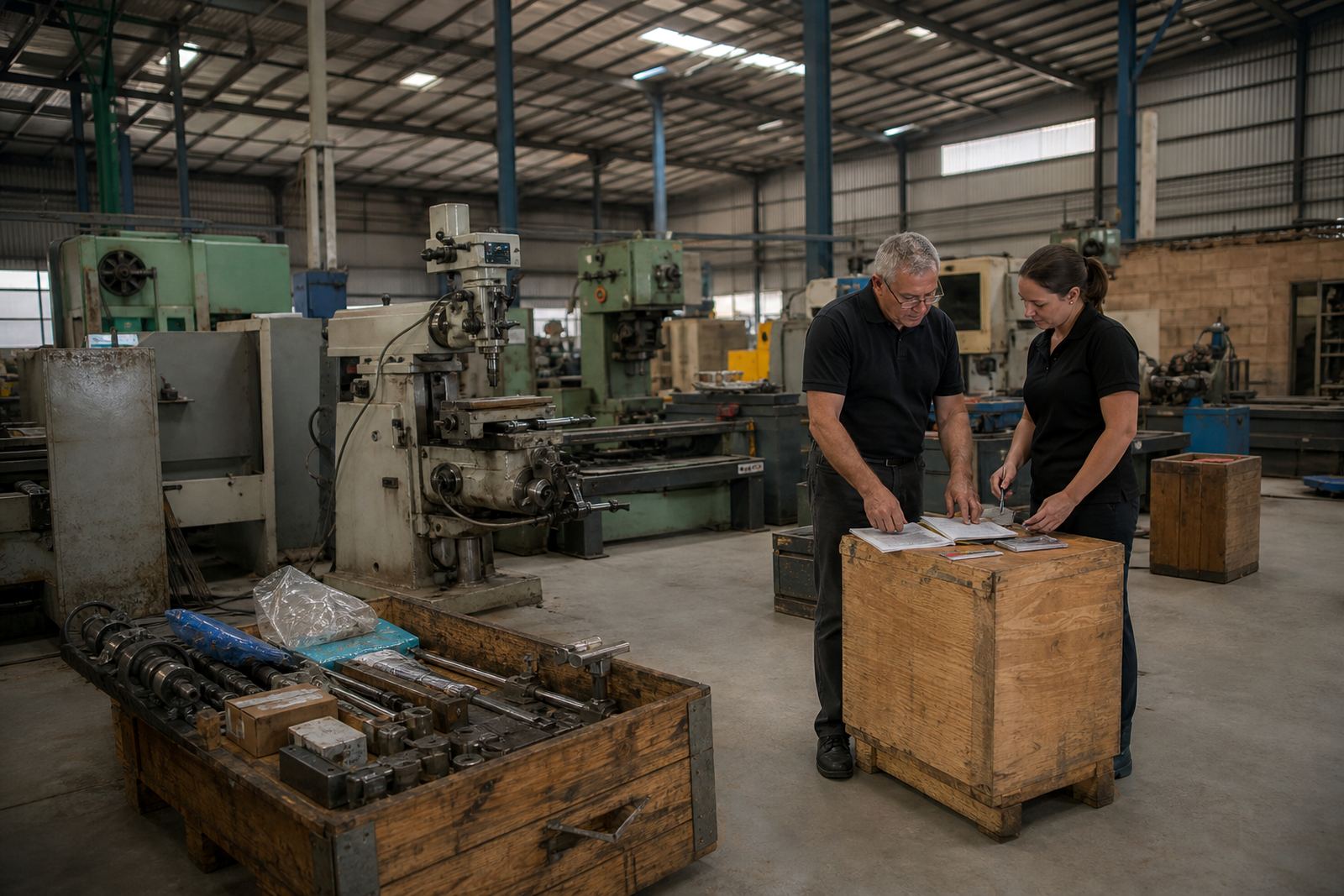
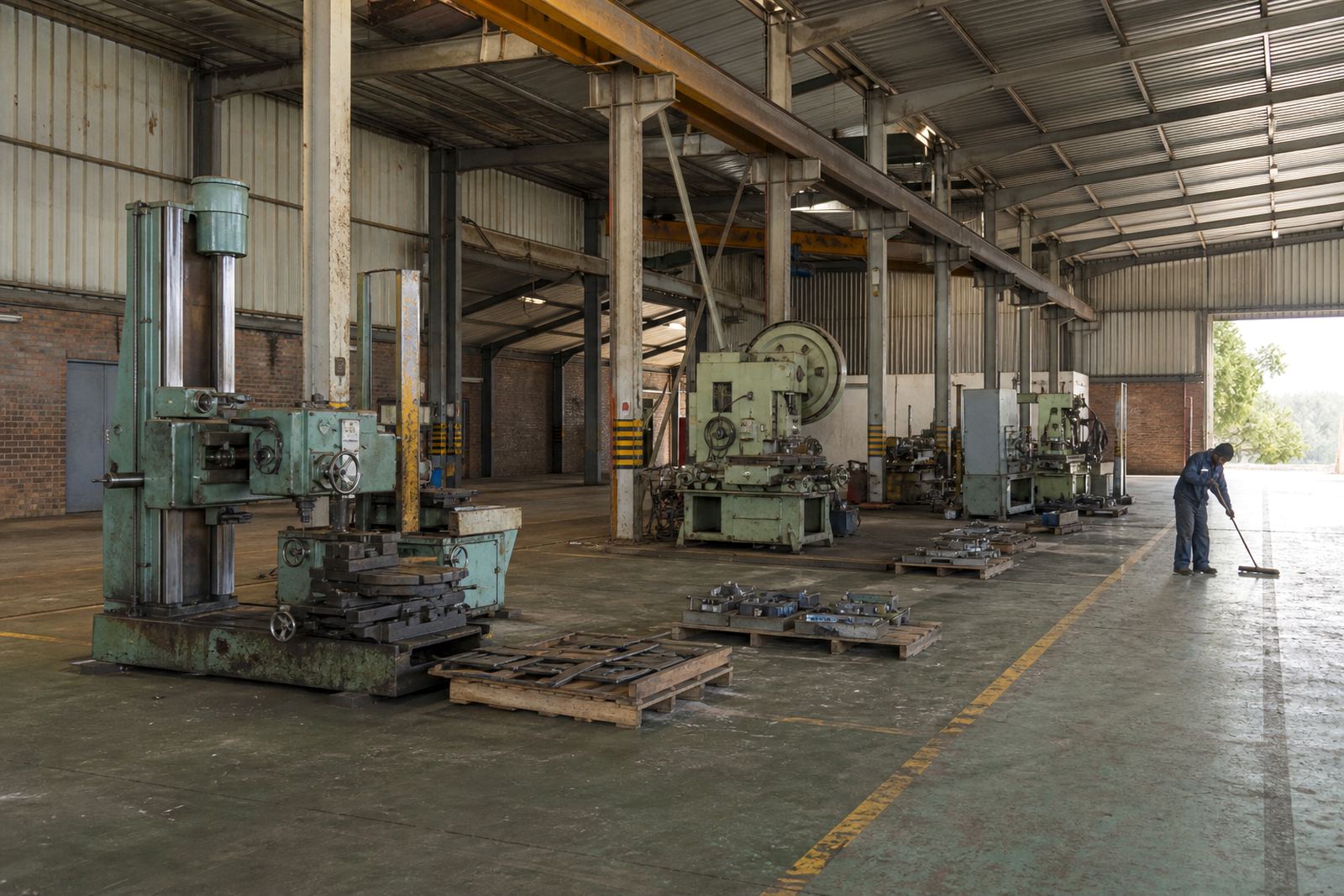
During the visit we record identification plates, approximate capacities, dimensions and visible operating condition. Where a machine can be run safely, a short functional check may be carried out. If a unit is isolated, in storage or partly dismantled, the valuation is based on the condition that can be confirmed on site, not on assumptions.
- Confirm asset list and site access before the visit
- Inspect condition, specification and installation type
- Note service records, hours and maintenance intervals if available
- Identify lifting, loading and removal issues that may affect saleability
What helps us price the work properly
Turnaround depends on the size of the site, the number of assets and whether specialist inspection is needed for heavier plant. Smaller assignments can often be completed quickly, while larger factory closures, multi-line operations or sites spread across more than one building need more time for sorting, noting and checking.
The outcome is a clear opinion of value with supporting notes on condition and marketability. That can be used for auction planning, reserve guidance, seller decision-making, clearance sales or general asset review. If auction is the next step, the valuation helps with lotting and catalogue preparation so the process starts on the right footing.
- Short site visits for a small number of machines
- Longer inspections for mixed plant or multiple buildings
- Written notes that support auction planning and reserve setting
- Practical guidance on what to sell together and what to separate
Pricing approach and practical limits
Valuation pricing is usually based on the time required, the size of the asset list, travel, site conditions and any extra inspection work needed. A clean workshop in Midrand is easier to work through than a rain-soaked yard in Durban or a tight factory floor with limited access, so the approach is adjusted to the job at hand.
We do not give personal financial or tax advice, and we do not promise a sale price. The work is to provide an informed view that can support business decisions. Where the equipment includes cranes, pressure systems, large electrical installations or other regulated plant, the valuation notes the visible compliance factors but does not replace statutory certification or engineering sign-off.
- Pricing depends on site size and complexity
- Travel and access affect the time on site
- Specialist items may need extra inspection time
- No guarantee of eventual auction or private sale outcome
Why sellers and buyers use us
Sellers want an honest view before they commit to auction or a sale. Buyers want to know what they are looking at before bidding or making an offer. Our base in Kempton Park supports work across Johannesburg, Pretoria, Germiston and Midrand, while our valuation work also reaches Durban, Cape Town and Gqeberha when the asset list justifies an on-site visit.
MD Siyabonga Mthembu leads the business with a team that covers auction planning, inspection, logistics, catalogue preparation and client communication. That means the person handling the inspection is working within a process that already considers how the machinery may be marketed, moved and viewed later on. It keeps the assessment practical, not vague.
- Clear inspection notes for sellers, buyers and stakeholders
- Useful support for auction planning and lotting
- Local knowledge of industrial sites and access conditions
- Experience with shutdowns, clearance sales and plant disposal work
Key facts
| Service area | Kempton Park, Johannesburg, Pretoria, Durban, Cape Town, Gqeberha, Germiston and Midrand |
|---|---|
| Assessment type | Physical on-site inspection and opinion of value |
| Typical asset types | Used industrial machinery, plant, workshop equipment and auxiliary systems |
| Report basis | Condition, specification, working status, records and marketability |
| Turnaround | Depends on site size, number of assets and inspection complexity |
| Booking method | Enquiry form on the contact page |