What Closure Support Covers
Closure support is practical help for businesses winding down operations and disposing of used plant in an orderly way. It brings together inspection, opinion of value, lotting, viewing arrangements, buyer communication and removal planning so the site can be cleared with less disruption.
For many sellers the key concern is time. Machines still need to be identified, powered where possible, photographed and described before they are offered to the market. We handle that work in a way that suits live factory conditions, whether the site is in Kempton Park, Germiston, Midrand, Pretoria, Johannesburg, Durban, Cape Town or Gqeberha.
- Used machinery and plant are assessed as they stand on site
- Items are grouped into sensible lots for sale
- Viewing days are arranged for interested buyers
- Collection and site clearance are coordinated after sale
How The Process Usually Runs
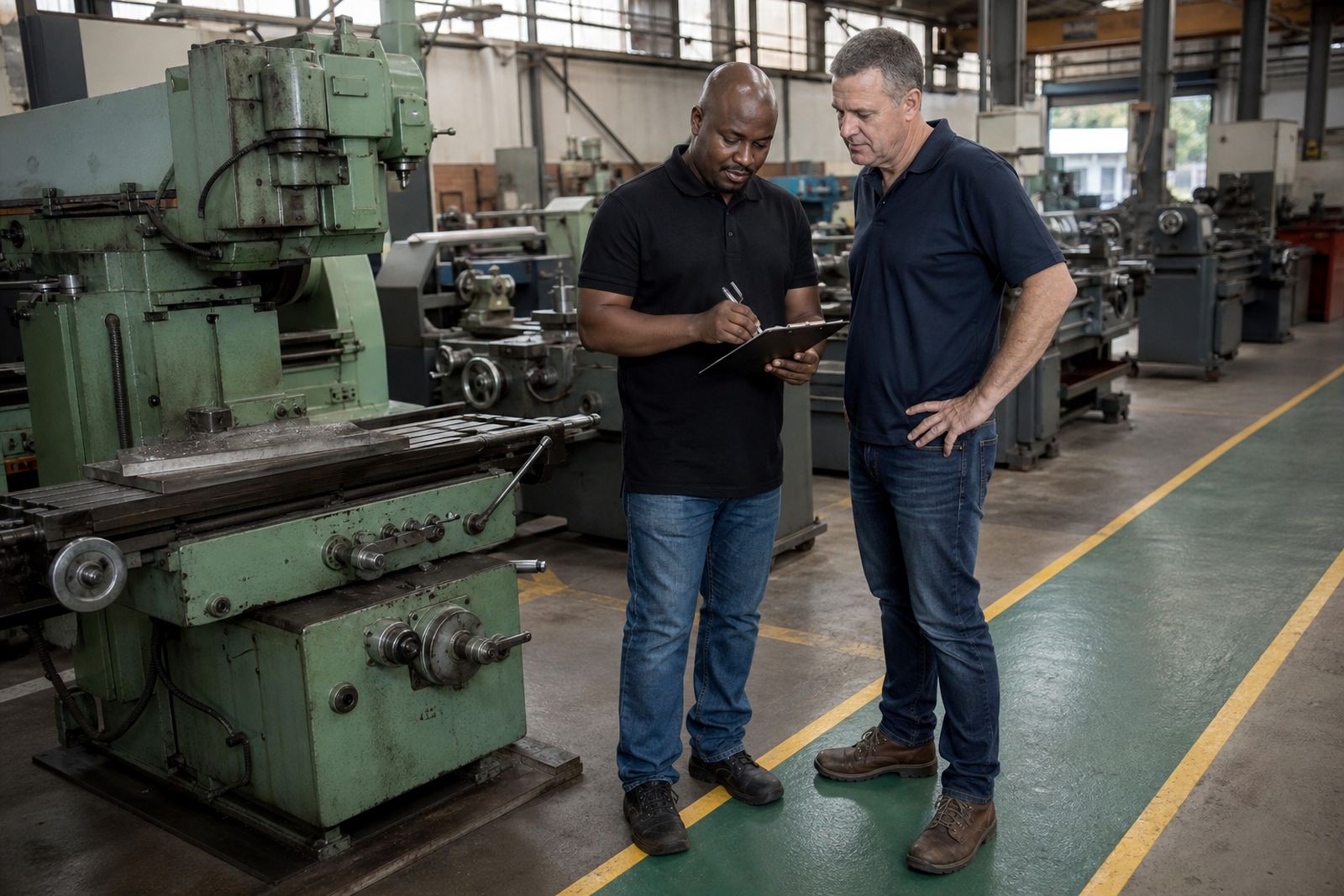
Every closure is different, but the process usually starts with an on-site inspection and a list of assets to be sold. From there, items are checked for make, model, capacity, age, condition and obvious missing parts. That information helps guide the valuation and the sale plan, but it does not guarantee a sale price because the market sets the final level.
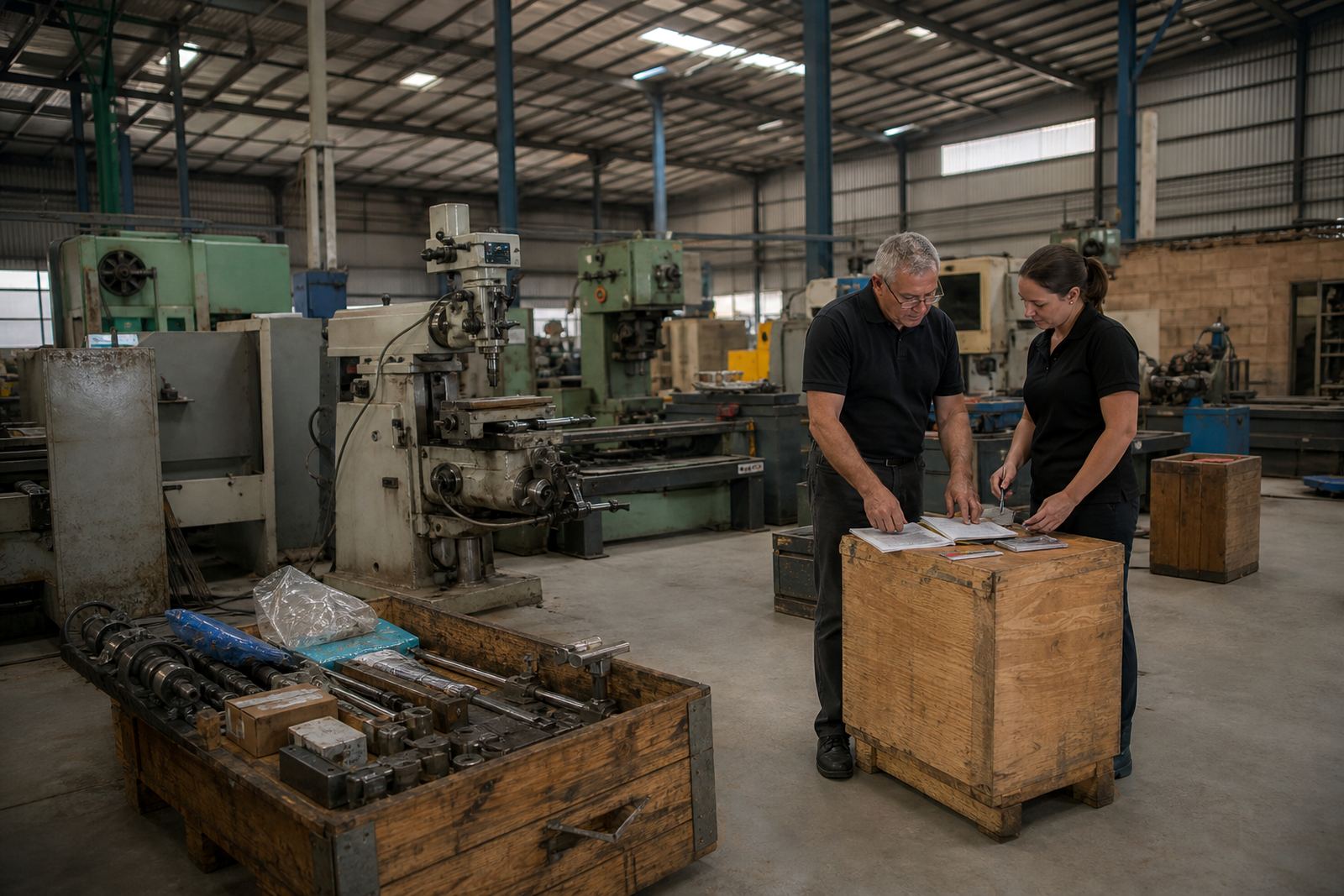
Once the list is confirmed, we prepare the auction or disposal sequence, set viewing times and organise the catalogue. For larger sites, the sequence may need to follow production stoppages, electrical isolation or access rules from the landlord or body corporate. In industrial areas this can mean working around forklift routes, loading bays and after-hours access windows.
- Initial site visit and asset review
- Valuation opinion and lotting
- Photo listing prep and catalogue notes
- Viewing days and buyer queries
- Collection coordination and closure handover
What We Look For During Asset Inspections
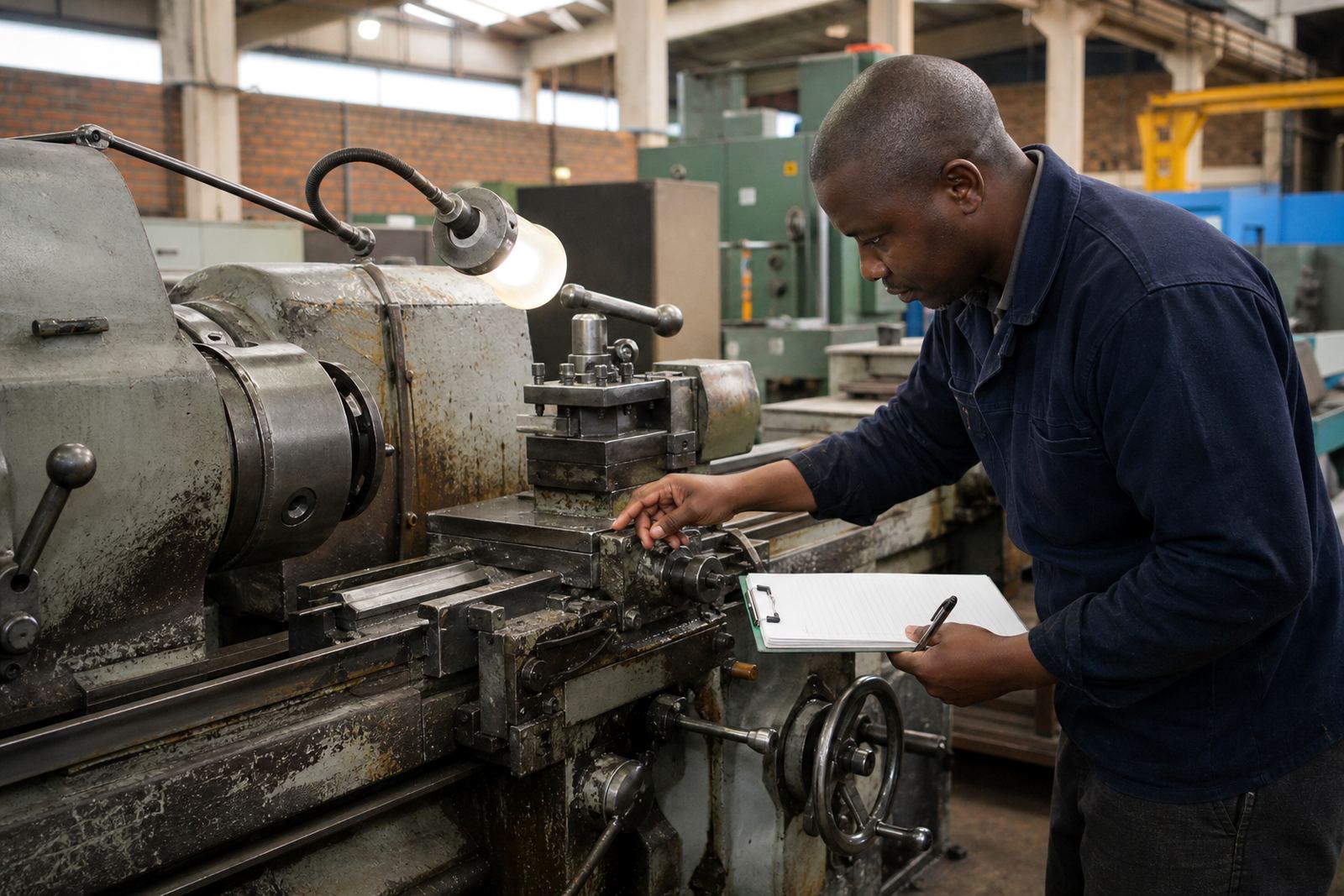
Good closure planning starts with a proper inspection. We look at the machine type, working condition, wear, tooling, safety guards, service records and whether the unit can be run for demonstration. A clean machine with clear identification plates and complete accessories is usually easier to present than one that has been stripped or left outdoors through coastal humidity and dust.
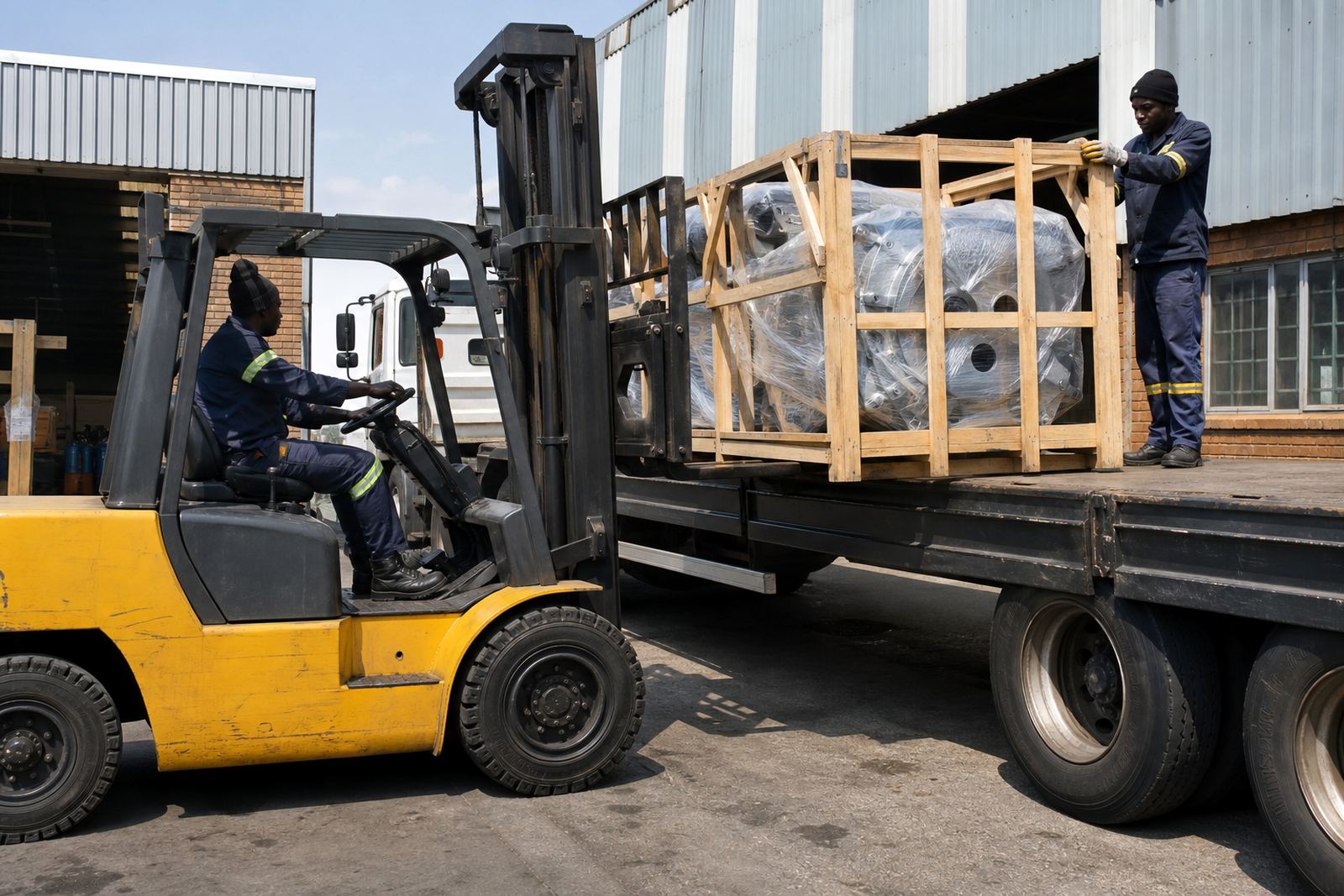
We also note practical points that affect removal, such as floor loading, anchor bolts, power supply, compressed air, extraction, overhead clearance and whether the item needs dismantling. In many Gauteng sites the question is less about the machine itself and more about how it will get out the door without damaging floors, racking or roller shutter doors.
- Electrical condition and isolation status
- Mechanical wear, leaks and missing parts
- Access for forklifts, cranes or rigging crews
- Weather exposure, especially on open yards
Turnaround For Closing Sites
Turnaround depends on the size of the asset list and the condition of the site. A small workshop with a few machines may be reviewed and prepared quickly, while a larger plant with mixed equipment can take longer because every item has to be recorded properly. In practice, speed comes from good access, a prepared asset register and someone on site who can confirm what is staying and what is going.
Where load-shedding affects testing or photography, we plan around available power and daylight. If a machine cannot be powered up safely, we still document it clearly so buyers know what they are looking at. That helps reduce delays later when collection teams arrive with the wrong gear or too little time.
For sellers under time pressure, the aim is to keep the process moving without skipping steps. A rushed closure often creates confusion at the gate or during clearance, so it pays to do the list properly from the start.
Pricing Approach And Reserve Guidance
Our pricing approach is based on an opinion of value, not a promise of what the market will pay. That opinion considers condition, demand, age, size, remaining service life and how easy the machine will be to remove and recommission. Reserve guidance is then discussed in plain terms so the seller can decide whether to pursue a quicker sale or hold for a firmer level.
We do not give personal financial or tax advice. What we can do is explain the disposal process clearly, point out the likely costs linked to removal and prepare the sale information so decisions can be made with good facts. That is often useful where a business is closing multiple lines at once and every item needs a separate decision.
- Valuations are opinions of value only
- Reserve levels are guided by condition and market interest
- Higher priced items usually need stronger photo and inspection notes
- Clear title and complete records help buyer confidence
Servicing, Standstill And Maintenance Intervals Before Sale
Before a closure sale, a machine does not usually need a full workshop overhaul unless the seller wants one. What helps most is basic tidying, safe isolation and a sensible record of the last service. If a machine has sat idle for months, seals, belts, batteries and hydraulic components may need checking before anyone attempts a demonstration.
As a general guide, some machines are normally serviced every 250, 500 or 1 000 operating hours, depending on type and duty cycle. For closure support, the exact interval matters less than the current condition and whether the machine has been kept clean and protected. Outdoor storage in Durban or Gqeberha often shows up as surface corrosion, while dusty inland sites may need more cleaning around motors, rails and control panels.
- Check lubrication and oil levels before viewing
- Inspect belts, hoses, seals and guards
- Record the last service date if available
- Disconnect and label power safely before removal
Removal, Clearance And Hand Over
Once the sale is concluded, the final step is to clear the site without holding up your shutdown programme. We coordinate collection timing, access requirements and buyer instructions so that equipment leaves in a controlled order. For bulky plant, the buyer may need rigging, lifting gear or a transport plan that suits municipal by-laws and site rules.
Closure support is most useful when the handover is neat. That means fewer disputes at the gate, fewer missed items and a cleaner exit for landlords, liquidators, owners or directors who need the premises handed back in good order. Our team stays involved through the final stages so the process closes properly, not half done.
Key facts
| Service area | Kempton Park, Johannesburg, Pretoria, Durban, Cape Town, Gqeberha, Germiston, Midrand |
|---|---|
| Base | Kempton Park, Gauteng |
| Founded | 2008 |
| MD | Siyabonga Mthembu |
| Core support | On-site valuations, lotting, auction planning, clearance coordination |
| Typical machinery types | Industrial plant, workshop equipment, processing lines, warehouse machinery |