Sale Planning That Starts With the Plant, Not the Calendar
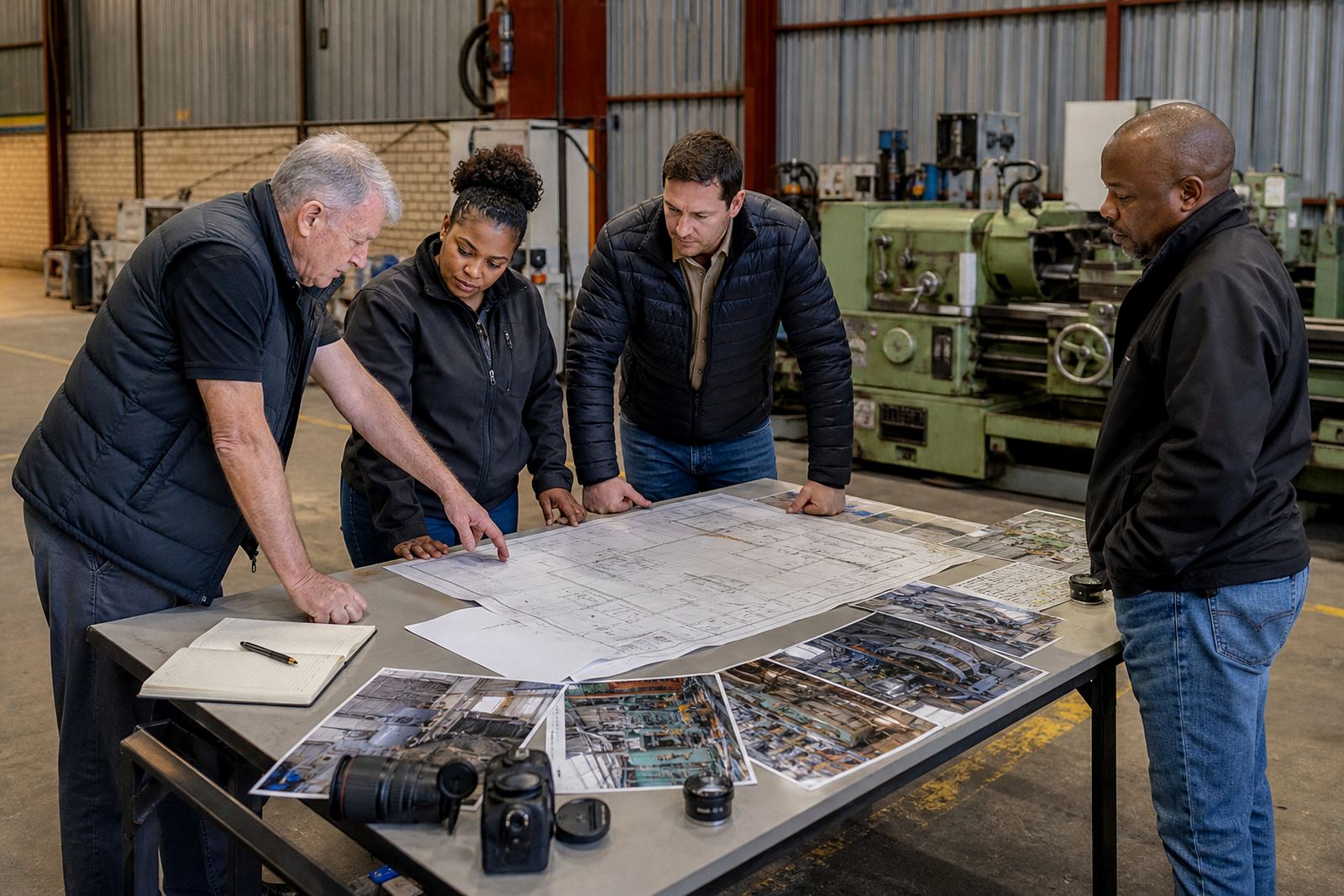
A proper auction plan begins with the machinery itself. Our team looks at the type of equipment, age, condition, power requirements, floor space, access points and any stripping that may be needed before moving items out. A paper plan is not enough on an industrial site where a 4 tonne forklift needs turning space, overhead clearance and a clear route to the gate.
We use auction planning to group assets in a way that makes sense for buyers and for the seller. That can mean separating production lines from support equipment, keeping similar machines together, or splitting lots where a single item would be too large to move in one go. In Kempton Park and the wider Gauteng area, where many sites operate with tight yards and shared access, this early planning saves time and avoids last minute hold ups.
- Site walk through and access check
- Asset grouping by type, size and moveability
- Review of power, rigging and loading needs
- Identification of items that need cleaning, tagging or minor preparation
- Advice on practical sale timing around production shutdowns or handover dates
What Is Included in the Auction Planning Service
Our planning service covers the steps that sit before the auction itself. The aim is to make the sale clear, orderly and fair for both sellers and buyers. We do not give a guarantee of a sale price, because a valuation is an opinion of value based on market knowledge, condition and demand at the time. What we do provide is a structured plan that supports better buyer confidence and cleaner selling conditions.
Depending on the site, planning may include inspection notes, lotting guidance, viewing day setup, reserve discussion, seller representation and clearance coordination. For larger plants, we also plan buyer flow so there is space for inspection teams, photo capture, lifting equipment and vehicles coming in to collect assets after the sale.
- On-site review of machinery and surrounding work area
- Proposed lot structure and sale order
- Viewing day layout and buyer movement planning
- Collection route planning for heavy or awkward items
- Closure support after the auction closes
How We Structure Lots and Buyer Flow
Lotting is where a sale can gain or lose momentum. Small items may be combined into sensible groups, while higher value equipment is often kept as single lots so buyers can assess each item properly. We also look at whether a machine should be sold in place, partly dismantled, or cleared as a package with linked accessories. That decision depends on the site, the machine dimensions and how the next owner is likely to remove it.
Buyer flow matters on viewing day and on collection day. We plan paths that keep people out of active work areas, reduce congestion around entry gates and allow enough room for trucks and rigging teams. In places like Johannesburg, Pretoria and Durban, where industrial yards can be busy and access may be shared with tenants or service providers, this planning keeps the process moving in a practical way.
Typical planning specs we check include machine length, width, height, weight, floor loading, doorway clearance, aisle width and power isolation points. If the equipment is sensitive to dust or coastal humidity, as often happens in Cape Town and Gqeberha, we note that too because storage and viewing conditions can affect how buyers assess the item.
Turnaround Times and Scheduling for a Live Sale
Turnaround depends on the number of assets, the size of the site and how quickly information can be gathered. A small, straightforward group of machines may be planned within a few working days once access is confirmed. Larger plants, or sites with multiple buildings and mixed stock, take longer because each item has to be checked, grouped and sequenced correctly.
We normally plan around the seller’s operational calendar, including shutdowns, relocations and end of lease dates. If a site is still running, we fit the planning around shift times and safe access windows. If the plant has been idle for a while, we may recommend a fresh inspection before final lotting because condition can change from one month to the next, especially with batteries, seals, hydraulics and exposed electrical parts.
For maintenance intervals, auction planning is best reviewed whenever there is a material change to the asset base, site access or sale timeline. As a practical guide, we suggest a fresh review every 3 to 6 months for active plants, or sooner if new machinery has been installed, removed or moved into storage.
Pricing Approach and Reserve Guidance
Auction planning is closely linked to reserve guidance and the likely strength of buyer interest. We look at market conditions, asset condition, completeness, and the likely cost for a buyer to dismantle, transport and recommission the equipment. The purpose is to guide the seller on a sensible sales approach, not to promise a final hammer figure.
Our pricing approach is transparent. We explain how the condition of each lot affects buyer appetite, where grouping may help or hinder, and how reserve levels can influence the speed of sale. Sellers are often surprised that two similar machines can behave very differently at auction because of age, maintenance history, power configuration or transport difficulty. That is why the planning stage is important.
- Opinion of value based on current market knowledge
- No guarantee of the sale price or sale outcome
- Reserve guidance aligned to the item and the market
- Clear explanation of the risks around over grouping or under grouping lots
- Practical advice on what can improve buyer response before sale day
Site Access, Clearance and Post Sale Coordination
Good auction planning does not stop when the catalogue is ready. We also plan for how the site will be cleared after the sale, which items need early release and what still has to be protected until payment and collection are complete. That includes access checks for loading vehicles, working around municipal requirements where relevant, and allowing enough space for safe removal of heavy items.
On many industrial sites, the biggest delays happen at the gate, not at the machine. We help with collection coordination so buyers know when they can arrive, what documents or site rules apply, and which routes are suitable for larger loads. Where needed, we also coordinate with sellers on closure support so the sale finishes cleanly and the remaining assets are accounted for.
For sellers across South Africa, from Germiston and Midrand to Durban, Cape Town and Gqeberha, the same practical rule applies: good planning keeps a sale orderly, reduces avoidable damage, and gives buyers a clear run at the equipment they came to inspect.
Why Sellers Use Machine Africa for Auction Planning
Machine Africa is based in Kempton Park and works with used industrial machinery across Johannesburg, Pretoria, Durban, Cape Town, Gqeberha, Germiston and Midrand. Founded in 2008, our team understands the day to day realities of industrial selling, from loading bay access and plant shutdowns to the detail that goes into a clean, workable auction plan.
Under the direction of Siyabonga Mthembu, our team includes Naledi Khumalo on auction management, Pieter van der Merwe on valuation, Ayesha Ismail on client relations, Thabo Molefe on operations, Johan Botha on site logistics, and Lerato Nkosi on catalogue and media coordination. That mix helps us keep planning practical, especially when sites are active or when equipment has to be sold in a specific sequence. If you need an auction plan that fits your machinery and your site, use the enquiry form on our contact page and we will take it from there.
Key facts
| Service area | Kempton Park, Johannesburg, Pretoria, Durban, Cape Town, Gqeberha, Germiston and Midrand |
|---|---|
| Typical planning focus | Timing, asset grouping, access, buyer flow and collection coordination |
| Site checks | Dimensions, weight, power, floor space, entry points and loading routes |
| Turnaround | From a few working days for smaller instructions, longer for larger plant |
| Review interval | Every 3 to 6 months for active sites, or when the asset mix changes |
| Pricing approach | Transparent and quote based, with reserve guidance and no sale price guarantee |