What an Asset Inspection Covers
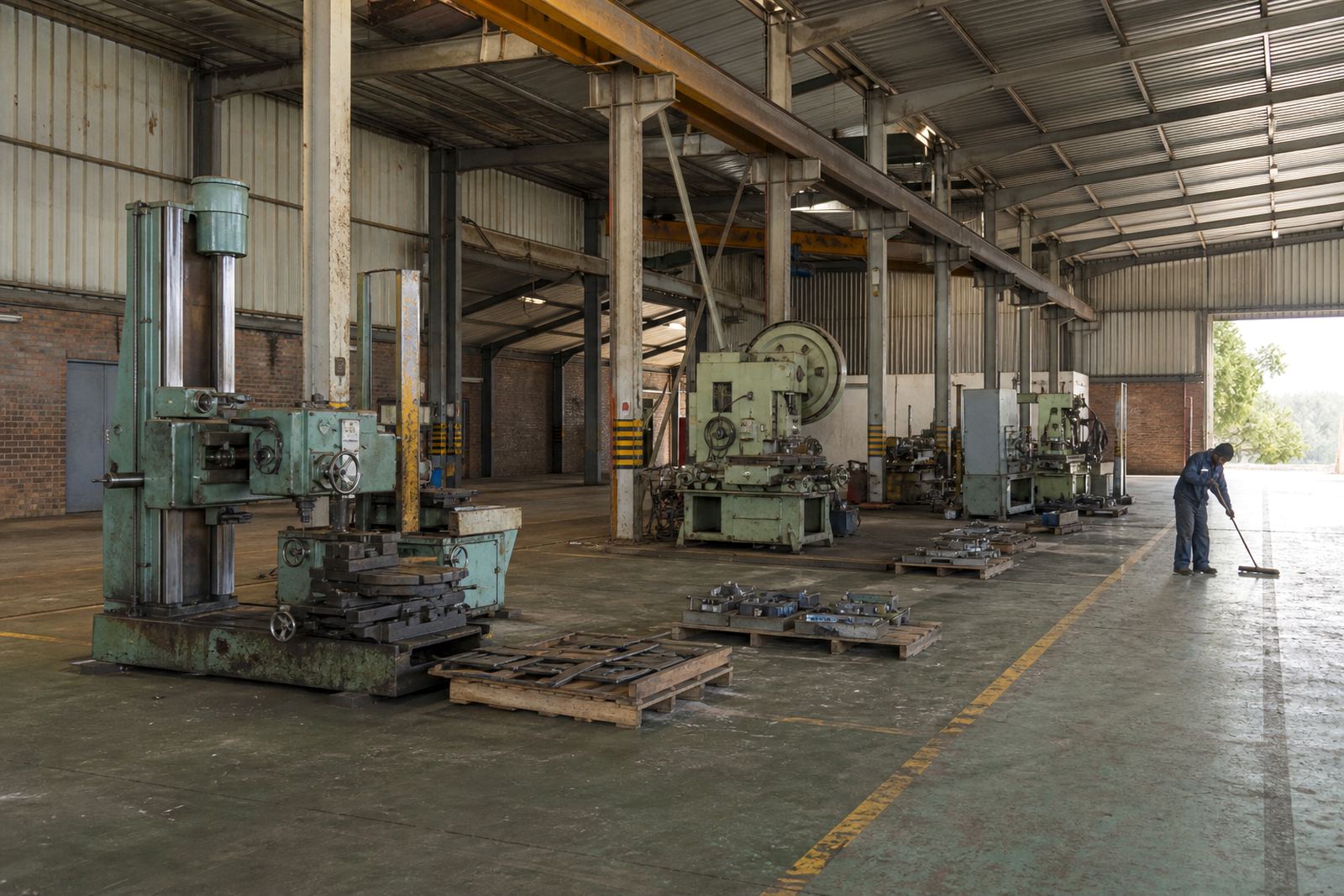
An asset inspection is a practical check of used industrial machinery before a valuation, auction or sale decision. It is not a warranty and it does not guarantee a sale price. It gives an opinion based on condition, age, usage, visible wear, missing parts and any signs of poor maintenance or damage. That matters when equipment has sat idle through load-shedding, long shutdowns or a slow production period because seals dry out, batteries weaken and electrical faults can appear before the machine is put back into service.
We inspect a wide range of plant and production equipment, from workshop machines to heavier industrial units. The review is focused on what can be seen and tested safely on site, with practical notes for sale preparation. Where access is limited, say for a machine fixed in place or tucked into a tight plant room, the report will note that clearly.
- External condition and visible wear
- Power supply, controls and safety features
- Missing guards, panels, hoses or attachments
- Lubrication points, leaks and contamination
- General cleanliness and storage condition
- Any evidence of rust, corrosion or water ingress
How We Carry Out the Inspection
The process starts with the asset list, site location and access details. We confirm what is on site, what can be safely reached and whether the equipment is operating or stationary. In Kempton Park, Germiston and Midrand, that often means arranging access around shift times, contractor rules and forklift movement so the inspection does not interrupt production more than necessary.
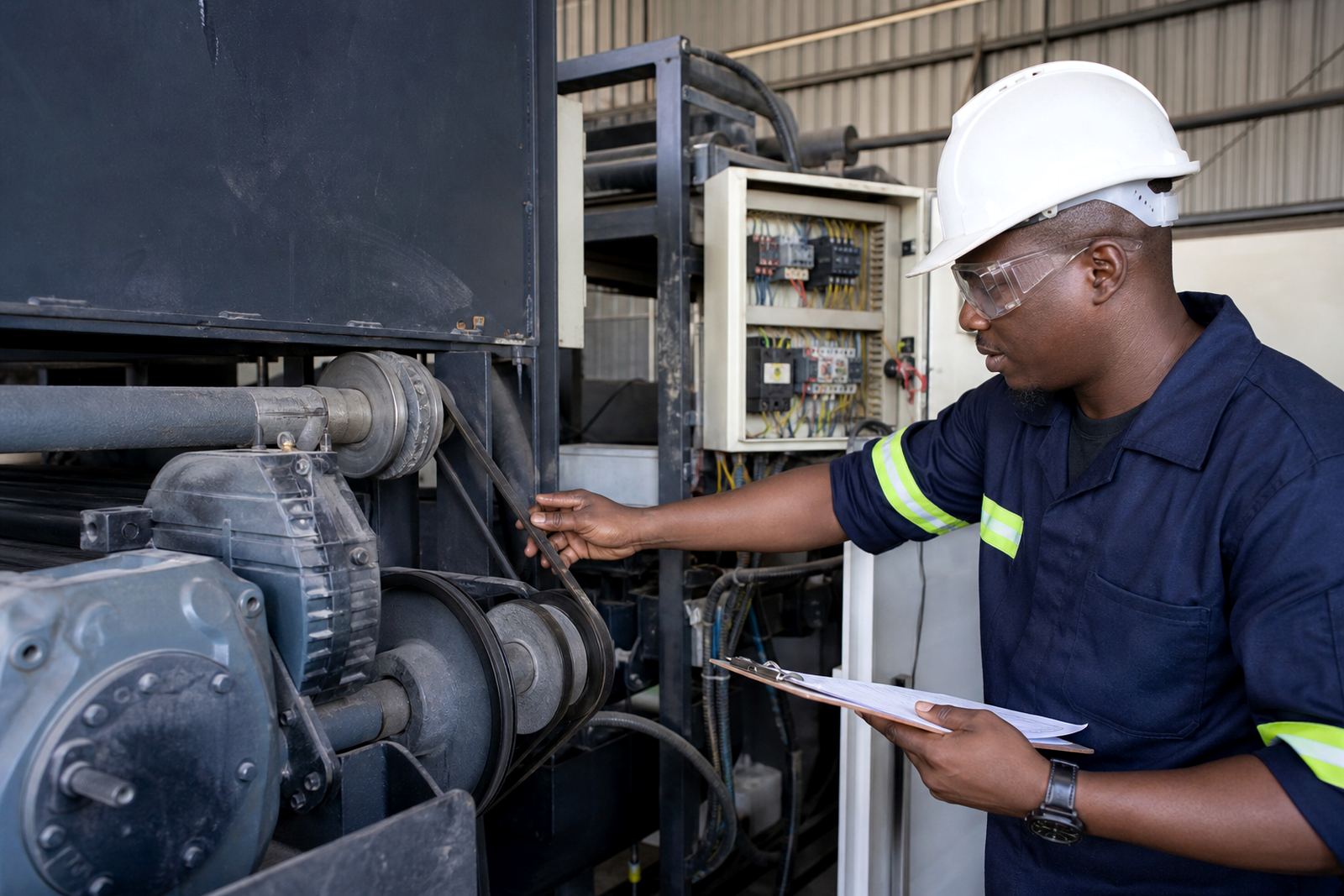
During the visit, the inspector checks the machine against its identification details and records the visible condition point by point. Where possible, we look at hours, service markings, wear patterns, guards, cabling and any obvious modifications. If a unit has been in storage, we look for moisture, dust build-up and signs that bearings, belts or hydraulic systems may need attention before sale or restart.
- Pre-inspection confirmation of asset list and access
- On-site visual inspection and basic functional checks where safe
- Photo record of key condition points and serial plates
- Notes on faults, missing items and sale prep items
- Condition summary that supports valuation and auction planning
What Buyers and Sellers Use the Report For
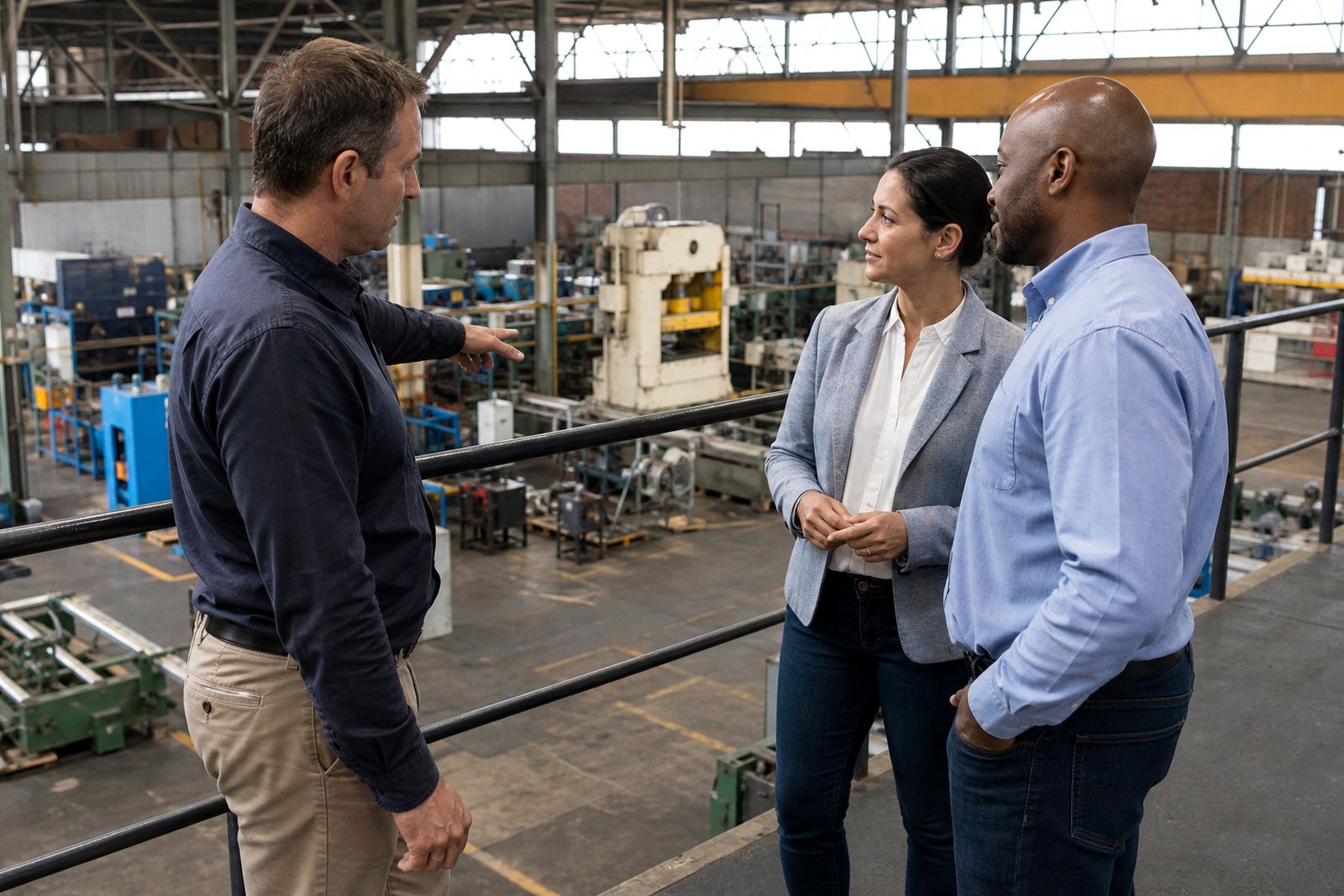
Sellers use the inspection to decide whether an item should be sold as-is, repaired first or grouped into a clearance sale. Buyers use it to understand what they are likely taking on, especially where a machine has been standing for months or has had intermittent use. A proper inspection helps reduce surprises later and gives both sides a clearer basis for the next step.
For auction work, the condition notes help with lotting, catalogue wording and reserve guidance. For a seller in Johannesburg or Pretoria with several machines spread across different bays, the inspection also helps decide which items should be photographed first, which need cleaning and which may need a short test run before viewing day.
- Sale preparation and cleaning priorities
- Reserve guidance and lot grouping
- Clearer buyer disclosure for viewing days
- Support for closure sales and disposal planning
- Better decisions on whether repair is worth the spend
Turnaround Times and Site Scheduling
Turnaround depends on the number of assets, the size of the site and how much access is available. A single machine in Kempton Park may be inspected far quicker than a full plant with multiple lines, spares stores and mixed equipment. Where the site is active, we plan around production windows and municipal or landlord site rules so the process stays orderly.
For urgent sale preparation, we can usually work to a tight schedule if the asset list is complete and access is ready. Reports are then compiled after the visit with the inspection notes, photo references and a practical condition summary. If further checking is needed, for example where a machine has not been run in a long time, we will say so rather than guessing.
- Single asset inspections can often be handled quickly
- Larger plant schedules need more lead time
- Access delays can affect turnaround
- Photo sorting and report prep follow the site visit
- Special checks may be added where the machine has been idle
Pricing Approach and What Affects Cost
Pricing is based on the scope of the inspection, the number of assets, travel, access complexity and whether the site needs detailed lot by lot checking. We do not quote sale prices from an inspection. The inspection supports an opinion of value, but final auction results depend on buyer interest, timing, condition and market demand at the time of sale.
Sites in Cape Town or Gqeberha may need extra planning for long-distance coordination, while compact urban sites in Johannesburg or Durban can be more straightforward. If machinery is spread across several floors, yards or depots, that also affects the time required. The aim is always to keep the scope sensible and the findings easy to use, not padded with unnecessary extras.
- Number of machines or lots
- Site size and access complexity
- Need for photos, listing prep or further checks
- Travel and logistics for out-of-area sites
- Depth of reporting required for sale planning
Maintenance Intervals and Sale Readiness Checks
For equipment that is being prepared for sale, it is wise to inspect again after cleaning, after any maintenance work and again before viewing day if the machine has been standing. That is especially important in coastal humidity, where corrosion can start quickly on exposed metal, electrical terminations and stored tooling. In inland areas the issue may be dust and dry bearings, while on heavy plant the risk is often hydraulic seepage, tyre wear or battery condition.
As a general practice, machines in active use should be visually checked on a regular maintenance schedule and formally reviewed before being offered for sale. If a unit has been idle for a long time, a second look after recommissioning can catch issues that only appear once power is restored or the machine is moved. Good timing here can make the sale process cleaner and less stressful.
- Check before cleaning and listing
- Check again after minor repairs or recommissioning
- Check just before viewing day if the machine has been idle
- Increase frequency in humid or dusty environments
- Keep maintenance notes with the asset file for future sale use
Key facts
| Service area | Kempton Park, Johannesburg, Pretoria, Durban, Cape Town, Gqeberha, Germiston and Midrand |
|---|---|
| Asset types | Used industrial machinery, plant equipment and workshop assets |
| Inspection focus | Condition, completeness, visible wear, safety features and sale readiness |
| Output | Practical condition summary with photo references and valuation support notes |
| Turnaround | Depends on asset count, access and site size |
| Pricing basis | Scope-driven, based on number of assets, travel and report depth |