Pinetown recycler disposal brief
The client was a recycling operation in Pinetown, KwaZulu-Natal, working with mixed material streams and a plant layout that had changed over time as lines were added. The instruction was to assess the used machinery, group the assets into saleable lots and prepare the site for auction without interrupting day to day handling more than necessary.
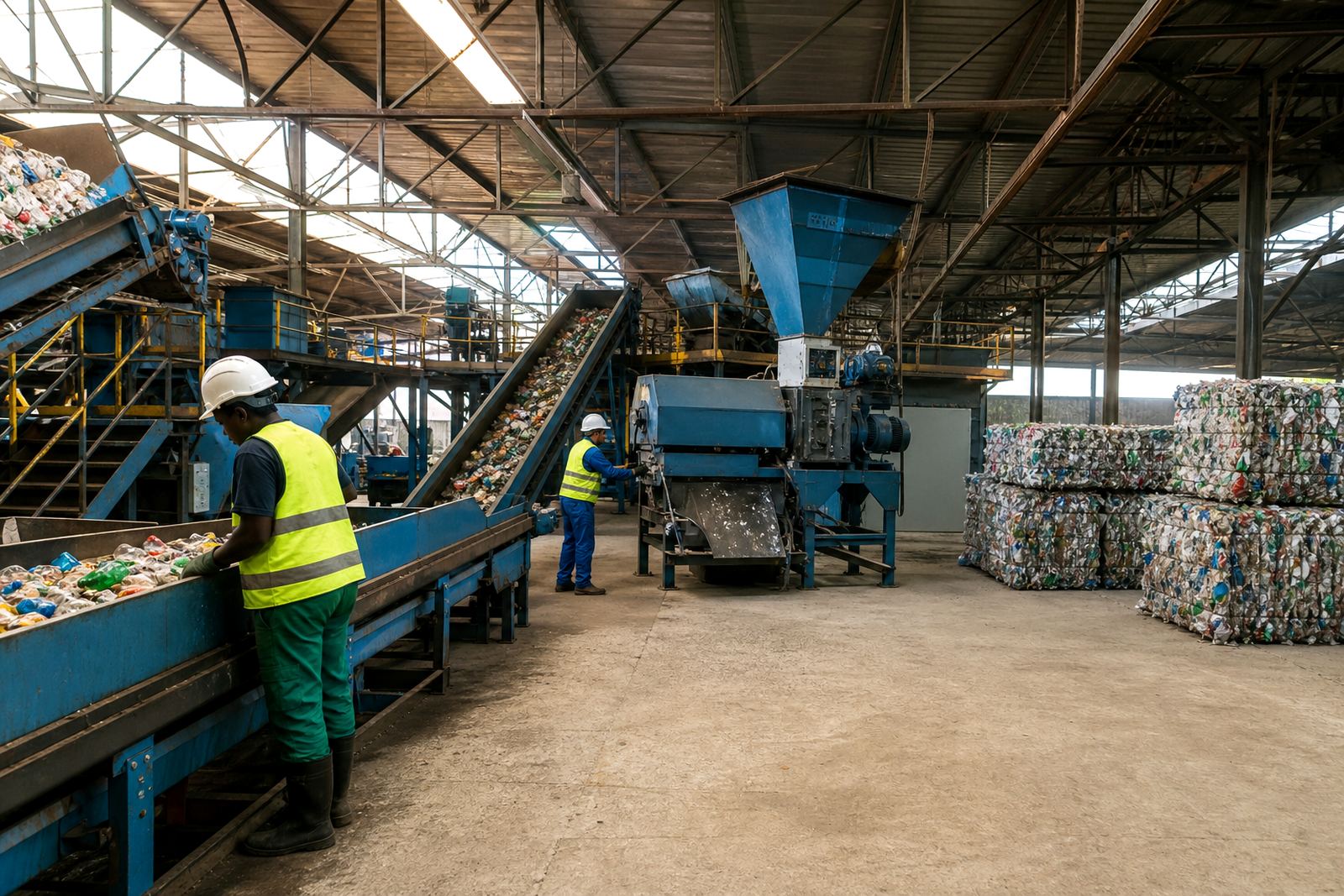
The asset mix included granulators, conveyor sections, a baler, feed hoppers, magnetic separation support items, control panels and assorted handling gear. Some items were complete and ready for re-use, while others needed testing, cleaning or de-energising before they could be listed properly.
What made the site tricky
The main constraint was the plant environment. A recycling site carries dust, scrap contamination and uneven wear, so every item had to be checked for condition, missing parts and visible damage before any opinion of value was given. In coastal KwaZulu-Natal, humidity also affects motors, bearings and electrics, so we paid close attention to corrosion, cable condition and storage history.
There was also limited space for moving machinery. Several assets sat tight against walls and conveyor runs, and access had to be planned around forklifts, bins and internal traffic. Load shedding was another consideration, because the client wanted inspection windows that did not clash with production stoppages or backup power routines.
- Restricted lifting and access around fixed conveyor routes
- Mixed condition across old and newer support assets
- Dust and moisture affecting visibility, labels and nameplates
- Need to keep the site orderly for staff and buyers
Our valuation and lotting approach
We started with an on-site valuation inspection and recorded each machine by type, size, condition and completeness. A valuation is an opinion of value based on market knowledge, local demand and the equipment's state at inspection, it is not a guarantee of sale price. From there we built lots that made commercial sense for buyers, instead of splitting every item too finely.
For this project we grouped several support items as bundles, while keeping higher value machines separate so buyers could inspect them properly. That helped present the plant as a working system, not just a pile of loose components. It also reduced confusion on viewing day and made the catalogue easier to follow for buyers from Durban, Johannesburg and further afield.
- Granulation line items separated for clarity where condition differed
- Conveying sections grouped by length and compatibility
- Baling and handling support assets catalogued as practical lots
- Photo listings prepared with close-ups of wear points, panels and frames
Auction planning and buyer viewing
Once the lotting was signed off, we set a timeline that allowed for inspection, catalogue preparation and viewing day coordination over about three weeks. That included site photography, asset descriptions, reserve guidance discussions and the practical steps needed to close off the sale cleanly. We kept the process straightforward so the seller could stay focused on operations.
Viewing day is where details matter. Buyers want to see guards, feeds, discharge points, motor sizes and general wear. We made sure access was safe and that items could be inspected without anyone wandering through active work areas. Clear signage and controlled movement on site helped keep things orderly and it saved time for everyone involved.
- Week 1: inspection, identification and condition notes
- Week 2: catalogue build, photo set and lot structure
- Week 3: viewing, buyer queries and disposal planning
Closure support after the sale
After the auction stage, the work does not stop. Collection timing, dismantling access and site clearance all need to be managed so sold assets leave without affecting the rest of the yard. For this project we coordinated removals around the client’s internal teams and kept communication tight so there were no surprises on handover day.
The outcome was a cleaner site, a more usable asset register and a sale process that gave buyers enough confidence to bid on used industrial machinery that had been properly described. The client also gained clearer records of what had been disposed of, what remained on site and which items needed further attention before future sale.
If we had to repeat the job, we would do the same thing again: inspect early, photograph every lot carefully, and keep the lotting practical for real buyers. That approach works best on recycling plants where equipment has seen hard use and where access, safety and timing all matter at the same time.
Why this project suited our team
This type of disposal suits our Kempton Park base because we work with buyers and sellers across Gauteng, KwaZulu-Natal and the coastal centres where used plant changes hands regularly. The team handled the assignment as a unit, with valuations, cataloguing, logistics and client communication kept in step from start to finish.
- Senior valuation led by Pieter van der Merwe
- Auction planning and timing coordinated by Naledi Khumalo
- Client updates managed by Ayesha Ismail
- Site movement and collection planning handled by Johan Botha and Thabo Molefe
- Photo listing prep and lot records compiled by Lerato Nkosi
For sellers of used industrial machinery, the value is in a process that is tidy, fair and well documented. That is what this Pinetown recycler needed, and that is what we delivered.
Key facts
| Project location | Pinetown, KwaZulu-Natal |
|---|---|
| Client type | Recycling plant operator |
| Asset type | Used industrial machinery and support assets |
| Main equipment | Granulators, conveyors, baler, hoppers, control panels |
| Timeline | About 3 weeks from inspection to auction readiness |
| Service scope | Valuation, lotting, cataloguing, viewing and closure support |