Workshop disposal brief in Kempton Park
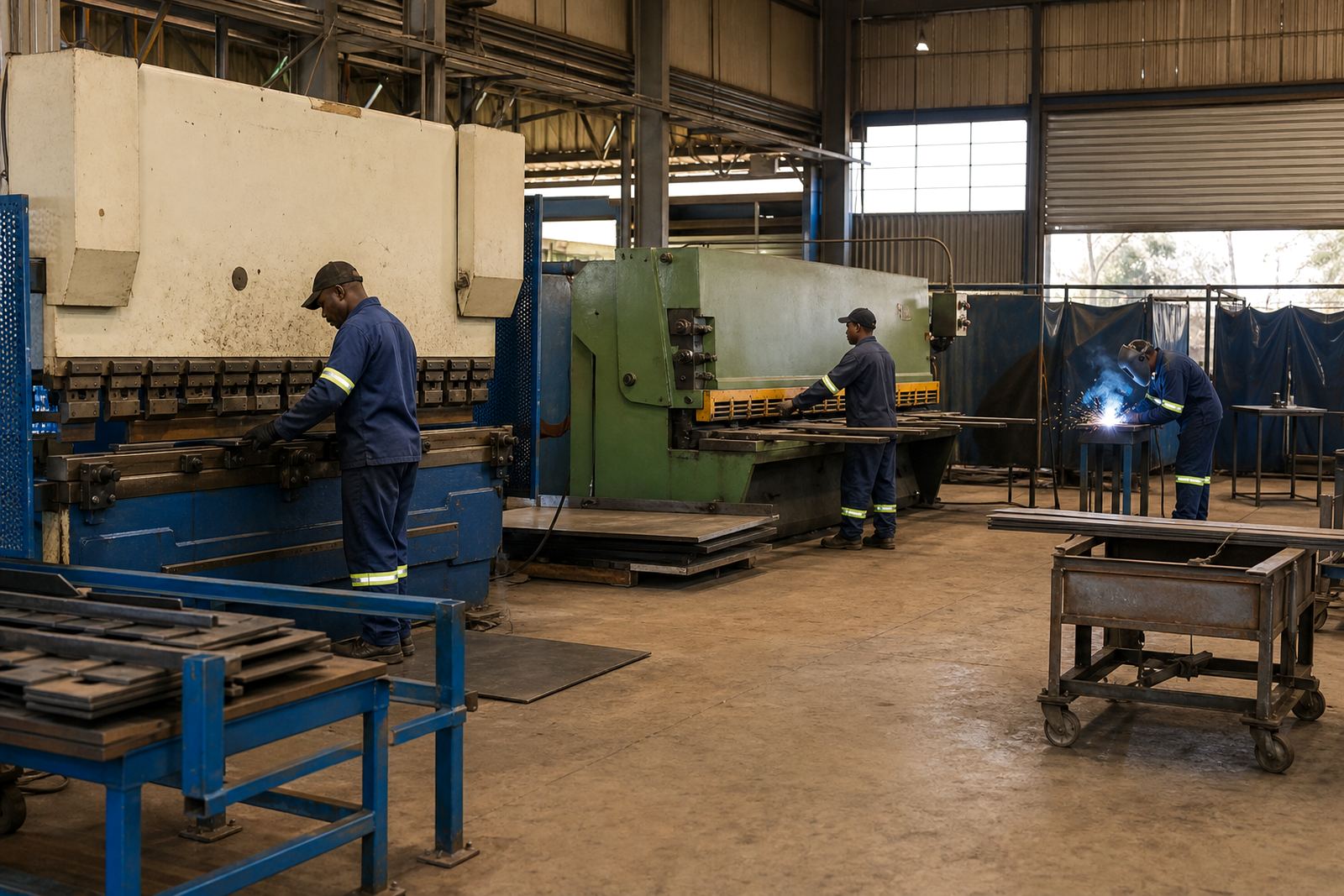
The client was a mid-sized sheet metal fabricator in Kempton Park that had tightened operations after a change in production mix. The workshop still had a solid spread of equipment, but several machines had been shifted around the floor over time, with loose tooling, mixed spares and some incomplete paperwork. The client needed a proper opinion of value, not guesswork, and wanted the machinery prepared for an auction process that would make sense to serious buyers.
The site was active enough to need care, but quiet enough for us to move through the floor without interrupting day-to-day cleaning and breakdown work. There were access constraints around a narrow loading area, plus the usual Gauteng issue of dust settling on machines parked near open doors. We also had to factor in load-shedding timing for inspection windows and photo work, because several items needed live checks while the supply was stable.
- Client type: sheet metal fabrication workshop
- Town: Kempton Park, Gauteng
- Project scope: valuation, lotting, staged viewing prep and auction support
- Main issue: mixed plant condition, moved equipment and incomplete asset records
What we inspected and how we approached it
We began with a floor walk and asset capture, then matched visible nameplate details, serial references where present, and condition findings against the equipment on site. Our valuer looked at wear, service access, safety guarding, electrical condition, maintenance history where available, and whether each item was still in a saleable working state or best described as parts, idle stock, or non-running plant. An opinion of value was then formed for each lot, based on observed condition and market interest, not as a promise of what any item would sell for.
The key machines included guillotines, press brakes, a folder, rolls, pedestal drills, a small CNC punch unit, extraction equipment, compressors and a range of hand-fed support items. Sheet metal workshops often have a mix of older and newer plant on the same floor, so we separated items that could attract different buyer groups. The aim was to avoid lumping together good saleable machinery with surplus benches and spares that would cloud the auction.
- Inspection covered visible operating condition and safety features
- Machinery was separated into individual lots and grouped lots
- Support items were listed where they added value, not just volume
- Photo notes were taken for buyer clarity and catalogue accuracy
Lotting, catalogue prep and buyer viewing staging
Once the inspection was complete, we prepared the lotting structure and the viewing route. That meant setting out the floor in a way that helped buyers see the bigger items safely and understand what was included with each lot. In a fabrication workshop, buyers want to know if the tooling is with the machine, whether the machine is powered, and whether transport can be managed without extra stripping. We put those details into the catalogue notes and photo sequence so the viewing day could move steadily.
We also arranged the items to reduce confusion around similar machines. Two plate processing units, a line of smaller support machines and assorted fabrication tools were staged so that buyers could walk from one lot to the next without doubling back. In practical terms, that saves time and usually gets better questions from the floor. It also helps sellers because the viewing is cleaner and the condition notes are easier to verify on the day.
- Catalogue notes were written in plain language with condition points
- Grouping was used where it made transport or use more practical
- Viewing paths were set to suit safe movement around larger plant
- Loose tooling was identified and linked to the correct lots
Timeline, site work and closure support
The project ran over three weeks. Week one covered intake, inspection and asset identification. Week two focused on lotting, photo listing prep and seller sign-off on descriptions. Week three was used for viewing day preparation, access checks, and closure support so the seller could field buyer queries with a clear record of what was being offered. Because the workshop was in Kempton Park, we could schedule the site work around traffic flow and local access without dragging the process out.
We also coordinated practical matters that matter on a working industrial site. That included making sure equipment was visible from safe angles, checking that bays and doors were usable for loading discussions, and flagging any items that should be handled carefully because of age, surface rust or missing parts. The clearance side was discussed alongside the sale plan so the seller understood what could be moved first and what might need additional handling. No tax or financial advice was given, just process guidance around disposal and auction steps.
- Week 1: inspection and asset capture
- Week 2: lotting, catalogue notes and photo listing prep
- Week 3: viewing staging, query handling and closure support
- Access and loading points were checked for practical removal planning
Results for seller and buyer clarity
The main result was a workshop that was organised for the market instead of left as a mixed store of idle plant. Buyers could see what was included, how the equipment was grouped, and where condition mattered. That usually improves the quality of enquiries because people are not trying to decode a cluttered floor plan. For the seller, the benefit was a transparent process with clear notes on each lot and a sensible structure for the auction day.
From a market perspective, the location also helped. Kempton Park is well placed for buyers moving between Johannesburg, Pretoria and the East Rand, and it is close enough for local contractors to attend a viewing without major travel. For larger items, buyers from Durban, Cape Town and Gqeberha can still participate when the catalogue is accurate and the lot descriptions are detailed. That is especially useful for fabrication equipment, where transport and reinstallation costs can affect how bidders behave.
- Cleaner catalogue presentation improved buyer understanding
- Separate lots reduced confusion around mixed workshop stock
- Seller had a clearer record of what was being offered
- Out-of-town buyers could assess the plant before travelling
What we would do again on a similar job
For a sheet metal workshop disposal like this, we would follow the same approach again: inspect first, lot second, then stage the floor for buyer movement. It is tempting to rush into photography and listing before the equipment is properly sorted, but that usually creates more questions later. A careful pass at the beginning saves time on viewing day and helps avoid arguments over what belongs in each lot.
We would also keep the same focus on practical condition notes, especially for older fabrication machines where wear can be hidden behind a clean exterior. In a coastal climate, even machines stored inland can show surface issues if they have been moved or left open, and in Gauteng the dust and power interruptions create their own complications. The best result comes from honest descriptions, direct viewing, and a structure that lets buyers make informed decisions without overcomplicating the sale.
- Start with a full inspection before catalogue work
- Keep lot descriptions specific and easy to verify
- Stage the floor for safe viewing and clear comparisons
- Use transport-friendly grouping only where it adds real value
Key facts
| Project type | Sheet metal fabrication workshop disposal |
|---|---|
| Location | Kempton Park, Gauteng |
| Duration | 3 weeks |
| Scope | Machinery inspection, lotting, staged buyer viewing preparation |
| Key equipment | Guillotines, press brakes, folder, rolls, punch unit, compressors |
| Service focus | On-site valuations, auction planning and closure support |