Food Plant Brief in Midrand
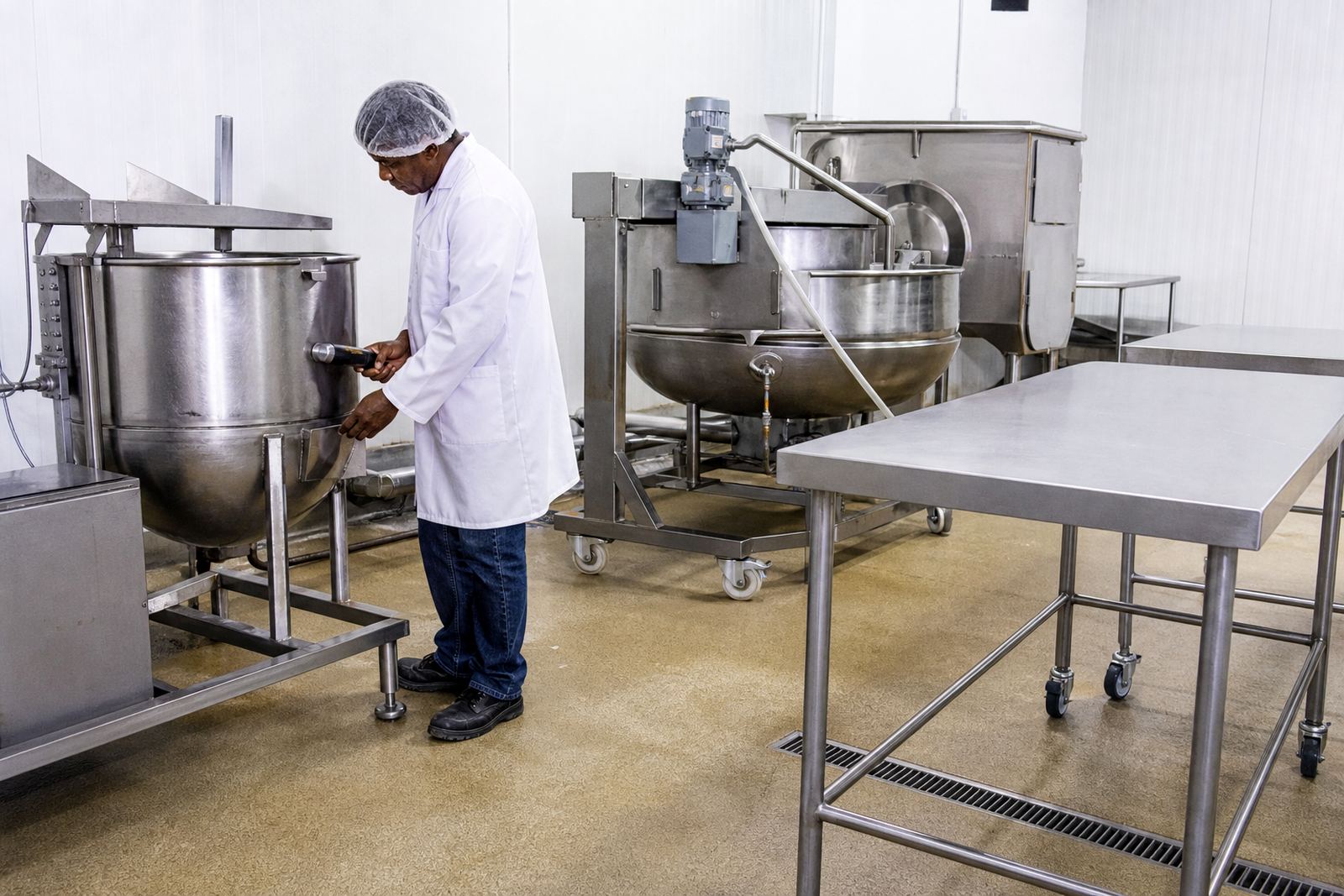
The client was a food processing operation in Midrand preparing to release a mix of stainless steel process equipment and support assets. The site included chilled processing rooms, washdown areas and packing space, so the work had to respect hygiene rules, wet floors and limited downtime around live plant. The main need was an independent view of value together with auction preparation that would let buyers assess condition properly before bidding.
We were asked to inspect the equipment, identify saleable lots and prepare imagery that showed each machine clearly. The owner needed a process that was orderly and accountable, with each asset matched to its location and condition at the time of inspection. Because food plant often carries traces of moisture, product residue and previous maintenance work, the catalogue notes had to be factual and specific, not vague or dressed up.
What We Inspected and How We Grouped It
Over the first week, the team walked the site and recorded the main items for valuation and sale planning. The asset mix included stainless steel tables, conveyors, inspection stations, pumps, filling and sealing equipment, product transfer units, workbenches, framed storage items and several associated motors and control panels. Some items were freestanding and others were fixed in line, so our lotting took account of dismantling, lifting points and the order in which equipment would need to come out.
- Stainless steel contact surfaces and frame condition
- Electrical panels, isolators and cabling presence
- Drainage, corrosion, wear and cleaning marks
- Access for removal through production and loading areas
- Whether items should sell singly or in grouped lots
We also checked for missing parts, serial plate visibility and signs of past modification. In food facilities, a machine can look presentable from a distance but still need careful notes on seals, guards, belts or control gear. That level of detail matters when you are setting expectations for an auction, because a valuation is an opinion of value and not a guarantee of sale price.
Auction-Ready Imaging and Catalogue Work
The second week focused on photo listing prep and catalogue structure. The site had mixed lighting, reflective surfaces and tight corners, so we used controlled angles and close detail shots to show the condition of each item without glare. Stainless steel needs careful handling in pictures because reflections can hide marks and distort size, so the media work took time. We shot general views, nameplate images where available, and close ups of wear, mounting points and accessories.
At the same time, the catalogue and media coordinator aligned the photos with the lot numbers and written descriptions. This helped avoid confusion for buyers coming from Johannesburg, Pretoria, Durban, Cape Town and Gqeberha. We kept the descriptions plain and practical, with size references, material notes and condition comments that would hold up during a viewing day.
- Lot numbers tied to floor plan position
- Clear identification of stainless and mild steel items
- Condition notes for buyers planning dismantling and transport
- Image sets prepared for online and viewing day use
Valuation Approach and Reserve Guidance
Our senior valuer prepared market opinions for the equipment based on age, condition, completeness, demand for that equipment type and the cost of removal. We did not treat the machinery as generic scrap, because several items still had useful service life for another food plant, co-packer or packing line installer. The reserve guidance was framed around saleability and buyer interest, with careful attention to what similar assets might attract in an open auction setting.
Reserve setting is always a balancing act. Too high and the market ignores the lot, too low and the seller gives away value. In this case, the advice focused on realistic levels that reflected the machinery as seen on site, including the usual risks of relocation, recommissioning and compliance checks at the next premises. The valuation output was kept separate from the selling process so the client could make its own decision on acceptance and timing.
Removal, Viewing and Clearance Planning
Once the lots were confirmed, we planned the practical side of the project. The operations coordinator and site logistics supervisor mapped the pickup sequence, viewing access and clear pathways for buyers. In a food plant, the handover has to be tidy because floors can be slippery, packaging waste accumulates quickly and there may be hygiene controls around the remaining areas. We worked around operating restrictions and made sure the marked equipment could be viewed without blocking circulation.
The timeline ran across four weeks in total. Week one was inspection and asset capture. Week two was lotting, catalogue work and imaging. Week three covered reserve guidance, viewing day preparation and seller representation planning. Week four was closure support and coordination of removal timing. That pace suited the site because it allowed the team to keep the process moving without rushing decisions or causing unnecessary disruption.
- Week 1: On-site inspections and asset recording
- Week 2: Lotting, catalogue notes and photography
- Week 3: Viewing day setup and reserve advice
- Week 4: Closure support and collection coordination
What the Client Needed Done Again
The strongest result was clarity. The client had a structured record of the equipment, a realistic view of likely market interest and a clean process for buyers to inspect the machinery. The project also showed the value of dealing with stainless steel plant in a methodical way, because surface condition and completeness can change the conversation quickly once buyers start asking questions. Several pieces that first looked similar were separated into better lots after close inspection, which helped the seller present them more sensibly.
If we were doing this project again, we would use the same approach: inspect early, photograph before movement, and set the lot structure before any removal begins. That keeps the paper trail clean and gives buyers confidence in what they are seeing. It also helps the seller avoid last-minute arguments about missing parts, extra fittings or whether an item should have been listed on its own. Small things matter here, and they matter fast.
For food facility work in Midrand and other Gauteng industrial areas, we find that a straightforward method works best. Measure properly, note the condition as found, and keep the records tight. That is how a valuation stays useful and how an auction process stays fair for both sides.
Key facts
| Project type | Food processing plant valuation and auction preparation |
|---|---|
| Location | Midrand, Gauteng |
| Equipment focus | Stainless steel process, packing and support machinery |
| Timeline | 4 weeks from inspection to closure support |
| Key service lines | On-Site Valuations, Lotting and Cataloguing, Photo Listing Prep, Viewing Days, Reserve Guidance |
| Project outcome | Clear lot structure, auction-ready imaging and practical seller guidance |