Alberton packaging line brief
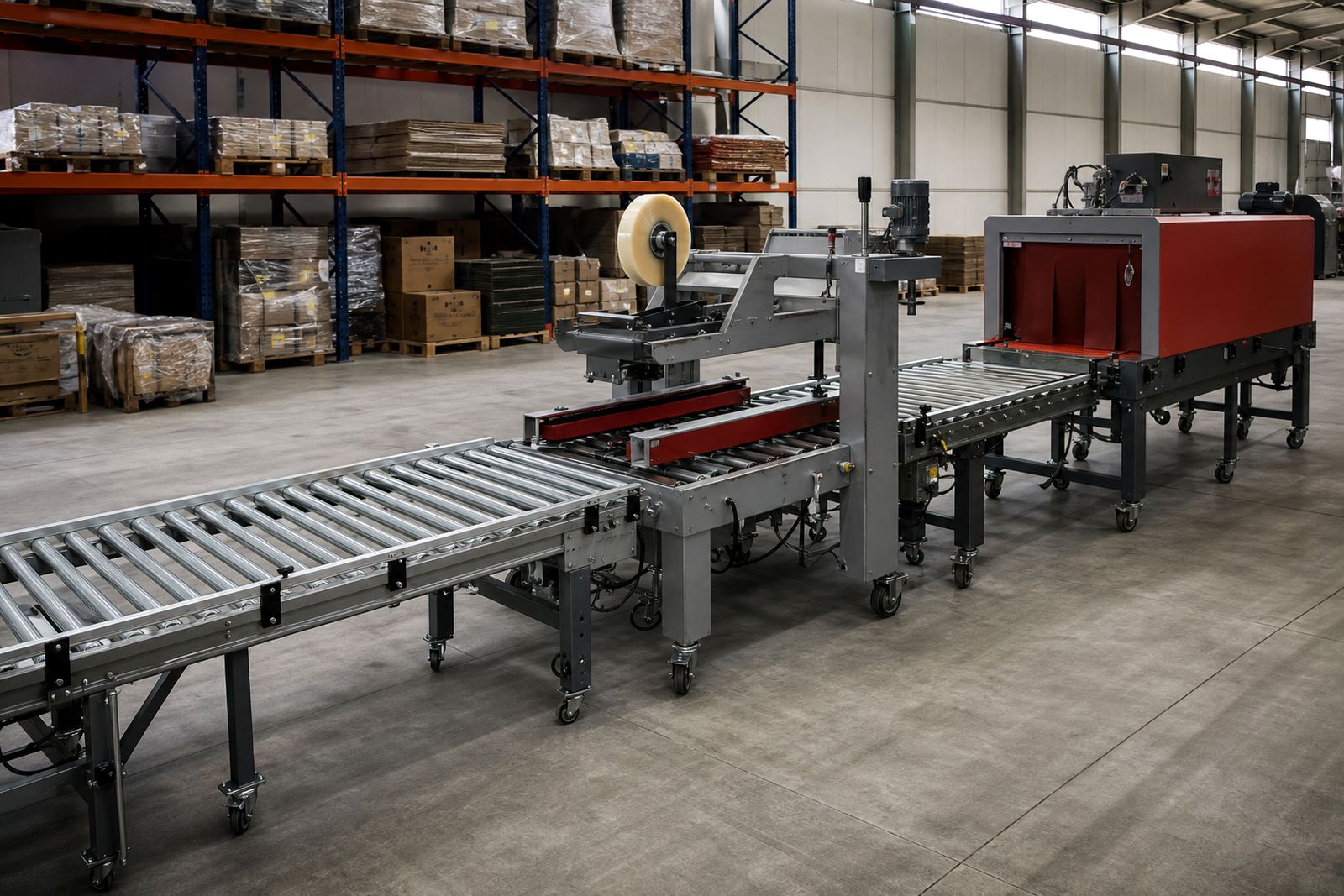
The brief came from a manufacturing business in Alberton that was clearing a packaging section after a production change. The site held a mix of conveyors, a filling unit, a wrapping machine, a date coder and support tables, all used in a line that had been working on dry goods packed for local distribution. The client needed the assets documented properly, grouped in a sensible way and presented so buyers could judge what they were looking at without guesswork.
From the start we treated the job as a disposal project with two goals: protect the seller’s position and give buyers enough detail to make informed bids. That meant checking condition on site, identifying the main machine types, recording working dimensions and separating the line into usable lots rather than forcing everything into one bundle.
What the site looked like and the limits we worked within
The plant was in a busy industrial part of Alberton with shared yard access, loading constraints and normal factory safety rules. Power was not available throughout the whole inspection window, so we worked around interrupted testing and concentrated on visual checks, serial plates where present, component counts and layout measurements. The equipment also had signs of ordinary wear from long shifts, dust exposure and repeated cleaning, which is common on packaging lines that run in Gauteng industrial conditions.
There were a few practical limits that shaped the assignment:
- Some items were fixed to the floor or tied into adjacent conveyors, so removal planning had to be realistic.
- Not every unit could be fully powered up on the day, which meant condition notes had to be specific.
- Clearance had to respect site access, forklift movement and the time needed for safe disconnection.
- The line had been reconfigured over time, so the catalogue needed to show how the equipment related to each other.
Those limits did not stop the job, but they did influence how we described the assets and how we framed the valuation opinions.
Valuation, lotting and auction prep
We carried out an on-site valuation opinion for the machine set as it stood, not as a guaranteed sale price. That distinction matters. In an auction, market interest, timing, presentation and buyer demand all affect the result, so our role was to give the seller a fair and defensible view of value based on condition, age indicators, make-up of the line and likely buyer use.
After the inspection, we loted the equipment for auction in a way that made sense for the market. The smaller support items were grouped where it helped buyers start a line or replace worn components, while the larger units were kept separate so specialist bidders could focus on them. We also prepared photo listing notes and the catalogue description for each lot, with dimensions and practical observations that buyers usually want before a site visit.
- Key facts recorded included machine type, approximate footprint, visible condition and included components.
- We noted any missing guards, worn belts, loose cabling or incomplete change parts.
- Where accessible, we checked serial plates and basic identification marks.
- Lot descriptions were written to be direct and usable, not padded out with marketing language.
Timeline from inspection to closure
The project ran over four weeks from first visit to closure support. Week one covered inspection, measurements and the valuation opinion. Week two was used for lotting, catalogue preparation and seller sign-off. Week three focused on viewing day coordination, buyer enquiries and auction administration. Week four covered collection planning, handover checks and post-sale closure support.
That timeline suited the site because the seller wanted the line cleared in an orderly way and buyers needed enough time to assess the equipment. We kept the process practical, which is often better than rushing an industrial disposal and then dealing with avoidable disputes later on.
Buyer interest and seller support
The packaging line attracted interest from buyers looking for spares, replacement machinery and lower-cost entry points into packaging work. That is typical for used industrial equipment in South Africa, especially where a buyer can match the machine to an existing operation or refurbish it for a new product format. We guided enquiries through the viewing process and made sure the listing information matched what was seen on site.
For the seller, the main value was control and clarity. The assets were not left to chance and the disposal was handled in a way that allowed for transparency around condition, grouping and collection. We also managed the practical side of closure, including coordination for removal access and the final site checks once items were uplifted.
- Viewings were arranged in a controlled way so buyers could inspect the equipment safely.
- Collection coordination helped reduce congestion at the loading point.
- Seller representation kept communication consistent from start to finish.
- Closure support helped the site return to normal use without loose ends.
What we would repeat on the next packaging disposal
If we did a similar packaging line again in Alberton or elsewhere in Gauteng, we would follow the same sequence: inspect early, record the line as it is actually set up, lot with the buyer in mind, and allow enough time for viewing and collection planning. That approach works because packaging machinery often looks simple from a distance but has details that affect value, like change parts, controls, conveyors, guards and how the unit was installed.
We would also keep stressing to sellers that a valuation is an opinion of value and not a promise of sale outcome. Buyers respond to clear information, and sellers benefit when the condition notes are honest, the photos are useful and the auction process is run in a calm, orderly way. That is how you get a disposal that makes practical sense, not just one that looks neat on paper.
Key facts
| Project | Alberton Packaging Line |
|---|---|
| Town | Alberton, Gauteng |
| Asset mix | Conveying, filling, wrapping and support equipment |
| Scope | On-site valuation opinion, lotting, cataloguing and auction preparation |
| Timeline | 4 weeks from inspection to closure support |
| Use case | Disposal of used industrial packaging machinery for buyers across South Africa |