Bellville bottling line brief
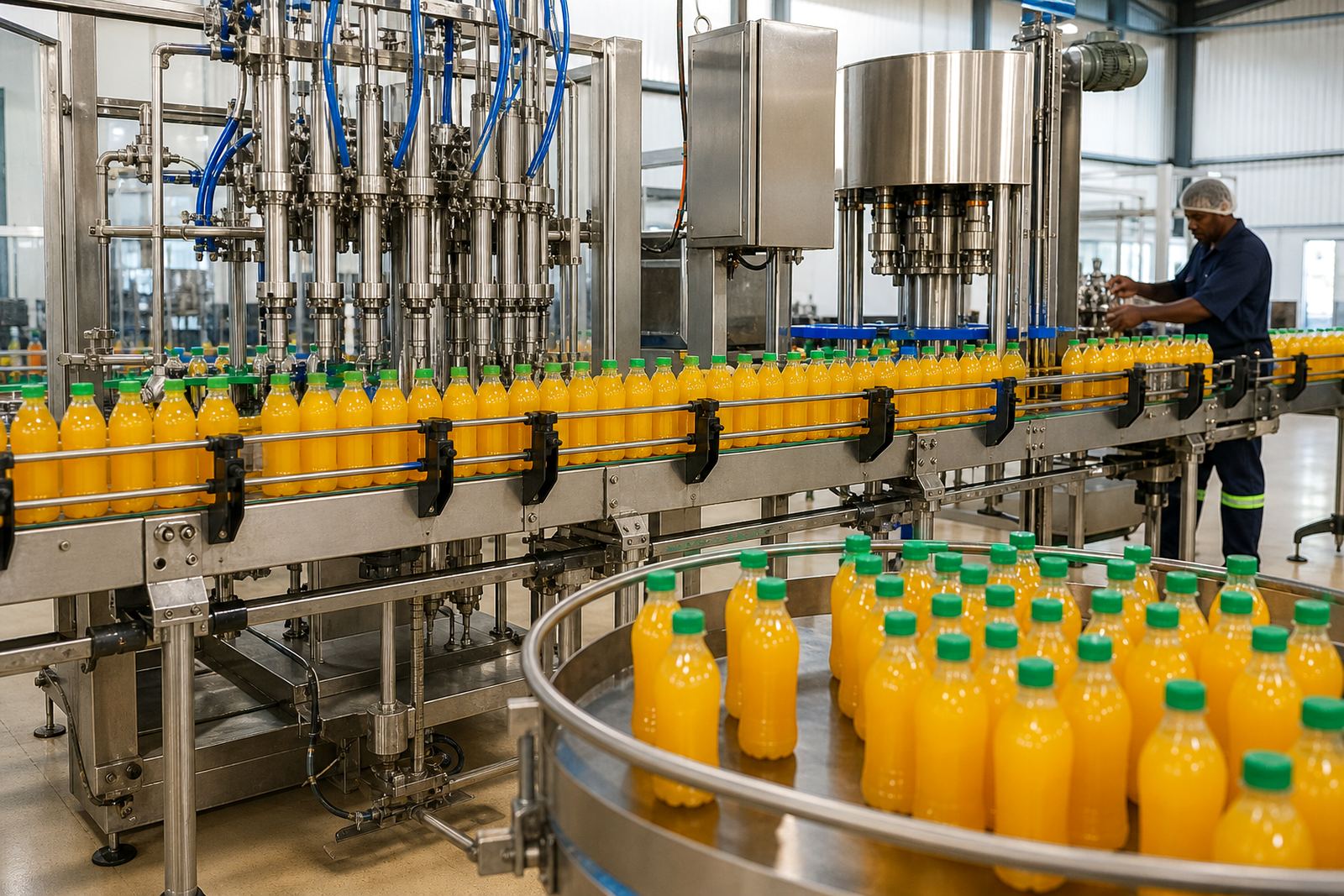
The site was a beverage packing operation in Bellville, Western Cape with a used bottling line made up of fillers, conveyors, wrapping stations and supporting plant. The brief was straightforward on paper, but it needed a measured approach on site because the line had to be recorded as a working set of assets, not just as a pile of machines. The seller wanted a clear view of what could be offered together, what should be sold separately, and what could be left out of the auction lotting.
We were asked to prepare the line for auction listing with enough detail for buyers in Cape Town and other centres to assess fit, capacity and condition before viewing. The site was active enough to need careful coordination, with limited space around the production floor and ordinary factory constraints such as pallet movement, floor traffic and access around tight runs of conveyor. On a coastal site like Bellville, dust, humidity and packaging wear also have to be noted properly because they affect how buyers read the equipment.
What we looked at on site
Our inspection covered the main line sections and the practical points that matter in a sale. For bottling machinery, that includes the type of filler, the conveyor layout, motor and drive condition, guarding, control panels, wrap station setup and the general state of the frames and contact surfaces. Where there are incomplete connections or mixed components, buyers need that explained plainly so they can judge removal and recommissioning costs for themselves.
- Filler body, infeed and discharge points, and visible wear on contact parts
- Conveyors, transfer sections and support stands
- Wrapping station and film handling area
- Control panels, cabling and accessible electrical points
- Asset tags, serial references where available, and matching photographs
- Space for dismantling, loading and removal planning
We also recorded the practical constraints that affect an auction audience, including whether the line could be lifted in sections, whether the equipment needed to be isolated before viewing, and whether the layout allowed proper access for buyers who wanted to inspect underneath and behind the machines.
How the auction listing was prepared
The listing work started with lotting. A bottling line can be sold as one complete production run or split into practical lots, and the right answer depends on condition, market interest and how well the components match one another. We separated the line into logical groups so the catalogue would make sense to both plant buyers and resale traders. That way a buyer looking for a filler is not forced to read through packaging equipment that does not suit their setup.
The catalogue copy was written in plain terms. We do not dress up a machine with claims it cannot support. The description stated what the equipment appeared to be, what was visible at inspection, and where the buyer needed to confirm compatibility, power supply or installation details during viewing. That is especially important with used bottling plant because line speed, container size, neck finish and power requirements can vary a great deal from one site to the next.
- Lot structure matched the physical layout where possible
- Photo listing prep focused on nameplates, key sub-assemblies and wear points
- Viewing day notes covered access, loading points and inspection timing
- Reserve guidance was set with the seller based on condition and market interest, not on any promised sale price
Timeline from first visit to listing
The project ran over 3 weeks from the first site visit to the final auction-ready pack. In week one we completed the on-site assessment, took measurements and recorded the main asset groups. Week two was used for lotting, photography and catalogue preparation, with follow up on missing technical details where the site records were incomplete. Week three covered seller review, viewing preparation and final auction positioning.
That timeline worked because the site had a mix of straightforward items and a few areas that needed additional attention. Some sections were easy to identify, while others had to be described carefully because the machine set had been adapted over time. A neat timeline only works when the team on the ground stays organised and the seller can make quick decisions on what is included and what stays off the sale list for now.
- Week 1: inspection, measurements and asset capture
- Week 2: cataloguing, photo prep and lotting
- Week 3: seller sign-off, viewing arrangements and auction release
What the seller needed from the process
The seller needed clarity more than anything else. With a bottling line, there are usually several moving parts to manage at once: production downtime, removal access, buyer questions and the need to keep the property safe while the sale is being marketed. We handled the process so the seller could focus on their own operations instead of answering the same technical questions repeatedly.
The other need was transparency. An opinion of value is not a guarantee of sale price, and a good auction process should say that plainly. We framed the machinery for the market as it stood, based on observable condition and practical buyer demand. That helped set a realistic tone for the sale and avoided the kind of confusion that can happen when used plant is described too loosely.
- Clear separation between complete lots and spare items
- Practical buyer notes for dismantling and collection coordination
- Simple guidance on viewing access and factory movement rules
- Seller support through closure so the process did not stall near the end
What we would repeat on the next bottling site
We would take the same approach again on a similar site in Bellville or anywhere else in South Africa. Start with a proper on-site assessment, keep the lotting tied to the actual machine layout, and write the catalogue so buyers can see the real condition without guesswork. That method saves time and gives the market a fairer picture of the asset.
For a bottling line, the useful detail is often in the small things. A buyer wants to know whether the conveyors are complete, whether the wrapping station is ready for removal, whether the filler can be matched to their bottles and whether there are parts that need to be sourced after purchase. If those points are captured properly at the start, the auction process runs more cleanly and the seller gets better control over the sale record.
We would also keep the logistics side tight. In a Cape Town metro site, access windows, loading space and building rules matter. If a line is due to be cleared, the removal plan should respect the site, the neighbours and the timing of the auction handover. That is part of good practice, not an extra.
Key facts
| Project | Bellville Bottling Site |
|---|---|
| Town | Bellville, Western Cape |
| Asset Type | Used bottling line with fillers, conveyors and wrapping stations |
| Project Scope | On-site valuation, lotting, cataloguing, photo listing prep and auction planning |
| Timeline | 3 weeks from first visit to auction-ready listing pack |
| Service Area | Cape Town, Gauteng and nationwide South Africa |