Workshop Sale Brief in Gqeberha
The brief came from a manufacturing workshop in Gqeberha that was reducing floor space and replacing part of its old plant. The seller needed a clear, practical sale plan for a mixed group of assets that included machine tools, air equipment and general workshop support items. The assets were in working condition overall, but several units had seen hard use and required careful checking before they could be listed with confidence.
Our task was to give opinions of value based on inspection, age, condition, completeness and likely market interest. A valuation is an informed view of what an asset may achieve in the market, not a guarantee of sale price. That matters on workshop sales, because buyers will often compare machine hours, tooling, electrical condition and maintenance history before they decide what to bid.
We also had to keep the process practical for a site that still had daily activity in part of the premises. Access was limited in some bays, and a few items had to be moved into clearer positions for photography and lotting. The site also had the usual coastal concerns, with salt air, surface rust on exposed steel and a few electrical enclosures that needed extra attention during inspection.
What We Found On Site
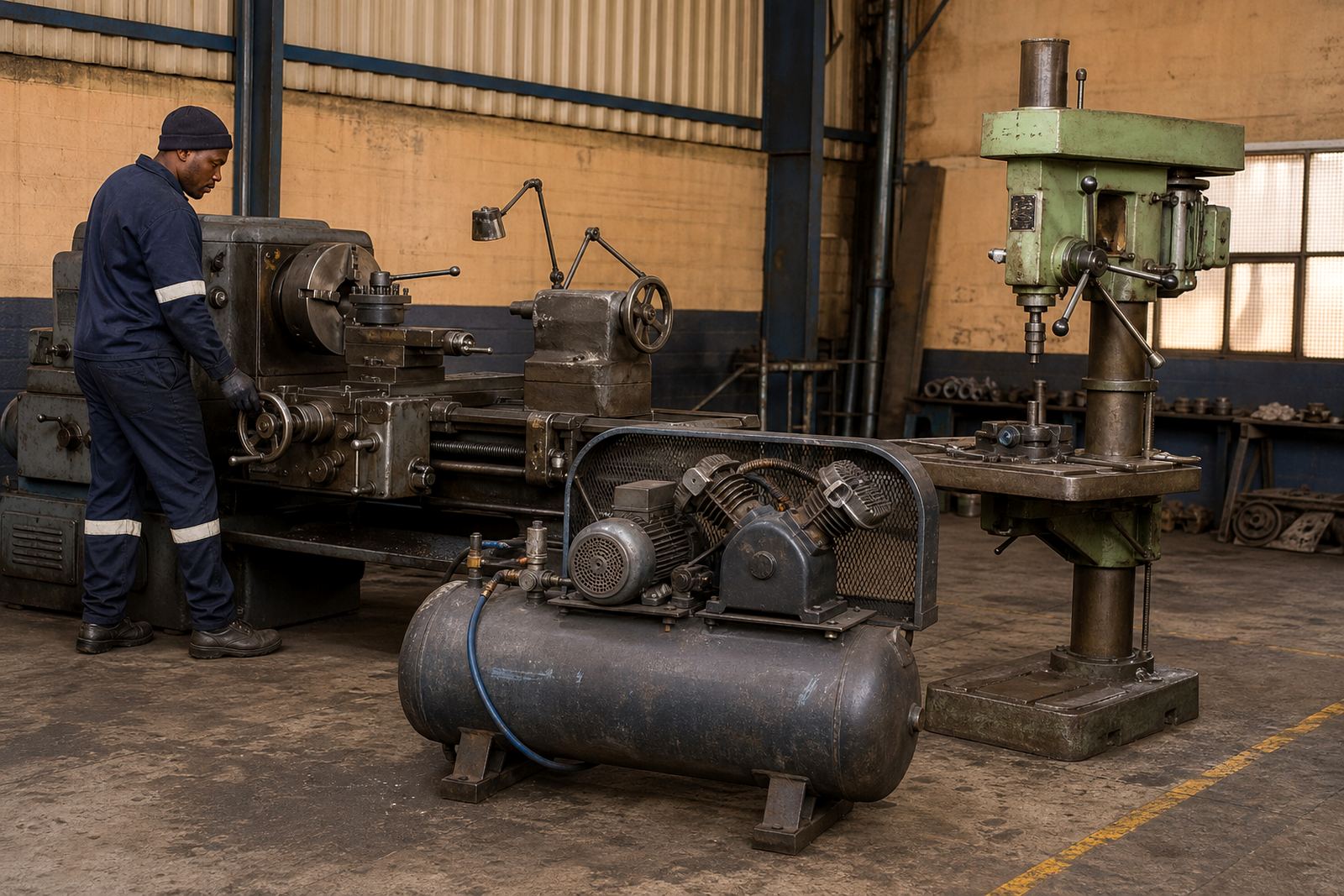
The asset mix was broad enough to need structured lotting rather than a simple bulk list. There were smaller machine tools, compressed air units, bench equipment and support items spread across several work areas. Some assets were tied together by piping and cabling, which meant we had to note what could be removed as a single lot and what should be separated for better buyer interest.
- Machine tools with mixed capacities and varying levels of wear
- Reciprocating and rotary air compressors with receiver tanks
- Bench grinders, vices, stands and general workshop support gear
- Electrical starters, cable runs and fixed connections requiring isolation notes
- Loose spares, guards, hoses and tooling that added value to the main lots
We also recorded condition points that affect bidding. These included missing nameplates on some items, worn belts, light oil leaks, incomplete tooling, and the general need for buyers to inspect motors, wiring and guards before making a decision. In a workshop sale like this, those details help prevent confusion on viewing day and keep the catalogue accurate.
Valuation, Lotting and Catalogue Prep
Once the inspection was complete, we set about grouping the assets into sensible lots. The aim was to keep similar items together where that made commercial sense, while still leaving room for buyers who wanted individual machines. Lotting decisions can make a real difference in a sale because some buyers want a full workshop package, while others only want one specific machine or compressor.
Our catalogue and media prep focused on clean, honest presentation. We captured wide shots and close-up views of serial markings, controls, motor plates where visible, and any wear points that a buyer would want to see. We also prepared concise descriptions with key facts such as approximate machine size, electrical type where known, visible accessories, and whether the item was free standing or fixed. That helped the viewing process run faster and gave remote buyers a clearer picture before they travelled.
- Site valuation and asset verification
- Lotting strategy for single items and grouped lots
- Photo listing prep with condition notes
- Reserve guidance based on local market interest
- Seller representation during buyer questions and viewing
Timing and Sale Coordination
The project ran over three weeks from first inspection to sale close planning. Week one covered the site visit, asset capture and initial valuation work. Week two was used for lotting, catalogue preparation and reserve discussions with the seller. Week three focused on viewing day support, buyer queries and final sale coordination, including collection planning for successful bidders.
Because the workshop was still active in places, we had to coordinate around machinery that could not be switched off immediately. That meant planning the inspection route carefully, confirming which equipment could be moved, and making sure all photos were taken in sequence so there was no need to disturb the same area twice. In Gqeberha, wind and coastal dust can also affect open machinery, so we made sure the exposed units were documented properly before any clearing work started.
The sale process was kept orderly and transparent. Buyers wanted practical details, not sales talk. They asked about working condition, whether tooling was included, how loading would be handled and what access would be like for collection. Clear answers on those points made the difference between casual interest and real bidding activity.
Results for Seller and Buyers
The end result was a cleaner, better organised sale process that matched the type of assets on site. The seller had a clear record of what was available and how the lots were structured. Buyers could compare items properly, inspect them in person and decide with fewer surprises. That is especially useful in workshop sales where one machine can look ready on the outside but still need new belts, hoses or electrical work before it is put back into service.
For the seller, the main value was control and visibility. Assets that were still useful were not scattered across the floor or hidden behind older equipment. The viewing day format also helped separate serious buyers from passers by. In our experience, that saves time and reduces back and forth once the auction has closed.
What worked well on this project was the combination of practical lotting and honest condition notes. That made the catalogue easier to use and kept expectations grounded. It also helped with collection coordination, because buyers knew what they were taking and could plan transport, loading gear and labour in advance. No one benefits from a rushed removal when heavy equipment is involved.
What We Would Repeat on the Next Workshop Sale
If we handled a similar workshop sale again in Gqeberha, we would follow the same approach: inspect early, photograph clearly, lot by buyer type and keep reserve guidance tied to actual condition. We would also keep a close eye on access routes for removal, especially where compressors, benches or fixed tools need lifting equipment or careful disconnecting.
The other lesson from this project is that support equipment should never be treated as an afterthought. Hoses, receivers, starter panels, benches and tooling can make a lot more sense to a buyer than they first appear. When those items are listed properly, the sale feels more complete and the buyer sees better value in the overall package.
For sellers across South Africa, from Johannesburg and Pretoria to Durban, Cape Town and Gqeberha, the same principle applies. Good records, honest inspection notes and a practical auction plan will always help a workshop sale move more smoothly. It is not about dressing up old machinery, it is about showing what is there and letting the market respond fairly.
Key facts
| Project type | Multi-asset workshop sale |
|---|---|
| Location | Gqeberha, Eastern Cape |
| Asset mix | Machine tools, compressors and support equipment |
| Project duration | 3 weeks from inspection to sale close support |
| Core services | On-site valuations, lotting, catalogue prep, viewing days |
| Condition factors | Mixed wear, coastal rust, incomplete tooling on some items |