Workshop brief from a Germiston engineering site
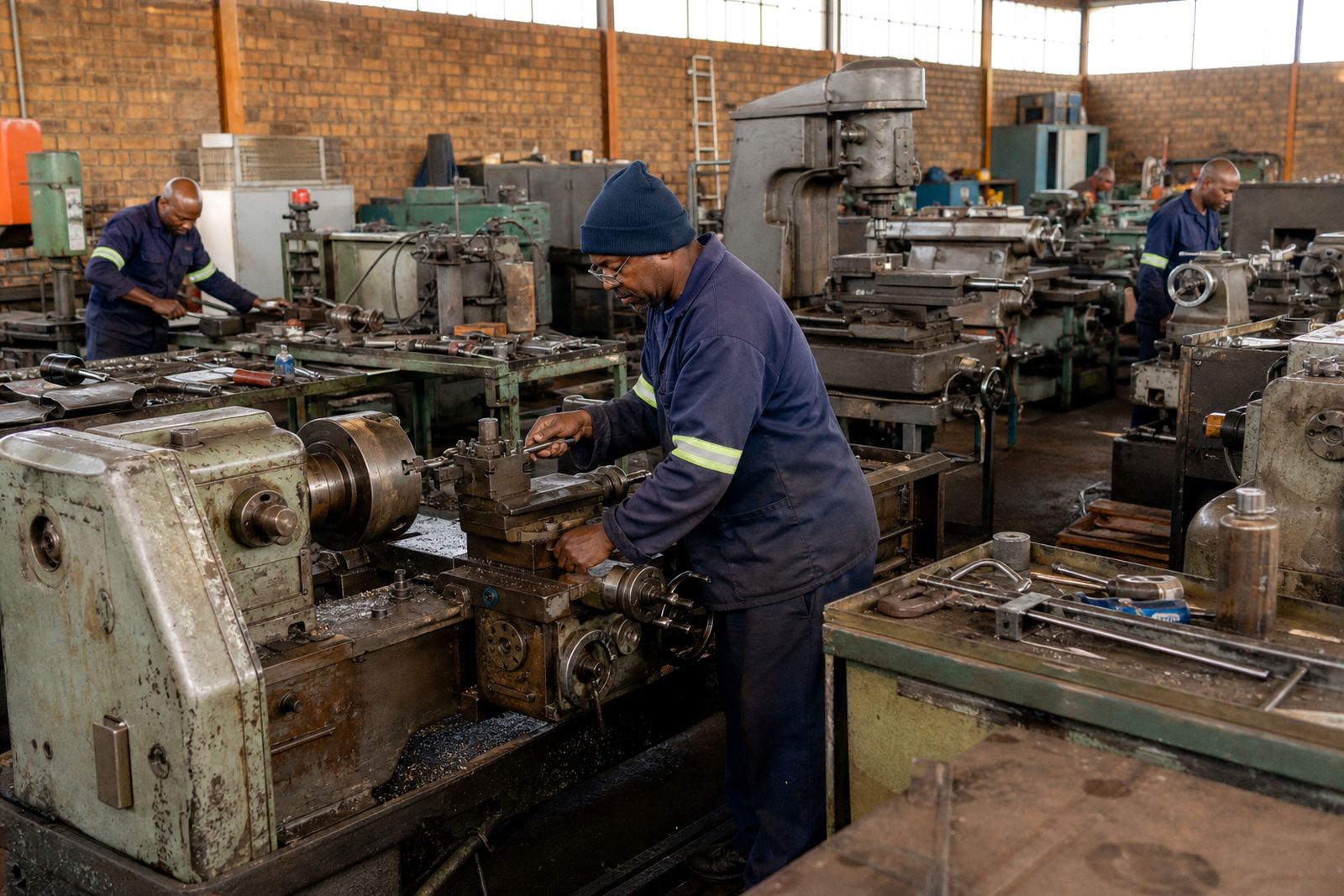
The client was an engineering workshop in Germiston with a mix of machine tools, support equipment and loose accessories that had to be assessed before sale. The site had limited floor space, some items were tucked in tight corners, and power interruptions meant inspections had to be planned around available lighting and safe access.
The main need was straightforward. They wanted a sensible view of market value for each asset, then a clean auction catalogue that would show buyers what was available without confusion. Because the site was active during part of the process, we worked in sections and kept movement through the workshop safe and organised.
- Client type: engineering workshop selling used industrial machinery
- Town: Germiston, with access and collection planning for Gauteng buyers
- Asset mix: machine tools, ancillary equipment, benches, spares and accessories
- Goal: prepare valuation opinions and catalogue material for auction use
What the valuation scope needed to cover
For this kind of project, the quality of the valuation depends on the details. We recorded make where visible, model references where readable, serials when present, bed lengths, motor ratings, spindle and chuck sizes, power supply type, and visible condition. Where a plate was missing or worn, we marked the gap and relied on physical inspection rather than guesswork.
We also looked at the practical sale factors that affect a buyer’s decision. These included age, signs of wear, whether the machine was complete, whether guards and controls were present, and how easy the item would be to remove from the building. A valuation is an opinion of value, not a guarantee of sale price, so the notes had to reflect condition honestly.
- Measured and noted visible machine details on site
- Separated running condition from cosmetic condition
- Marked missing parts, incomplete tooling and untested functions
- Recorded removal issues such as floor anchoring, access width and overhead clearance
Catalogue preparation for buyers and sellers
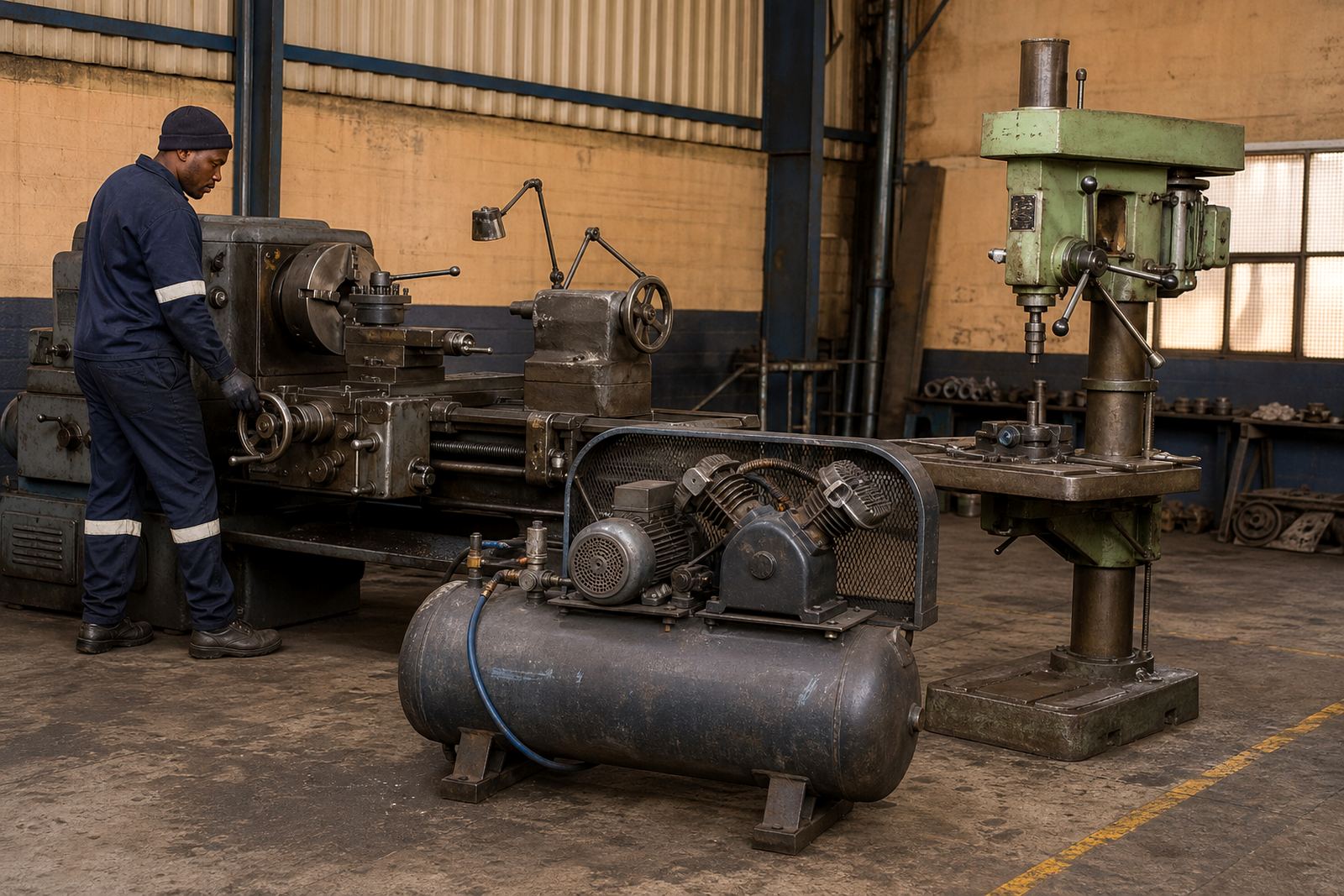
Once the inspection notes were complete, the next step was lotting and catalogue prep. That meant grouping related items in a way that made sense to buyers, while still keeping each lot clear and easy to track. A lathe was not listed on its own when it made more sense as a grouped machine with its stand, tooling cabinet and key accessories.
The photo listing work focused on practical detail. Buyers need to see the bed, headstock, feed controls, jaws, guards, work table surfaces, name plates and any obvious damage. We prepared image sequences that supported the written descriptions and kept the wording plain enough for trade buyers, but precise enough for workshop managers to use when reviewing interest.
- Prepared lot descriptions with dimensions, visible condition and key fittings
- Matched photos to each lot so there was no confusion at viewing
- Grouped accessories where they added real sale value
- Highlighted items that needed testing before collection
Timeline, access limits and site coordination
The project ran over three weeks from first site visit to final catalogue handover. Week one covered inspection planning and on-site checking. Week two was used for lotting, photo review and writing the catalogue notes. Week three focused on clarification, seller sign-off and auction readiness support.
There were a few practical constraints. The workshop had ongoing movements of smaller jobs, so we had to avoid blocking access routes. Some machines were close to walls and pipework, which made measurements awkward. Load-shedding also meant we kept the process flexible so photos and detail checks could be completed when lighting was adequate.
- Week 1: inspection, asset identification and measurement
- Week 2: lotting, catalogue writing and photo selection
- Week 3: seller review, corrections and auction preparation support
- Constraint: active workshop traffic and limited floor space
What we supplied on the project
Machine Africa supplied a full valuation and auction preparation service that matched the scale of the site. The work was led by our Germiston and Kempton Park operations team, with valuation input from Pieter van der Merwe and auction planning support from Naledi Khumalo. Site movement and access were managed carefully so that the workshop could keep functioning while the project was underway.
The deliverables were practical and ready for use. We did not overstate condition, and we did not treat any estimated value as a sale promise. Instead, we gave the seller clear guidance on how each lot could be presented, what needed explanation, and where reserve guidance would need to stay realistic for the market.
- On-site valuation opinions for used machine tools and support items
- Auction planning notes for lot structure and sale order
- Catalogue copy with clear buyer-facing descriptions
- Viewing day support requirements and collection coordination notes
Outcomes for the seller and prospective buyers
The main result was a cleaner, better organised sale package. The seller had a documented view of what was on site, what was complete, and what could be offered with confidence. Buyers gained clearer information before viewing, which matters when machinery is heavy, old or mixed with tooling that may or may not be included.
For a Germiston engineering workshop, that kind of clarity saves time. It helps reduce unnecessary back-and-forth on condition questions, and it gives the seller a firmer basis for deciding how to present each asset. It also makes clearance planning easier when the time comes to move equipment off site.
- Clearer lot descriptions for machine tools and related assets
- Better separation between saleable items and scrap or residual material
- More practical reserve guidance based on condition and market interest
- Improved readiness for viewing days and post-sale collection planning
What we would do again on a similar site
We would use the same approach again for a workshop in Germiston or any similar industrial area. Start with careful inspection, confirm what is present before writing any catalogue copy, and build the lot structure around how a buyer would actually assess the asset. That usually produces better responses than rushing to list everything as a single block.
We would also keep a close eye on access, power availability and removal routes from the start. In workshop environments, small oversights can cause delays later, especially when machines are fixed in place or surrounded by stored material. Our method is simple, but it works because it respects the site and the sale process.
- Inspect first, catalogue second
- Keep descriptions honest and easy to verify
- Plan for removal access before auction day
- Use valuation opinions as guidance, not guarantees of sale price
Key facts
| Project | Germiston engineering workshop valuations and auction catalogue preparation |
|---|---|
| Town | Germiston, Gauteng |
| Timeline | 3 weeks from inspection to catalogue handover |
| Asset type | Used machine tools and workshop support equipment |
| Service mix | On-Site Valuations, Lotting and Cataloguing, Auction Planning, Photo Listing Prep |
| Project lead | Pieter van der Merwe with support from Naledi Khumalo and the operations team |