
What the Boksburg workshop needed
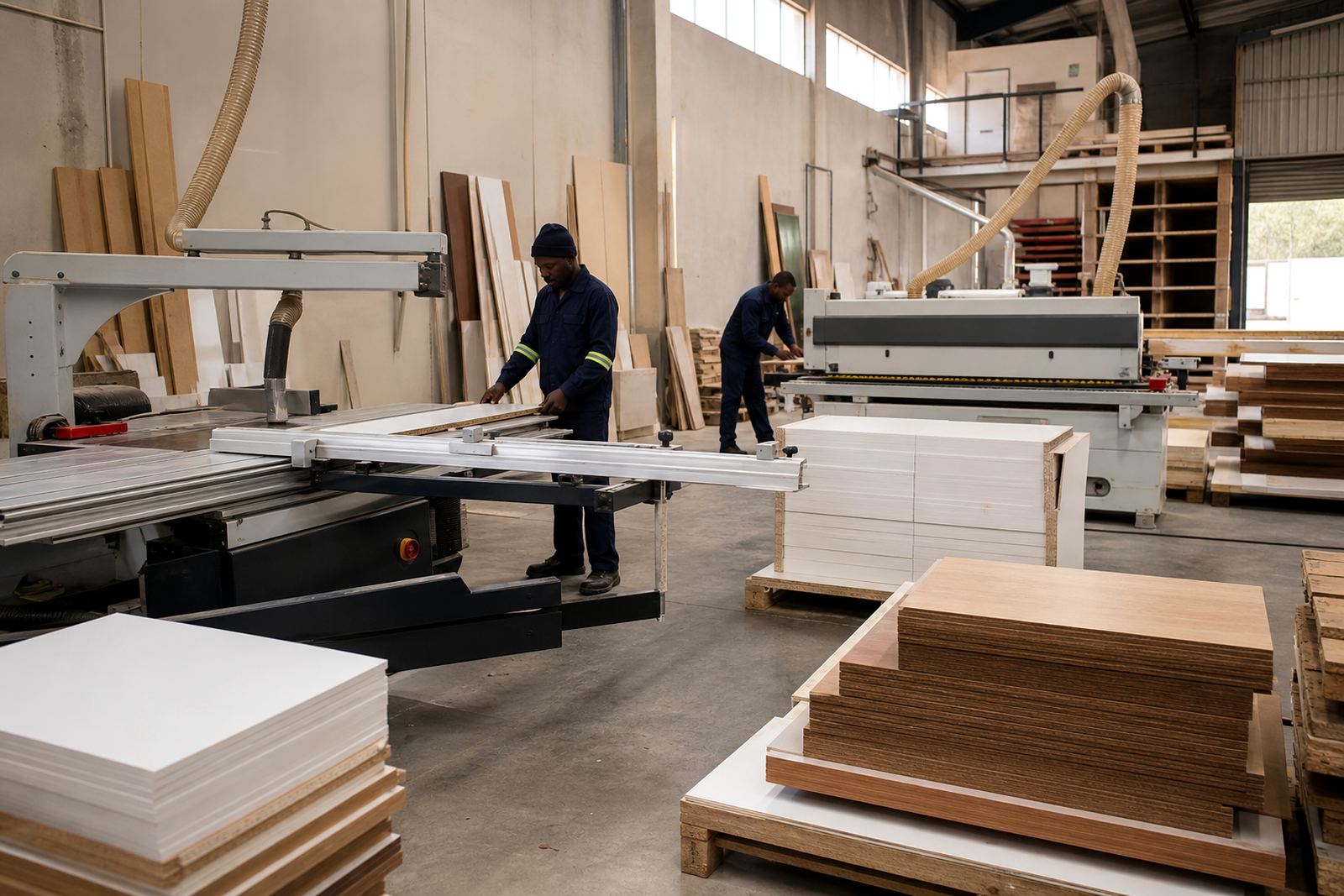
The client was a woodworking operation in Boksburg dealing with a mixed line of panel processing machines, edge finishing units, extraction gear and support items that had built up over time. Some machines were still in service, others had been idle after a change in production needs, and the site had limited space for storing assets while a sale was arranged.
We were asked to assess the machinery, group the assets in a sensible way and prepare them for sale to buyers in Johannesburg, Pretoria, Durban, Cape Town and Gqeberha. The workshop was active during parts of the week, so the plan had to avoid interrupting production and keep movement through the yard to a minimum.
- Client type: woodworking and panel processing operation
- Town: Boksburg, Gauteng
- Main asset group: used industrial machinery for sheet goods and finishing
- Constraint: limited floor space and working around live operations
Valuation work before the sale plan
We carried out on site valuations and recorded each machine as a separate asset or lot where that made sense. A valuation is an opinion of value based on condition, age, market demand, make, hours of use where known and how easy the machine is to remove and recommission. It is not a guarantee of sale price, and it changes with buyer interest and timing.
For a panel shop, the details matter. Buyers want to know the cutting width, table size, motor size, dust extraction capacity, fence condition, blade wear, electrical setup and whether the machine has all guards and controls in place. We also checked for signs of moisture exposure, which is common in Gauteng workshops that have had roof leaks or storage issues after load-shedding interruptions.
- Confirmed working condition where possible on site
- Noted missing parts, damaged panels and wear points
- Separated higher value machines from low value support items
- Flagged items needing buyer removal planning before sale
How we structured the lots
The sale was built around clear lotting and cataloguing so buyers could understand the workshop quickly. Instead of lumping everything together, we grouped the equipment by function: panel cutting, edge finishing, extraction, handling and small support assets. That approach usually helps the market price items more accurately because buyers can bid on what they actually need.
Our catalogue and media work focused on honest presentation. Each lot needed a proper description, measurements, serial or identifying details where visible and photographs that showed the machine from all practical sides. We kept the wording factual and avoided overstatement. If a machine had cosmetic wear but solid mechanical value, that was stated plainly.
- Panel saw and related cutting equipment
- Edge banding and finishing equipment
- Dust extraction and filtration units
- Material handling, benches and support items
Site logistics and viewing day preparation
The site had narrow movement areas and a few tight corners, so Johan and the logistics team mapped the removal route before any buyers came through. That matters with larger woodworking machines because some units need forklifts, skates or careful stripping before collection. We also looked at access points, floor condition and the best sequence for moving equipment without damage.
Viewing days were arranged so buyers could inspect the machinery properly and ask direct questions. In woodworking sales, serious buyers often want to see how the infeed and outfeed tables sit, whether extraction ports are intact and how the electrical cabinets are laid out. Clear access helps reduce disputes later and gives both sides a better picture of what is being sold.
- Measured access points and turning space
- Planned removal sequence for heavier assets
- Prepared machine cards and viewing notes
- Managed buyer movement safely through the workshop
Timeline from first visit to closure
The project took 4 weeks from first inspection to sale closure support. Week 1 covered the site visit, asset list and valuation notes. Week 2 was used for lotting, photography and catalogue preparation. Week 3 included buyer enquiries, viewing day coordination and reserve guidance. Week 4 focused on bid review, sale closeout and the first stage of collection coordination.
That pace suited the site because the business still needed access to the workshop while the sale progressed. It also allowed enough time to answer buyer questions properly and to confirm removal needs in advance. In South Africa, delays around transport, labour and power outages can create problems if the handover is rushed so we kept the process steady and documented.
The result was a cleaner sale process, better buyer understanding and a practical handover plan for the assets that moved first.
What we would repeat on the next panel shop sale
For a similar woodworking machinery sale, we would use the same approach again because it keeps the process clear for both seller and buyer. The strongest part of this project was the combination of accurate asset recording, grouped lots and removal planning before bidding got underway. That reduced confusion and helped keep the workshop functioning while the sale was live.
We would also keep the focus on condition notes and useful measurements. Buyers of used industrial machinery want the facts: table sizes, motor ratings, extraction capacity, access needs and any work required before recommissioning. For a panel shop in Boksburg or Midrand, that level of detail is often what turns interest into serious bids.
- Keep the lot structure simple and tied to production use
- Photograph key working faces and access points
- Plan removal before the first viewing day
- Set expectations clearly on condition and collection
Key facts
| Project type | Used woodworking machinery sale for a Boksburg panel shop |
|---|---|
| Main equipment | Panel saws, edge finishing units, dust extraction and support machinery |
| Location | Boksburg, Gauteng |
| Timeline | 4 weeks from first site visit to closure support |
| Service scope | On-site valuations, auction planning, lotting, cataloguing and collection coordination |
| Coverage | Johannesburg, Pretoria, Durban, Cape Town, Gqeberha and surrounding industrial areas |