Print finishing disposal brief in Epping
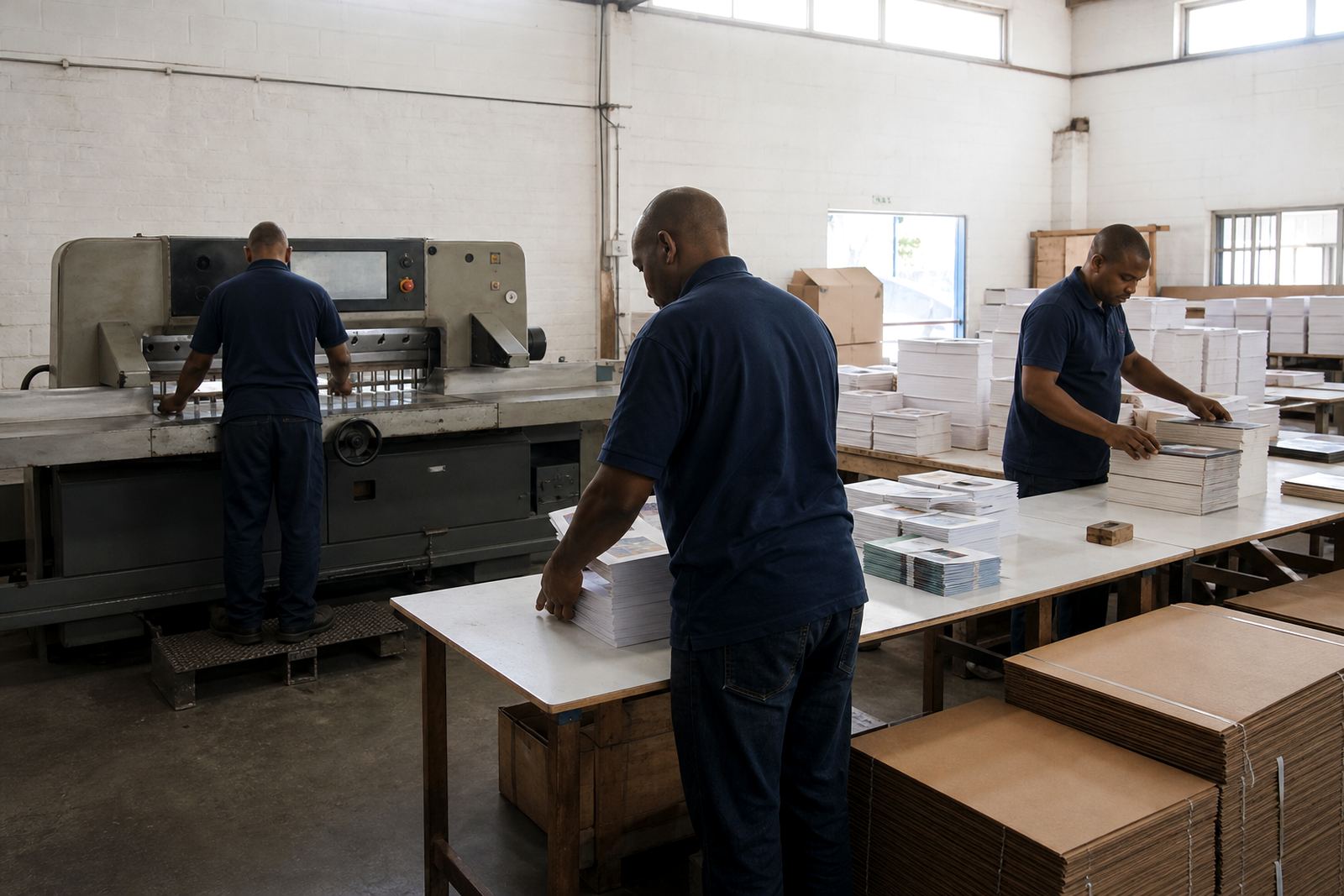
The client was a busy print finishing site in Epping, Cape Town, with a mix of cutters, handling tables and packing support gear that needed to be cleared in an orderly way. The equipment was no longer central to the business, and the team wanted a practical disposal route that would give buyers enough information while keeping the site moving.
We were asked to assess the machines, group the lots sensibly and guide the sale process from first inspection through to collection planning. The main aim was simple: present the assets properly, protect the condition of the machinery during removal, and make sure the process did not disrupt the rest of the operation.
- Client type: print finishing and packaging operation
- Town: Epping, Cape Town
- Asset type: used industrial print finishing equipment
- Main items: cutters, handling tables, packing support gear
What we found on site
The inspection covered the physical condition of each item, the operating setup, and the practical details buyers would need before placing bids. Several pieces were standard workshop and finishing equipment with moderate wear, while others had been standing for a while and needed careful description so buyers understood what was complete and what was not. In a site like this, condition notes matter just as much as the nameplate details.
We recorded the machine type, general size, power requirements where visible, and any visible issues such as worn belts, missing guards, damaged rollers or surface rust. In coastal areas like Cape Town, humidity can leave a mark on steel frames, bearings and electrics, so we always check for that and note it clearly. A buyer does not want surprises on collection day, and neither does a seller.
- Cutters were assessed for table condition, blade housing and guards
- Handling tables were checked for frame straightness and surface wear
- Packing support gear was listed with any loose parts or missing accessories
- We noted access limits, floor space and likely lift requirements
Auction planning and lotting approach
The lotting plan was built around how buyers in the print and finishing trade usually purchase. Similar items were grouped where that made sense, but we avoided putting too much into one lot if it would reduce interest. Smaller support gear can attract more action when it is split properly, while heavier cutters often perform better as single lots if the buyer needs one specific unit.
We prepared the auction listing structure, viewed the machinery against the site layout, and set out the sequence for photographing and describing each item. That process also helps with later removal, because clear lot order and accurate labels reduce confusion. For a disposal like this, the important part is not only getting bidders interested, but making the whole handover easier for the seller.
- Lotting by machine function and removal practicality
- Catalogue notes written for buyers who know print finishing equipment
- Viewing day planning with safe walk-through routes
- Reserve guidance based on condition and market interest, not guarantees
Timeline from inspection to sale-ready listing
The project ran over four weeks from first site visit to final sale preparation. Week 1 covered inspection and basic asset review. Week 2 was used for lotting, condition notes and photo listing prep. Week 3 allowed for catalogue checks, viewing arrangements and seller sign-off on the lot structure. Week 4 focused on auction readiness, buyer queries and removal coordination.
That timing worked well for the client because it fitted around factory access and normal trading hours. In busy industrial areas around Cape Town, you often have to plan around deliveries, staff shifts and tight yard space, so a clear schedule helps everyone. It also gave us enough time to catch details that would have been missed in a rush, especially on older machines that had been moved more than once.
- Week 1: site inspection and asset review
- Week 2: lotting, descriptions and photography prep
- Week 3: listing checks and viewing day planning
- Week 4: auction preparation and collection coordination
Removal, collection and site closure support
Once the lots were ready, the next step was to keep the collection process organised. Printing and finishing equipment can be awkward to move, especially when tables are long, frames are heavy, or access is shared with other plant. We worked through the removal sequence in the right order so buyers could collect without damaging floors, doors or adjacent equipment.
Closure support included confirming what had sold, what still needed attention, and which items required extra handling on site. On industrial clearances, this part is often overlooked, but it matters. If a machine has to pass through a narrow opening or be broken down before loading, that needs to be known before anyone arrives with a truck and a crew. It saves time and avoids disputes.
- Collection planning for bulky cutters and tables
- Coordination for buyers with their own transport or rigging crews
- Clear identification of unsold or excluded items
- Practical site handover support after the auction process
What the seller gained from the process
The key result was a cleaner and more workable disposal path for equipment that no longer needed to stay on site. The seller had proper opinions of value for the machinery, clear lot descriptions, and a structure that buyers could understand. That matters because valuations are opinions of value based on condition and market context, not a promise of what any item will fetch on the day.
For the client, the process also reduced internal admin. Instead of staff trying to answer every buyer question or manage access ad hoc, there was one clear route for inspections, listing information and collection planning. We would use the same approach again for a print facility with similar assets: inspect carefully, lot sensibly, keep notes practical, and plan removals before the auction closes. It keeps the sale orderly and the site manageable.
- Clear asset descriptions for buyers across South Africa
- Practical lot structure that suits used finishing equipment
- Less disruption to the operating site during the disposal
- Better handover control once the sale process is complete
Key facts
| Project type | Print finishing equipment disposal |
|---|---|
| Location | Epping, Cape Town |
| Asset mix | Cutters, handling tables and packing support gear |
| Timeline | 4 weeks from inspection to sale readiness |
| Services used | On-Site Valuations, Lotting and Cataloguing, Auction Planning, Collection Coordination, Closure Support |
| Base team | Kempton Park with South Africa-wide service coverage |