Benoni Plastics Plant: the brief and site conditions
The instruction came from a plastics processor in Benoni that was reshaping its operation and needed a controlled sale of surplus plant. The assets were spread across a working industrial site with tight passageways, mixed floor levels and limited laydown space, so the plan had to keep people moving safely while still allowing proper inspection. As with many plants around Gauteng, there was also the usual practical pressure of load-shedding, so we needed to plan viewing and photography around short power interruptions.
The brief was straightforward in principle but detailed in execution: identify the machinery, separate operating items from non-operating items, prepare a lot structure that buyers could understand, and support the seller through an auction process that could be followed by both local and out-of-province buyers. Valuations were treated as opinions of value based on condition, age, completeness and market demand, not as a guarantee of sale price. That distinction mattered because the plant had a mix of serviceable machines and items needing repair or recommissioning.
What we assessed on site
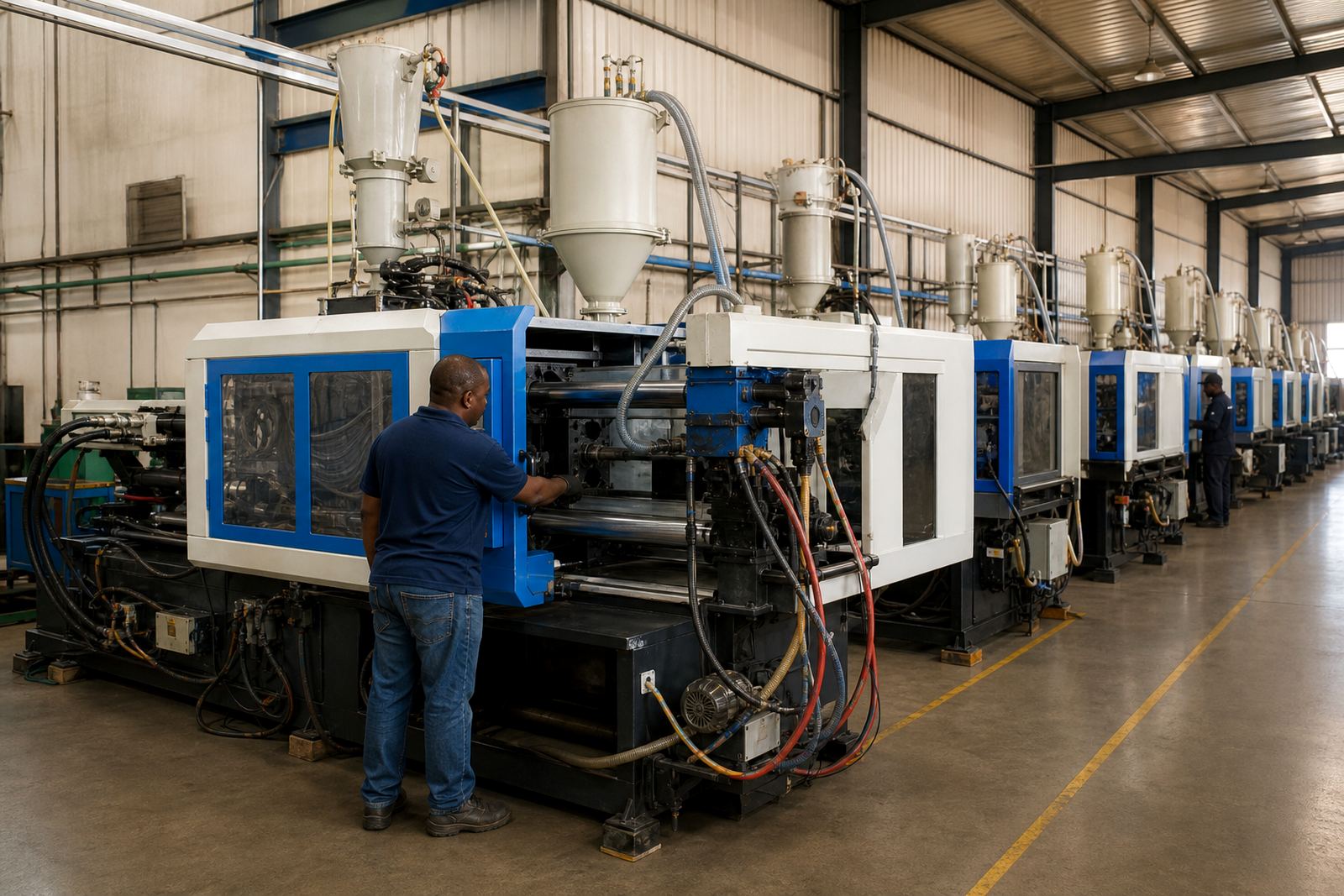
The core package covered plastics processing equipment and the support gear that gives a plant its rhythm. In this case the main assets included injection moulding machines, granulators, chillers and associated process cooling items, plus storage, conveyors and some smaller handling equipment. We also checked serial plates where visible, noted motor ratings, and recorded missing guards, damaged hoppers and any signs of wear that would affect buyer confidence.
- Injection moulding machines in varying tonnages, with clamp and injection units assessed separately where possible.
- Granulators with feed openings, cutter condition and motor health noted for each lot.
- Process cooling equipment including chillers, pumps and pipework, with attention to corrosion and service history.
- Associated items such as conveyors, dryers, control panels and material handling accessories.
- General site factors including access, lifting points, floor loading and likely collection sequence.
We also considered the realities of a plastics site in Gauteng: dust build-up, water exposure near cooling lines, and the effect of inland temperature swings on stored electrical equipment. Those details help buyers judge whether they are buying a machine that can go straight into production or one that needs a workshop visit first.
Lotting, cataloguing and auction planning
Once the initial inspection was done, the next step was lotting. The objective was to avoid over-grouping, which can hide value, and avoid over-splitting, which can make a sale harder to follow. We prepared the sale so that a buyer interested in one moulding machine did not have to take the whole plant, while also allowing bundled lots where that made sense for auxiliaries and smaller equipment.
The cataloguing phase included photo listing prep, descriptions of key features, and notes on condition and completeness. A good catalogue does not promise results it cannot support. It gives buyers enough information to ask the right questions, plan transport and budget for recommissioning if needed. For this Benoni project, that meant clear wording around machine size, power requirements, visible condition and whether the item was in line for immediate viewing or still being moved into position.
- Site photographs taken in workable light, with repeat images where a nameplate or control area needed closer detail.
- Asset descriptions written in plain terms so that buyers from Johannesburg, Pretoria, Durban, Cape Town and Gqeberha could compare lots quickly.
- Reserve guidance discussed with the seller using market evidence and current demand, while keeping expectations realistic.
- Viewing day planning arranged to reduce congestion and allow buyers time to inspect key lots properly.
Timeline from instruction to closing
The project moved over a six week period from first inspection to sale close-out. Week one covered the on-site valuation and asset capture. Week two was used for lotting decisions and seller sign-off on the sale structure. Weeks three and four focused on catalogue preparation, buyer enquiry handling and final viewing arrangements. The auction itself took place after the listing period, with closure support and collection coordination following once lots had been placed.
Because the site was in Benoni and the buyer pool extended across South Africa, timing mattered. Transport, loader availability and access to industrial sites in other provinces all affect how bidders participate. We kept the process practical and visible, which helped reduce confusion on the day and made it easier for the seller to move from one phase to the next without dragging out the handover.
Outcome and market response
The sale produced a clean handover path for the seller and gave buyers a clear route to inspect and bid on individual assets. The strongest interest was in the moulding machines and the cooling equipment, with secondary interest in the granulators and support items. Rather than chasing a quick appearance of activity, we focused on orderly presentation and truthful condition reporting, which is what generally supports better decision making from buyers.
For the seller, the main value was control. The assets were not treated as a vague bulk clear-out. Each lot was described, inspected and tracked through the process so that closure support could be handled properly. That included collection coordination, site clearance planning and final checks on what remained on the floor after each collection window. It is the sort of job where detail matters more than noise.
- Clear lot identity made it easier for buyers to compare machines and plan logistics.
- Condition notes reduced avoidable disputes during the inspection and collection stages.
- Seller representation helped keep the process steady when buyer questions came in from different provinces.
- Closure support made the end of the sale feel controlled instead of rushed.
What we would repeat on the next plastics sale
If we were handling the same kind of plastics plant again, we would keep the same approach: inspect early, catalogue in proper sequence and give buyers enough detail to make a sensible offer. For plants with moulding machines and cooling systems, that means paying close attention to power supply condition, hydraulic leaks, cooling water lines and the completeness of guards and controls. Those are the points that change buyer appetite quickly.
We would also keep the lot structure flexible. Some buyers want one production line component, while others are looking for multiple assets to rebuild a section of a plant. A good auction plan needs to allow both. The Benoni project showed why practical asset management matters, especially when a site has to keep functioning until the very end and the sale must be handled without unnecessary disruption.
Key facts
| Project | Benoni Plastics Plant |
|---|---|
| Client type | Plastics processor, Benoni, Gauteng |
| Asset mix | Injection moulding machines, granulators, process cooling equipment |
| Timeline | 6 weeks from inspection to closure support |
| Scope | On-site valuation, lotting, cataloguing, viewing days and auction planning |
| Coverage | Sellers and buyers across South Africa, including Johannesburg, Pretoria, Durban, Cape Town and Gqeberha |