Water Treatment Assets We See Most Often
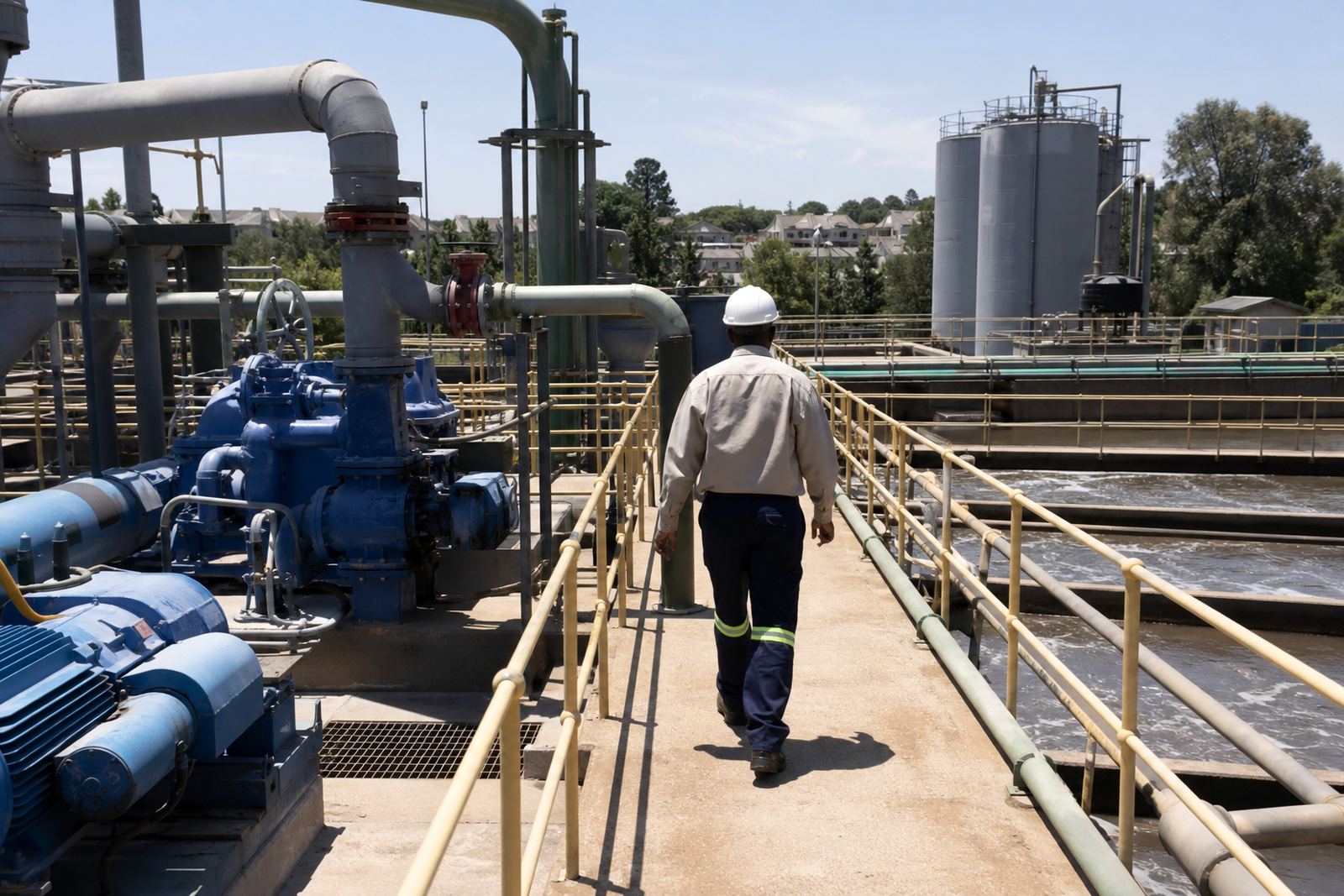
Water treatment sites usually hold a mixed set of equipment, from process pumps and duty standby sets to tanks, dosing skids and filtration units. Some plants are compact and neatly installed, while others have grown in stages over many years, with additions tucked into corners and older items kept as backup. In our work, we look at what is on the floor, what is still connected, and what can be lifted and moved without damage.
The condition of these assets can vary a lot. Coastal humidity in Durban or Gqeberha can affect panels, fasteners and frames, while inland sites around Johannesburg, Pretoria and Kempton Park often see wear from dust, vibration and long operating hours. Load-shedding can also leave a mark on control gear and motors, especially where backup power was only partly installed. A proper valuation takes all of that into account, because the same machine can have a very different opinion of value depending on its maintenance history and site condition.
- Centrifugal and multistage pumps
- Clarifiers, tanks and buffer vessels
- Filter presses, media filters and strainers
- Chemical dosing pumps and mixing tanks
- Blowers, compressors and support skids
- Panels, starters, valves and pipework sections
How A Valuation Is Handled On Site
An on-site valuation starts with identifying the assets, checking access and confirming what is being included in the instruction. We then review nameplates, approximate sizes, visible condition, installation method and any signs of corrosion, leaks or previous repairs. Where possible, we also note whether items are freestanding, bolted down, integrated into a line or difficult to remove without shutdown work. That matters because removal can affect the overall market response, and a valuation should reflect reality, not wishful thinking.
Valuations are opinions of value, not guarantees of sale price. That distinction is important in water treatment because the buyer pool can be specific. A working pump set with sensible spares may attract interest quickly, while a large tank or specialised dosing frame may need the right buyer, lifting plan and transport route. We do not give personal financial or tax advice, but we do give a practical view of how a market may respond at auction or private sale.
- Walkthrough of the plant or storage area
- Asset identification and basic condition review
- Grouping into sensible lots for the market
- Commentary on removal, access and transport issues
- Reserve guidance where the seller wants a floor price
Auction Planning For Utility And Industrial Sites
Water treatment auctions work best when the layout is planned with movement in mind. Buyers want to understand what they are bidding on, how it is arranged, and whether the items can be inspected without confusion. That means catalogue order matters. We often advise that pumps are listed with their drive details, tanks are shown with dimensions, and electrical support items are separated from process equipment instead of being bundled into one vague lot. A good catalogue saves time on viewing days and reduces disputes later.
In South Africa, the practical side is often about access and compliance. Some sites need loading timed around operations, municipal restrictions or security gates. Others have uneven yards, narrow plant rooms or overhead pipework that makes removal more involved than the asset itself. Our auction planning includes site-specific thinking like forklift access, crane reach, temporary isolation, and whether a buyer can collect during business hours or only at set times. It is the kind of detail that keeps a disposal moving and avoids last minute trouble.
- Lot by function: pumps, tanks, treatment, electrical and spares
- Clear photo listing prep with close-ups of nameplates and wear points
- Viewing day flow that lets buyers inspect without blocking the site
- Collection coordination for heavy or awkward items
- Closure support once the auction or sale process is complete
Common Mistakes That Reduce Value
One of the biggest mistakes is leaving equipment until the end of a shutdown and then rushing the sale. Water treatment gear can look simple, but a pump train, dosing area or filtration line often needs proper identification before it can be marketed well. If the site strips out cables, valves and tags too early, the asset may become harder to describe and harder to sell. Missing parts can also make a lot appear incomplete, even where the core machine is still sound.
Another problem is over-grouping. A buyer for pumps may not want a whole yard of unrelated items, and a buyer for tanks may not want to pay for small ancillary equipment they do not need. Sellers sometimes expect every item to draw the same level of interest, but the market works in parts. We often see better results when the catalogue separates plant by use and gives honest condition notes. Small details like a seized valve, bent frame or noisy motor can change the view of value quite a bit, so it is better to say so upfront.
- Do not remove identification plates before inspection
- Do not bundle unrelated assets into one broad lot
- Do not assume a working-looking unit is market-ready
- Do not ignore access issues for trucks, forklifts or cranes
- Do not leave buyers guessing about dimensions or condition
Budget Ranges And Practical Sale Costs
Budgets in water treatment are usually driven by size, condition and removal complexity. A small group of support items may be inexpensive to prepare for sale, while a larger plant with tanks, pumps and electrical gear may need more planning, more photography and more site coordination. The same applies to collection. A unit that can be lifted onto a flatbed in one visit is very different from equipment that needs dismantling, isolation and a staged load-out. Because every site is different, any budget discussion should be based on the actual list of assets and the condition found on inspection.
As a rough planning guide, sellers should allow for modest admin and preparation costs on simple lots, and a higher allowance where the site requires detailed cataloguing, viewing arrangements or controlled clearance. For heavier water treatment equipment, it is wise to account for lifting and transport as well. The total can move a lot depending on whether the assets are in Germiston, Midrand or further out in Cape Town or Durban, because access, labour and timing all play a part. We keep the discussion practical and clear, so you can decide whether to sell as a group, in sections, or through a structured auction process.
- Simple handheld items and small supports: lower preparation effort
- Pumps, skids and panels: moderate preparation and inspection effort
- Large tanks, bundled pipework or site clearance lots: higher coordination needs
- Remote or constrained sites: allow for extra removal planning
What Buyers Look For In This Sector
Buyers in water treatment are usually checking more than the name of the machine. They want to know if the equipment is suitable for reuse, refurbishment or parts. For pumps, they look at the frame, shaft area, seals and motor condition. For tanks, they consider wall thickness, corrosion, supports and whether fittings are complete. For treatment support gear, they want clean identification, useful dimensions and an honest view of wear. That is why good listing work matters so much. It helps the right buyer find the right lot without wasting time.
We often advise sellers to think like the buyer. If a component is hard to test, say so. If a unit was kept as standby and has not run for some time, say that too. Buyers appreciate straight information and it can improve confidence at auction. Our role is to present the assets clearly, keep the process orderly, and help both sides understand the practical value of the lot in front of them.
- Clear dimensions and load details
- Honest condition notes and visible wear points
- Good photos of motors, frames, tanks and pipe connections
- Separate lots for reusable items and scrap-type material
- Enough detail for buyers in Johannesburg, Pretoria, Durban, Cape Town and Gqeberha to bid with confidence