Packaging lines need more than a quick once-over
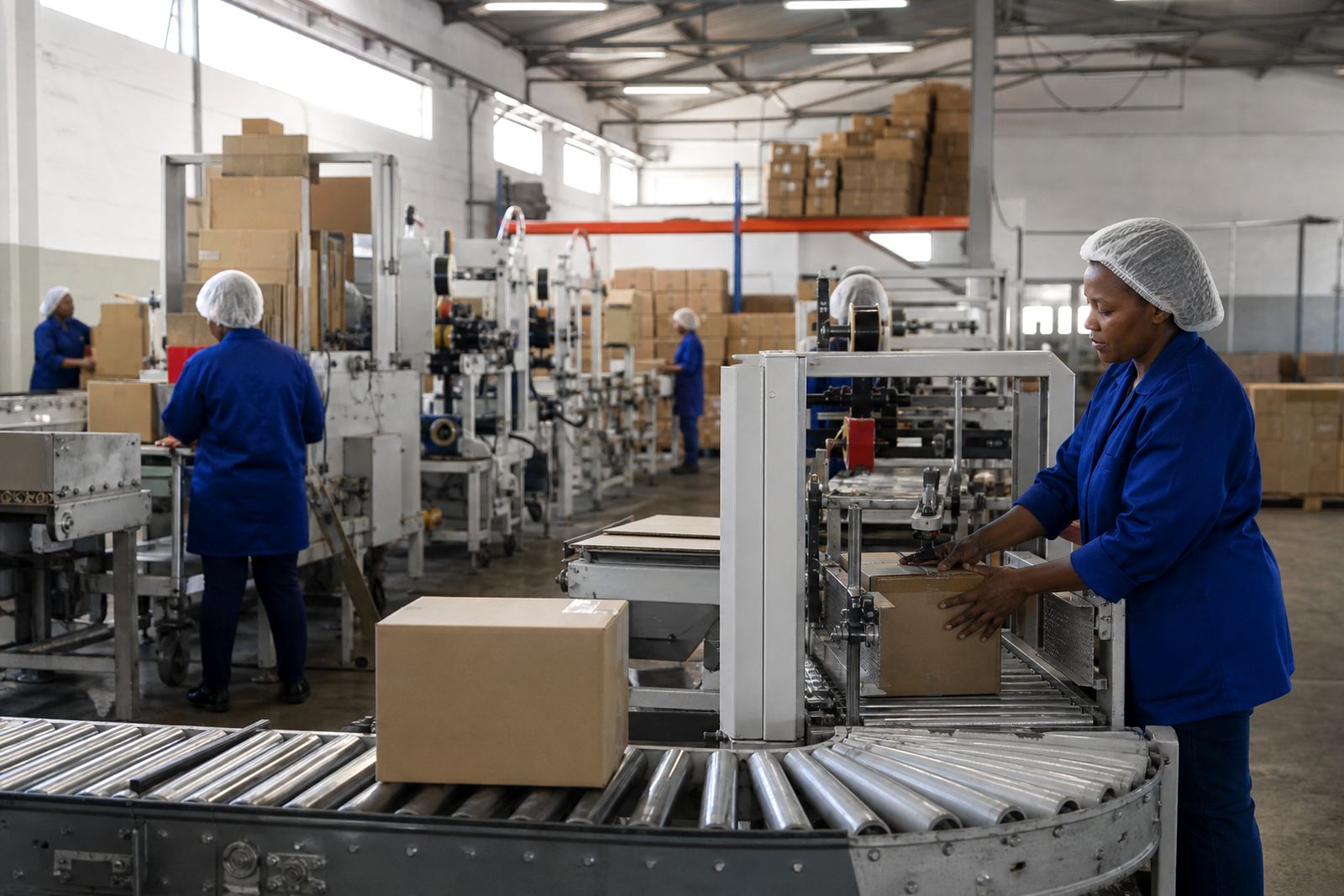
Packaging line assets are rarely sold as single machines. A line normally includes a filler, capper or sealer, label unit, conveyors, accumulation tables, guarding, electrical panels and control gear, plus change parts and spare tooling. When we assess a line, we look at the whole set-up as one working system, not just the shiny unit at the front. That matters because one weak point, like missing sensors or a damaged transfer section, can change the value quite a bit.
For sellers in Johannesburg, Pretoria, Durban, Cape Town and Gqeberha, the first step is usually a site visit or a detailed photo review. We check machine age, duty cycle, service history, whether the line ran product daily or only seasonally, and how well it coped with dust, heat, wash-downs or coastal humidity. In our experience, the best valuation work starts with what is on the floor and not what the logbook says it should be worth.
Typical equipment in a used packaging line
Packaging lines come in many forms, from simple manual-fill stations to high-output systems. A used line may include bottles, pouches, cartons or tubs handling equipment, and the value depends on how matched the units are. If the filler is far faster than the capper or conveyor speeds are mismatched, the whole line can be harder to place at auction.
- Fillers for liquids, powders or granules
- Wrappers, shrink systems and sealing machines
- Conveying systems with bends, guards and supports
- Label applicators, coders and checkweighers
- Air compressors, pumps and control panels
- Change parts, guides, rails and format tooling
We also note whether the equipment is stainless steel, mild steel or mixed construction, and whether parts show corrosion, cracked plastics or worn bearings. A line that has spent years in a humid Durban warehouse may show different wear from one used inland in Kempton Park, and that affects likely buyer interest.
How we plan the auction around the layout
Packaging lines often sit in tight production spaces with cable trays, mezzanines, drains and narrow loading access. That is why auction planning has to start with the layout. If the line cannot be dismantled safely, or if a forklift cannot reach the heaviest modules, the costs and risk to buyers rise. The same applies where walls, fixed pipework or plant floors make removal awkward.
Our team considers lotting and cataloguing in the sequence buyers will use. A full line may be offered as one lot, or split into sections if that gives better interest. The right choice depends on whether the line is complete, whether the control system is still intact, and whether there are clear separations between process stages. We often advise clear photo listing prep too, because buyers want to see infeed, discharge, guards, electrics and nameplate details before they make a bid.
- Measure door widths, ceiling height and fork access before removal day
- Record line speeds, product sizes and power requirements where available
- Identify any missing items early, including pumps, panels and safety covers
- Plan viewing days so buyers can inspect from feed end to discharge end
Common mistakes that pull value down
One common mistake is treating a line as a single number without checking whether it is complete. Missing conveyors, no control software backup or removed format parts can reduce buyer confidence fast. Another mistake is leaving cleaning and strip-down too late. Sticky product residue, oil spills and damaged guarding make a line look neglected, even when the main machines are sound.
We also see sellers underestimate the effect of power and compliance issues. A line may look ready, but if the electrical cabinet is incomplete, if emergency stops are missing, or if the machine history is unclear, the market will price in extra risk. The same goes for pack lines that were used in regulated sectors, where buyers want to know what standards applied and what documentation is available. Small faults can become expensive very quickly, so the valuation has to reflect real condition, not hope.
For buyers, a frequent error is assuming every line can be dropped into a new building without changes. Floor space, drainage, ventilation and load-shedding planning all matter. In Gauteng especially, many plants now want backup power for control systems and critical conveyors, because a stop-start pattern can upset product flow and cause seperation at the infeed or jam points.
Budget ranges and what changes the number
Used packaging line values can vary widely, so we do not promise a sale price. A valuation is an opinion of value based on condition, completeness, market demand and removal difficulty. For some buyers, a smaller line may be attractive because it can be installed quickly. For others, a larger line with stronger output is worth more only if the matching ancillary kit is present.
As a working guide, budget expectations often sit in broad bands from the low tens of thousands of Rand for basic single machines to several hundred thousand Rand or more for complete, well-kept lines with automation and supporting equipment. High-spec systems with specialist filling heads, modern controls and strong service records can sit above that. The final figure depends on whether the line is current, how many parts are included, and whether there is enough demand in the market at that time.
If the line needs careful dismantling, crane work, electrical isolation or transport over long distances, buyers will factor those costs in. That is why auction guidance and reserve guidance matter. A reserve that is set too high can stall interest, while a reserve that is too low may not reflect the asset correctly. Our role is to help sellers set sensible expectations and present the line in a way that supports proper bidding.
Why South African sellers call us for packaging assets
Machine Africa works from Kempton Park and handles industrial machinery valuations and auctions for clients across South Africa. The team includes Siyabonga Mthembu, Naledi Khumalo, Pieter van der Merwe, Ayesha Ismail, Thabo Molefe, Johan Botha and Lerato Nkosi, each focused on a part of the process from inspections and logistics through to cataloguing and closure support. That combination helps when a packaging line has to be assessed quickly and fairly.
We regularly assist with plant appraisals, site inspections, collection coordination, clearance sales and viewing days for machinery in Johannesburg, Pretoria, Durban, Cape Town and Gqeberha. If you are upgrading a line, closing a site, or selling specific packaging assets, our enquiry form is the simplest way to get started. We will look at the equipment as it stands and give you a practical view of what the market is likely to make of it.
- On-site valuations for packaging machinery and support plant
- Auction planning and seller representation
- Lotting, cataloguing and photo listing prep
- Closure support and collection coordination