When plastics lines need a value or sale plan
Plastic processing sites often call for a valuation when they are upgrading a line, closing a section, relocating, or replacing worn equipment after years of running under load-shedding and stop-start production. The machinery mix can change quickly too. A plant might have one clean extrusion hall, a separate grinding area, bagging stations and a scrap yard with regrind stock, all of which affect what the equipment is worth and how it should be sold.
A proper valuation is an opinion of value based on the machine type, condition, age, make, working status, installation quality and current market demand. It is not a promise of sale price. For plastics facilities, that matters because a twin-screw extruder, a chiller, a granulator and a small bagger can each move very differently at auction. Some pieces are best grouped as a line, while others should be sold separately to attract the right buyers from Johannesburg, Pretoria, Durban, Cape Town and Gqeberha.
Machine Africa works from Kempton Park and supports sellers and buyers across South Africa. The goal is simple: give a realistic view of the equipment, identify what is saleable, and set up the auction process so production teams can keep moving without unnecessary disruption. Siyabonga Mthembu leads the business, with a team that handles valuations, auction planning, site logistics and catalogue preparation.
Typical equipment found in plastics and recycling operations
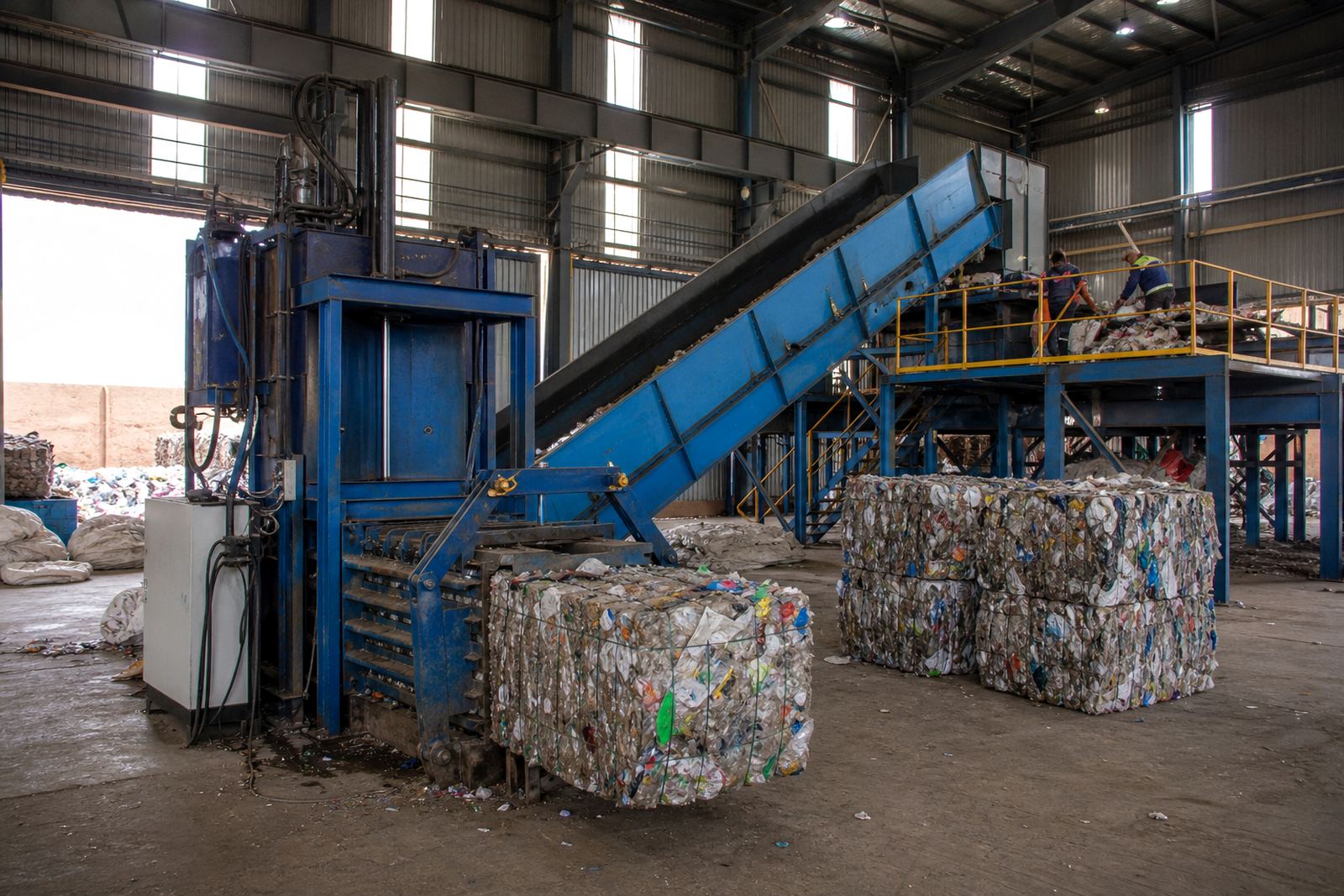
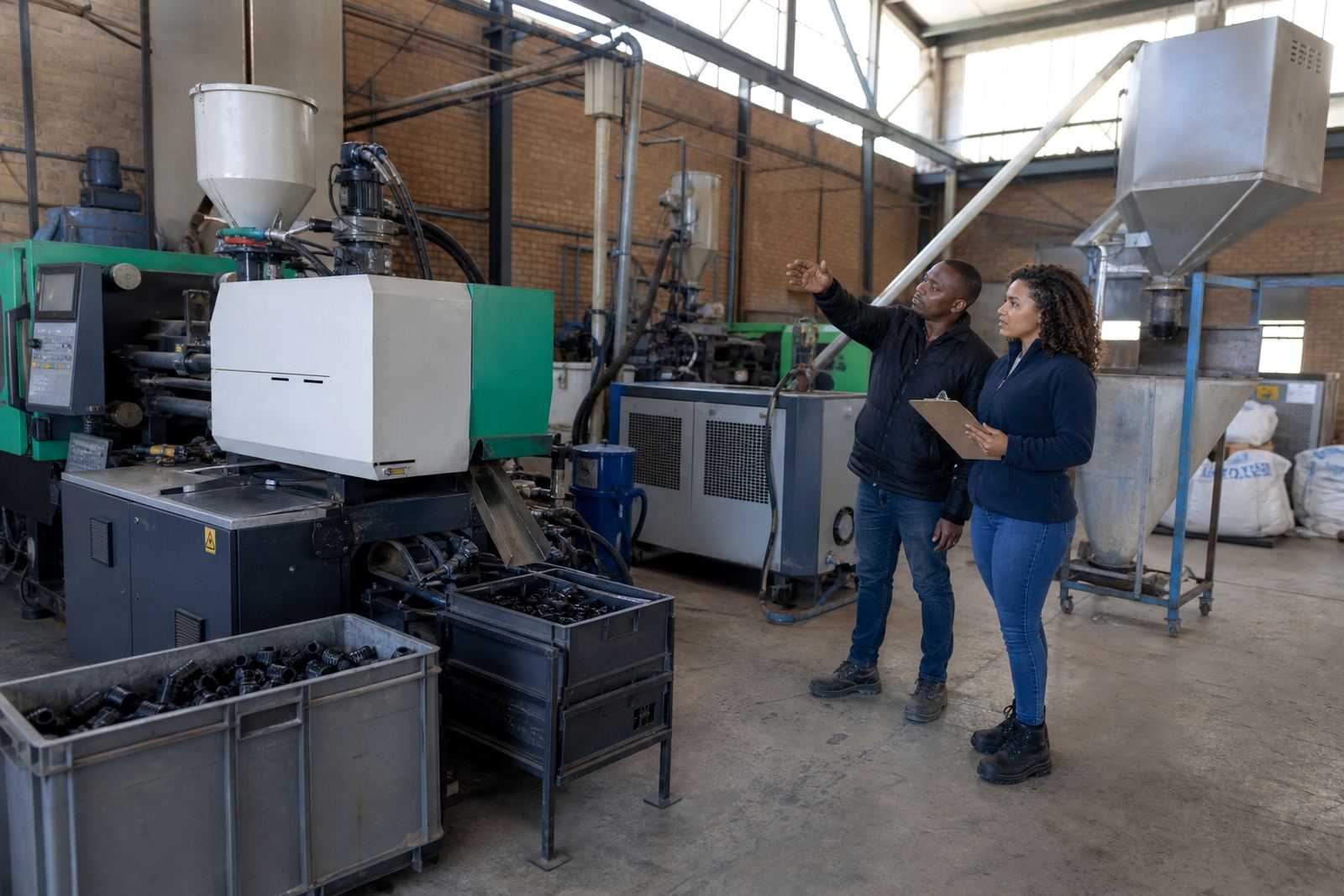
Most plastics processing facilities include a mix of core production machines and support items. The exact set depends on whether the site makes packaging, pipe, profile, film, moulded parts or recycled pellets. Recycling plants may also have more handling equipment, wash systems and sorting gear. When we inspect a site, we look at the whole flow, from feedstock intake to finished product storage.
- Extruders, injection moulding machines and blow moulding machines
- Granulators, shredders and pelletising systems
- Mixers, dryers, hoppers and feeders
- Chillers, cooling towers and temperature control units
- Compressors, pumps and vacuum systems
- Conveyors, stackers and material handling trolleys
- Weighing, sealing and bagging equipment
- Tooling, moulds, dies, screens and spare parts
Support assets can also influence a sale. A machine with good tooling, a tested motor, working heaters and a clean electrical panel will usually attract more interest than the same unit sold as an untested shell. On the other hand, some older equipment still has value as a spare parts source, especially if the market knows that replacements are hard to get. That is why a site visit is usually better than trying to value a plastics plant from a few photos and a list of model numbers.
How we plan a plastics machinery auction
Plastics plants often need careful planning because many items are heavy, connected to services and stored in tight spaces. A sensible auction plan starts with the floor layout. We map where each machine sits, how it will be reached by riggers or forklifts, and which items should be removed first to keep walkways open. This is especially important in Midrand, Germiston and other active industrial areas where site access may be limited by neighbours, loading bays or municipal rules.
We then work through lotting and cataloguing. A buyer looking for a single granulator wants clear photos, accurate measurements and notes on power requirements, while a line buyer may prefer to see multiple related items grouped together. For some sellers, reserve guidance is helpful. That means setting a minimum acceptable figure for a lot based on condition and market interest. It is still an opinion of value, not a guarantee that the lot will sell at that level.
Viewing days are useful for plastics machinery because buyers often want to inspect wear points, screws, barrels, heaters, electrical cabinets and hydraulic systems before bidding. If the site is still operating, we coordinate timings to limit interference with shifts, cleaning and material movements. Thabo Molefe oversees operations coordination, while Johan Botha manages site logistics where removals and collections are involved. It keeps the process practical and avoids a lot of back and forth.
Common mistakes that reduce buyer interest
Many plastics sites lose value because the equipment is not prepared for sale. Dust, resin build-up, missing guards and mixed-up spares make buyers cautious. So does a plant where no one can say which machine runs, which machine is in storage and which machine last had service work. Buyers want facts and access, not guesswork.
Another common issue is poor lotting. If a site throws every item into one large group, smaller buyers may stay away. If the lots are too fragmented, a line buyer may not see the value in the full set. The right balance depends on the plant. For example, a recycler with wash tanks, dryers and pelletisers may suit grouped lots, while a moulding shop with several separate moulding machines may do better with individual lots plus tooling.
- Do not leave power supplies live without a plan for safe isolation
- Do not hide faults that a buyer will discover at inspection
- Do not assume every item should be sold as one bulk lot
- Do not forget manuals, moulds, dies and spare barrels
- Do not ignore access for forklifts, trucks and lifting gear
Photo listing prep also matters. Clear photos of the whole machine, nameplate, control panel and wear areas help buyers compare options quickly. Lerato Nkosi coordinates catalogue and media work so the listing is accurate and easy to read. It saves time later and usually leads to better enquiries.
Budget ranges for plastics plant valuations and sale planning
Every plastics facility is different, so budgets depend on site size, number of assets, travel and the amount of work needed to inspect and catalogue the equipment. A small workshop with a few machines will usually cost less to assess than a full recycling operation with shredding, washing and pelletising lines. Condition also affects the amount of work needed. A clean, organised site is quicker to document than a plant with loose spares, damaged control panels and mixed stock.
As a practical guide, many clients should allow for valuation and auction planning costs that can range from a few thousand Rand for a small asset list to a much higher figure for a large plant spread over several buildings or yards. On-site work, lotting, photo preparation, viewing days, reserve guidance and clearance support may all be priced differently depending on scope. We do not give financial or tax advice, but we do explain the process clearly so sellers can plan around shut-down dates, production handover and collection timing.
For buyers, the main cost is usually the purchase itself plus removal, transport and any recommissioning work. Plastic machinery can be heavy, awkward to move and sensitive to alignment, so it is wise to budget for rigging and electrical reconnection as well. Cape Town and coastal sites may also need extra care because humidity can affect stored motors, panels and spare tooling. In Durban, moisture and salt air can do the same if machines have been standing for some time.
Why plastics businesses call Machine Africa
Machine Africa supports sellers and buyers in Johannesburg, Pretoria, Durban, Cape Town, Gqeberha, Kempton Park, Germiston and Midrand, with a base in Kempton Park for work across South Africa. The team includes Naledi Khumalo on auction management, Pieter van der Merwe on senior valuation work, Ayesha Ismail in client relations, Thabo Molefe in operations, Johan Botha on site logistics and Lerato Nkosi on catalogue and media preparation.
Clients use the enquiry form on our contact page when they need an on-site valuation, auction planning, asset inspection, closure support or clearance sale assistance. For plastics processing and recycling operations, the benefit is a practical reading of what the machinery is likely to achieve in the current market, plus a sale process that is structured enough for busy industrial sites and clear enough for buyers who need to make quick decisions.
If the plant is being upgraded, closed or reorganised, we can help identify what should be grouped, what should be sold separately and what needs a closer inspection before it goes to market. That kind of preparation often makes the difference between a confused sale and one that runs in an orderly way.