When a print plant needs a value opinion
Printing operations call for practical valuation work because the equipment mix is rarely simple. A business may have guillotines, saddle stitchers, perfect binders, folders, laminators, plate handling gear, compressors, air lines, pallet jacks, and support equipment spread across a busy floor. In Kempton Park and the wider Gauteng industrial belt, we often see owners needing a value opinion before a sale, shutdown, upgrade, estate matter, or lender review.
A valuation is an informed opinion of value, not a guarantee of sale price. Condition, age, duty cycle, maintenance records, spare parts availability and how the line fits together all affect the figure. A machine that still runs well but has weak demand in the market can take longer to place, while a cleaner, better documented unit may draw more interest. The aim is to price the asset sensibly, not guess at a wishful number.
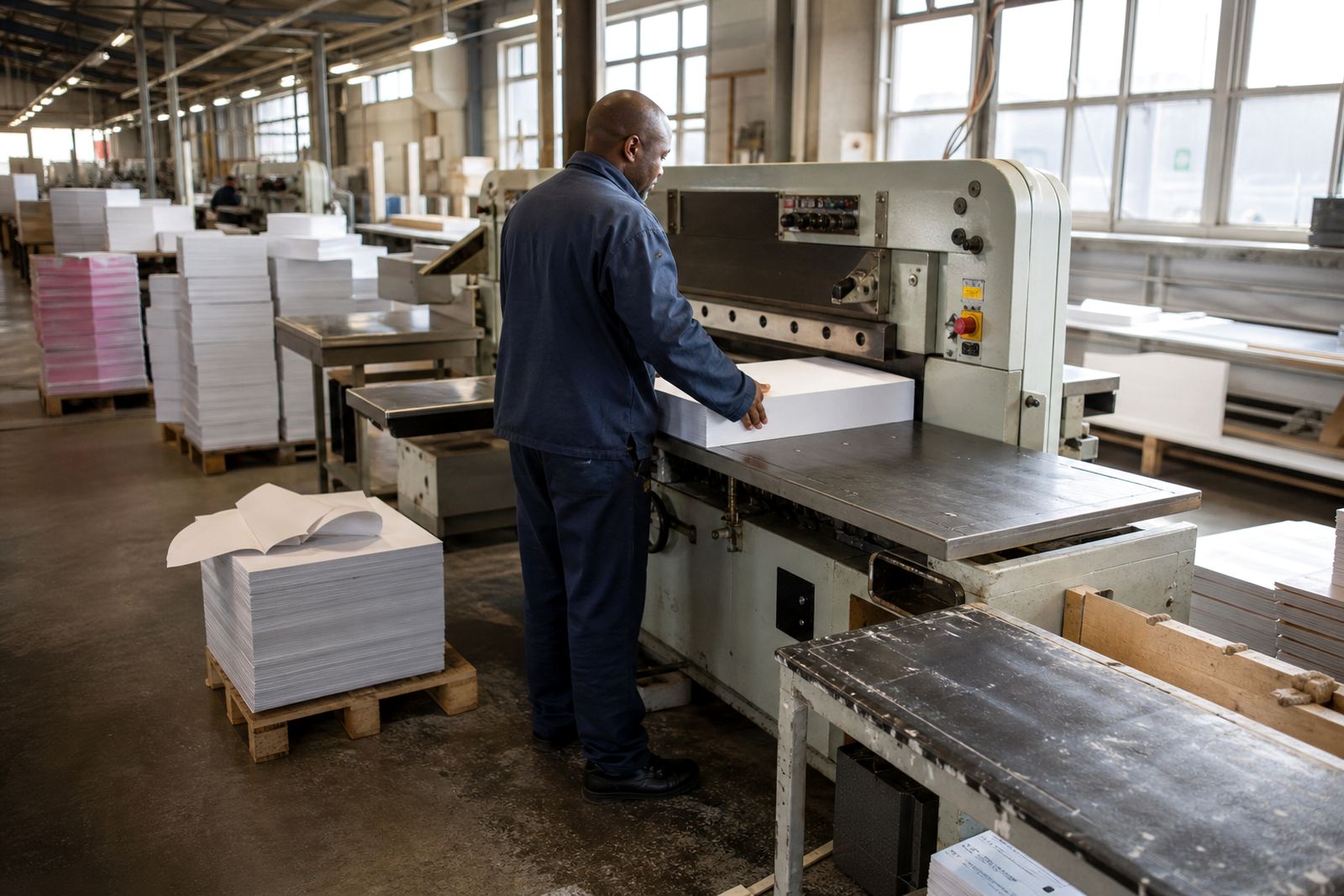
Typical equipment in print finishing and binding
Many printing operations have a core finishing setup built around paper handling and downstream conversion. The exact list changes from plant to plant, but the common set usually includes the following:
- Guillotines, stack cutters and trimming tables
- Folding machines and scoring units
- Saddle stitchers, wire binders and booklet makers
- Perfect binders, nipping presses and spine prep units
- Laminators, UV coaters and film handling equipment
- Paper drills, creasing machines and perforators
- Plate processors, exposure units and washout gear
- Compressors, extraction fans, pumps and electrical panels
For auction purposes, we also look at the support items that make the floor workable. A complete line with feeders, conveyors and spares is often more usable than a loose machine on its own. That matters when buyers in Johannesburg, Pretoria, Durban, Cape Town or Gqeberha are comparing lots and planning transport.
How we approach layout and auction planning
Good planning starts with how the plant is laid out. Machines that sit in a straight production flow are easier to inspect, photograph and remove than equipment packed into tight corners. We look at access for forklift movement, door widths, loading bays, floor levels, crane points and any municipal or site rules that affect removal. In older buildings around Germiston or Midrand, the tricky part is often not the machine itself but the route out of the building.
For a sale process, lotting should reflect how buyers think. Some buyers want one complete line, others want single machines, and some only need support assets. Grouping items sensibly can improve enquiry, but forcing together unrelated equipment can reduce interest. Catalogue notes need to be accurate and clear, with model details, approximate sizes, known faults, missing parts and whether power was available for testing.
- Confirm power requirements and phase before viewing days
- Mark disconnected or incomplete items clearly
- Separate serviceable spares from scrap or damaged stock
- Note any corrosion, ink residue, worn rollers or seized bearings
- Plan the removal order before the sale closes
Common valuation mistakes in printing plants
One of the biggest mistakes is pricing a machine as if it were new just because it still looks tidy. A clean cover does not tell you whether rollers are glazed, heaters are weak, controls are outdated or a feed system is tired. Another mistake is assuming the full line has the same value as the sum of the parts. In practice, a line can lose value if one essential unit is missing.
Owners also sometimes overlook maintenance records and downtime history. A machine that has been serviced regularly and has a proper paper trail is easier to assess. Missing manuals, no spare knives, no tooling and poor storage all affect buyer confidence. Coastal humidity can also leave its mark in places like Durban and Gqeberha, where rust, electrical issues and sticking components are common if the plant was not kept under cover.
For buyers, a frequent error is to focus only on purchase price and ignore the total cost of removal, rigging, reassembly and recommissioning. That extra spend can be significant, especially where access is tight or the machine has to travel long distance to another province. A fair auction sevice should make these realities plain before the hammer falls.
Budget ranges for used print equipment in Rand
Used print and finishing equipment can range widely in price, so broad budget planning is more useful than chasing a single figure. Small manual or semi-automatic items may sit in the low thousands of Rand, while mid-sized finishing units can move into the tens of thousands. Larger integrated machines or complete production sets can reach well beyond that, depending on condition, brand, age and demand.
When planning a disposal or acquisition, it helps to allow for the full project cost. That may include moving gear within the plant, rigging, removal, transport, cleaning, testing, and any repairs before the next run. For many sellers, the real question is whether the chosen route will recover more value than a quick clearance sale. For buyers, the key is whether the machine can earn its keep once installed and commissioned.
- Lower-cost items: basic finishing tools, tables and small support equipment
- Mid-range items: single production machines with working controls and tooling
- Higher-value items: linked lines, specialised binders and well maintained industrial units
- Additional costs: removal, loading, freight, and recommissioning on site
What sellers and buyers in South Africa should prepare
If you are selling from a site in Kempton Park, Johannesburg, Pretoria, Durban, Cape Town or Gqeberha, gather the basics early. Serial numbers, machine descriptions, photos, power status, service history and a list of missing parts all help. If the equipment is still in production, arrange a short period to show it in working order where possible. If it has been idle, be honest about the state of the unit. Clear information reduces disputes later.
Buyers should inspect with a practical eye. Check wear on rollers and bearings, look for fluid leaks, confirm control panels respond, and ask how the machine was stored. If viewing is limited to a short window, focus on signs that affect recommissioning and not just cosmetic condition. The best purchase is the one that fits the job, the floor space and the budget, with room for transport and setup.
At Machine Africa, the team led by Siyabonga Mthembu handles auctions and valuations from our Kempton Park base, with support from Naledi Khumalo, Pieter van der Merwe, Ayesha Ismail, Thabo Molefe, Johan Botha and Lerato Nkosi. Clients reach us through the enquiry form on our contact page, and we guide both sides through inspections, lotting, viewing days and closure support with straightforward advice.