Used Equipment in Construction Support Settings
Construction support businesses often run mixed fleets and workshop yards that change as projects start and end. One month the site may need generators, compressors and welders, then the next it is all about trailers, lifting gear, cutting tools and light plant ready for redeployment. In this setting, a valuation needs to reflect condition, age, usage hours, service history and how easy the item will be to move or sell again.
Machine Africa works with sellers who are reducing fleet size, closing a depot, replacing older equipment or clearing surplus stock after a contract ends. We also assist buyers who need dependable used machinery without waiting on long lead times or import delays. A valuation is an informed opinion of value, not a promise of the final auction result, and the market can shift quickly depending on demand, timing and presentation.
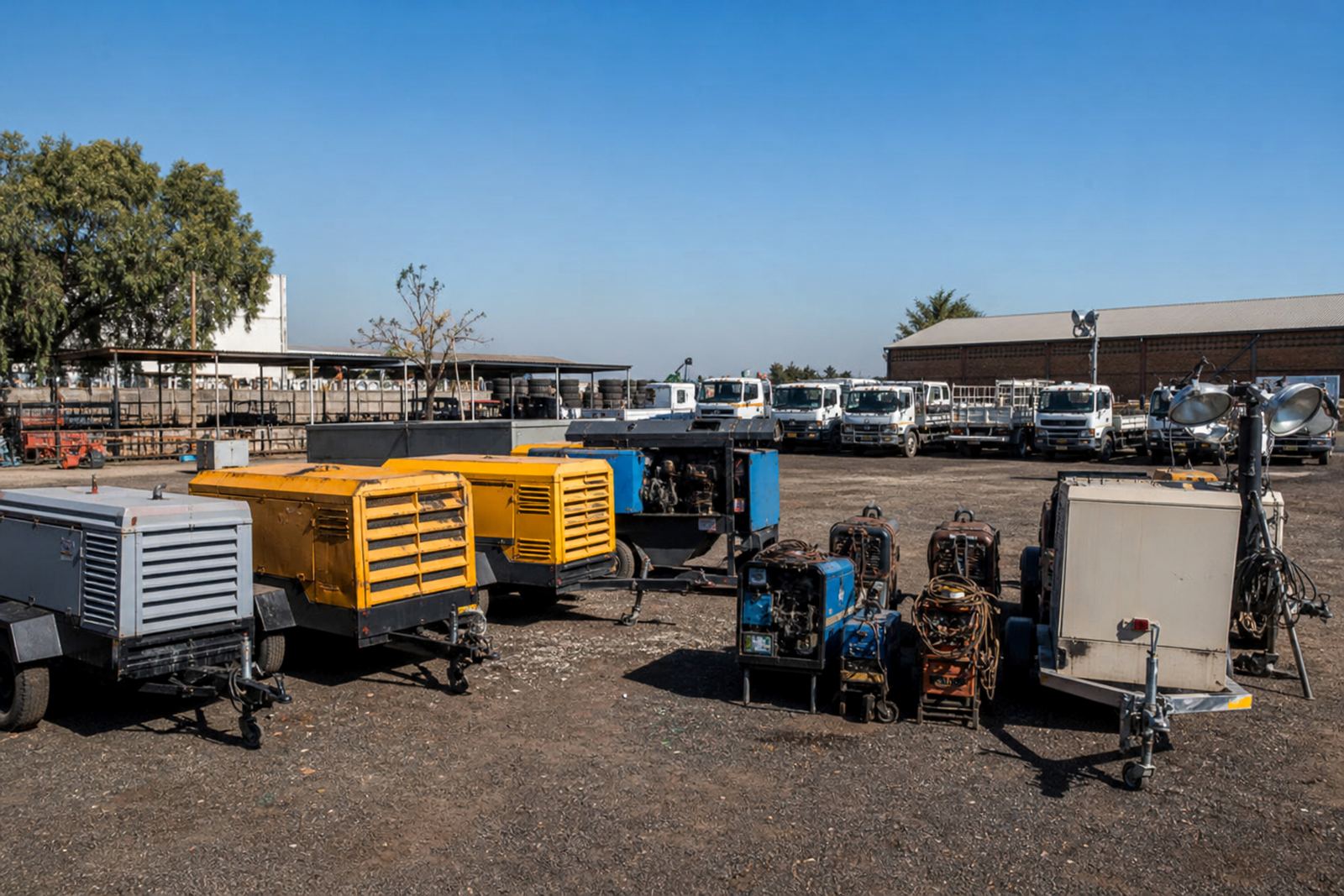
- Typical assets include compressors, welding machines, generators, mixers, compactors and site pumps.
- Workshop items often include benches, presses, drills, grinders, chain blocks and cutting equipment.
- Support fleets may also include trailers, small forklifts, light materials handling gear and storage racking.
What We Commonly See On Site
At contractor yards in Kempton Park, Johannesburg, Pretoria and beyond, the equipment mix is usually practical rather than neat. Some machines are stored under cover, while others sit in open yards exposed to dust, rain and coastal humidity if they have worked on projects near Durban, Cape Town or Gqeberha. That makes inspection important, because corrosion, worn cables, damaged fittings and flat batteries can change the picture fast.
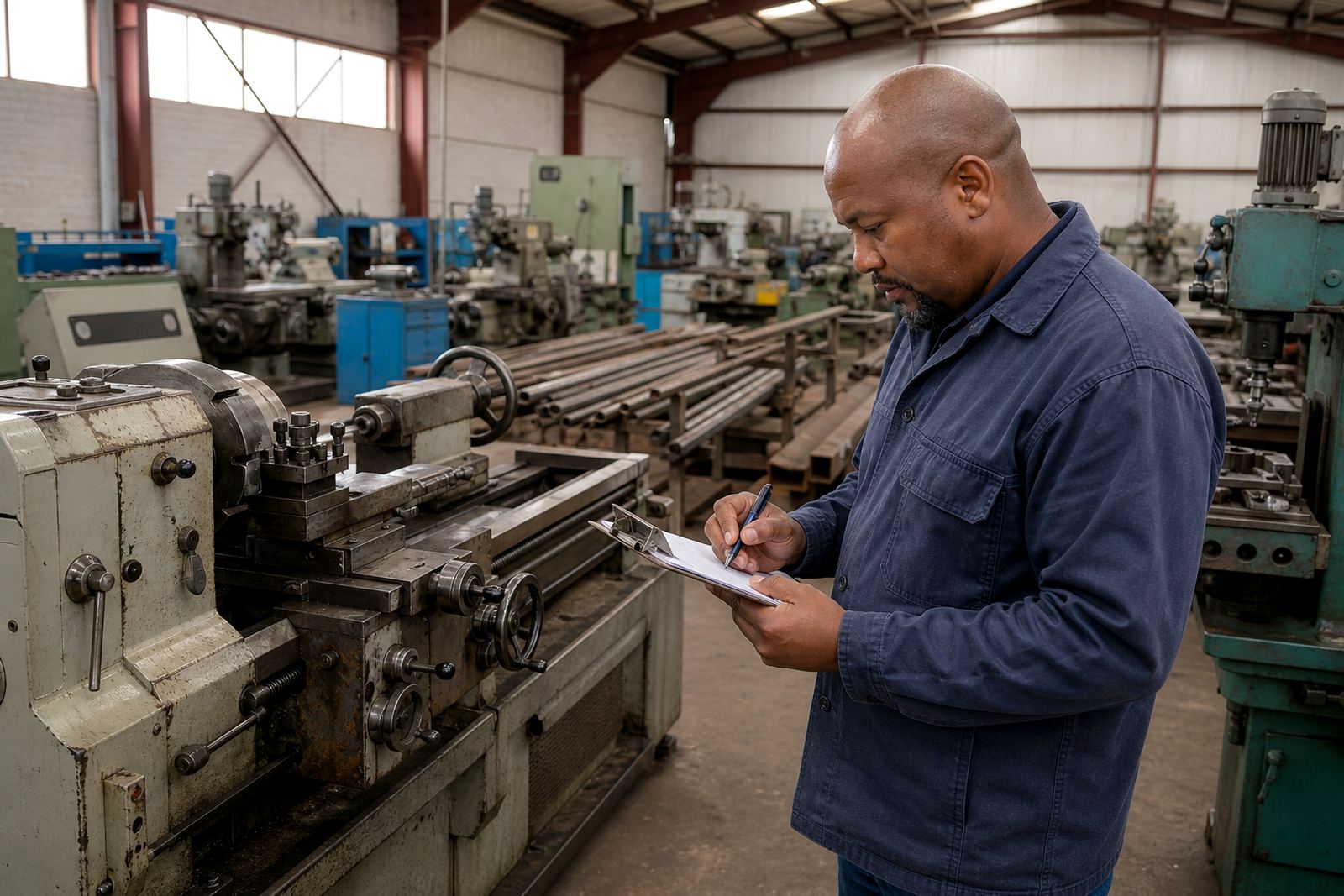
Our on-site valuations and asset inspections focus on the details that matter to a buyer and a seller alike. We look at working condition, visible wear, missing parts, serial identification where available, and whether the item can be tested safely. If equipment has been idle during load-shedding or a project pause, we note that too, because sitting unused can affect starting systems, fuel quality and seals. A fair assessment helps avoid inflated expectations and keeps the auction process grounded in reality.
- We often assess site generators, portable lights, air tools and battery charging equipment.
- We also see shuttering support, ladders, scaffold-related items and general maintenance stock.
- For workshops, fixed machinery and bench-mounted tools are often part of the lotting plan.
Planning The Yard Before Valuation Day
Good planning saves time and reduces arguments later. Before a valuation or auction, it helps to group similar items together, clear access paths and make sure machines are not buried behind scrap, timber offcuts or pallets. If a business has several branches or satellite yards in places like Germiston or Midrand, it is worth deciding early what stays on each site and what must be moved for inspection.
We often advise clients to separate items into categories such as workshop machinery, site support gear, transport items and loose accessories. It is also useful to gather service records, manuals, keys, remote controls and loose parts in one place. When these basics are sorted before cataloguing, viewing days are easier for buyers and the listing is cleaner. It can also help reduce disputes about what was included, which is a common mistake on busy construction yards.
- Keep machines accessible so they can be photographed and checked properly.
- Label non-runners, incomplete items and spare parts clearly.
- Set aside tools and accessories that belong with each machine, not in a general pile.
Auction Approach For Contractors And Site Support Businesses
For many contractors, an auction is the most practical route when equipment needs to move quickly and fairly. The process usually starts with an inspection, followed by valuation, lotting and cataloguing, then viewing days and the sale itself. Depending on the asset mix, we may recommend grouping smaller items into sensible lots and keeping larger plant separate so buyers can bid with confidence. Reserve guidance can also be considered where the seller wants to protect value without slowing the process down.
Clearance sales are often suitable after project completion, contract demobilisation or depot rationalisation. In some cases, seller representation is useful where the owner is busy on site and needs one team to manage the process from start to close. After the auction, closure support helps with collection coordination, paperwork flow and the handover of sold assets. The key is transparency at every step, so the market understands what is being offered and in what condition.
- Best results usually come from orderly lotting and honest condition descriptions.
- Viewings should be practical, safe and easy for contractors to attend between jobs.
- Collection coordination matters because many buyers need quick access to cranes, trucks or flatbeds.
Common Mistakes That Hurt Value
One of the biggest mistakes is waiting too long to assess surplus machinery. If equipment is left outside, stripped for parts or moved repeatedly without care, value can drop before the sale even starts. Another issue is overestimating what a machine will fetch because it once cost a great deal. The market pays for current condition, demand and usability, not the original purchase story.
It is also common to mix working and non-working items together without proper note taking. That confuses buyers and can slow the sale. Missing documentation, unsafe electrics, cracked hoses and incomplete fitment sets all need to be stated upfront. For businesses in areas with high dust or salty air, like parts of the coast, regular cleaning and dry storage can help preserve value, but once damage is there it must be reflected honestly in the opinion of value. No one benefits from pretending otherwise.
- Do not hide faults or missing parts.
- Do not keep mixed spares in unlabeled boxes.
- Do not delay inspection until the yard is already under pressure to clear.
Budget Ranges And Practical Cost Thinking
Budgeting for used construction support equipment depends on size, age and condition, and every yard is different. A small contractor might spend only a modest amount to replace a few workshop items, while a larger site support business may be looking at multiple plant categories across several branches. Because valuations are opinions of value and auction prices can move up or down on the day, we avoid promising figures. What we can do is help the seller understand what sort of market band to expect and how to present the equipment properly.
In practical terms, many buyers first decide whether they need a low-cost starter item, a mid-range working machine or a better-presented unit with stronger service history. Sellers should think in the same way when setting reserve guidance. If the aim is a clean yard and a fair sale, the budget should include inspection time, cataloguing, viewing arrangements and collection coordination. That is usually far cheaper than letting equipment sit unused for another year and lose more value through neglect.
- Low-entry items are often used to fill short-term gaps on site or in the workshop.
- Mid-range assets are usually chosen for active work where uptime matters.
- Better-kept equipment can attract stronger interest when documentation and presentation are in order.
How Machine Africa Supports The Process
Machine Africa is based in Kempton Park and works with sellers and buyers across Johannesburg, Pretoria, Durban, Cape Town and Gqeberha. Our team, led by Siyabonga Mthembu, includes specialists in auction management, valuation, client relations, operations, logistics and cataloguing. That means the process is handled by people who understand how construction support assets move through a yard and what buyers look for when they arrive.
Whether the brief is an on-site valuation, auction planning, plant appraisal, or a full clearance sale, we keep the process practical and orderly. Contractors, site support firms and workshop operators can enquire through the contact page enquiry form to start the conversation. From there, we help define the asset mix, plan the sale approach and prepare the equipment for market in a way that makes sense for the business and the people involved.