When a workshop needs a clear value on its equipment
Automotive workshops often need a valuation when they are upgrading hoists, closing a site, settling a dispute, restructuring after a move, or preparing for an auction. In a busy service bay, equipment can look busy and well used but the real question is what it is worth in the current market, in its present condition and where it stands on the floor. A proper valuation is an opinion of value, not a promise of what a buyer will pay on the day.
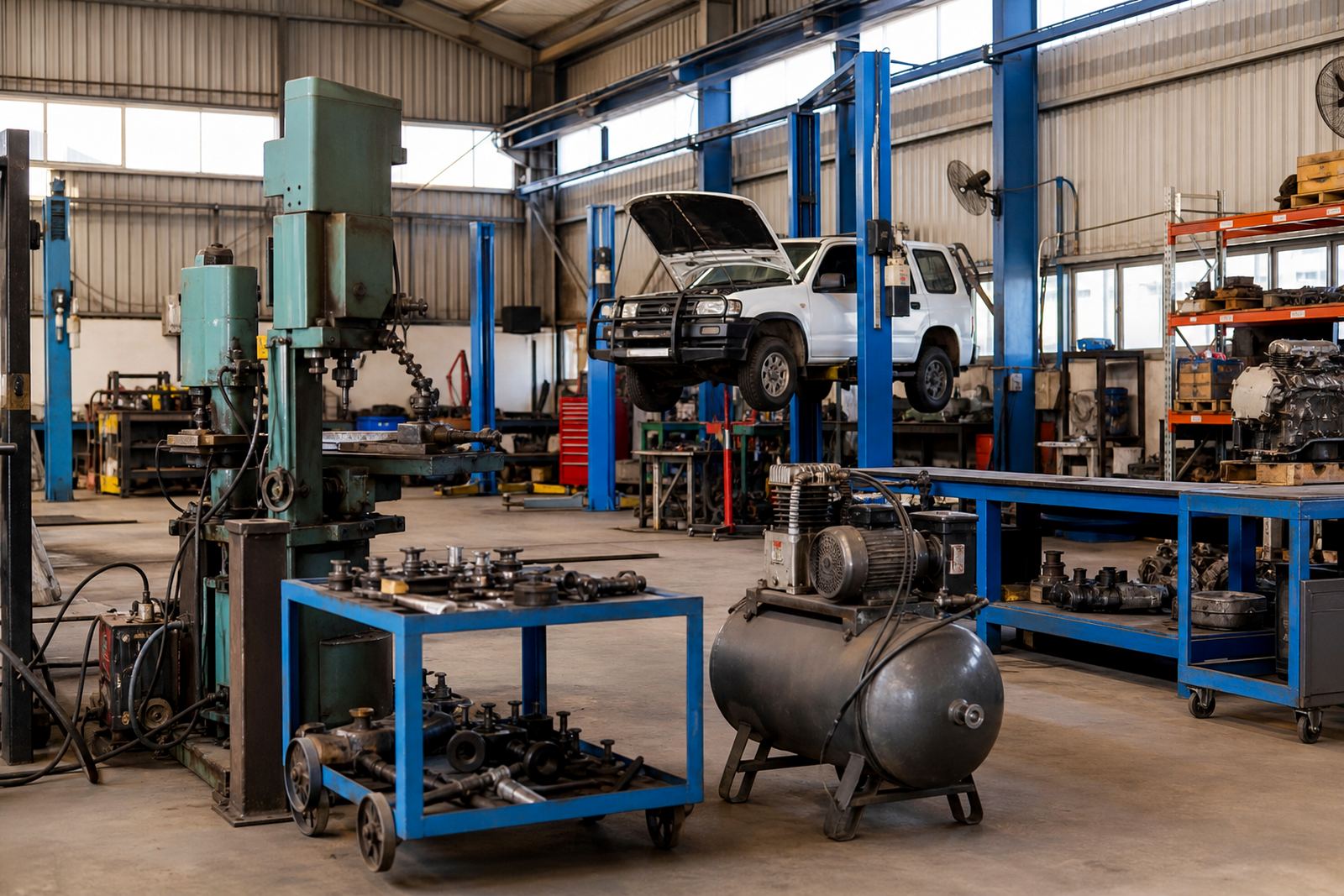
For fleet repair businesses and general vehicle service centres, the equipment mix can include the main repair bay, diagnostics area, tyre section, parts store and wash bay. In Gauteng and along the coast, we also see corrosion, damp, power interruptions and floor layout issues affect value. A unit with the right lifting capacity but poor service history or missing safety items may need a different approach to another one that is older but fully maintained.
- Used hoists, jacks and tyre changing equipment
- Wheel balancers, alignment equipment and brake service gear
- Air compressors, air lines and workshop pipework
- Diagnostic tools, battery chargers and starter equipment
- Cabinets, benches, parts shelving and oil dispensing units
Typical equipment found in fleet and vehicle service bays
Most automotive workshop valuations start with a room by room list of the plant and movable items. A fleet workshop in Midrand may be focused on bakkies, vans and panel vans, while a larger Johannesburg site might carry heavier lifting gear, alignment equipment and more extensive storage. In Durban or Gqeberha, salt air can affect compressors, steel cabinets and exposed electrical panels more quickly, so condition notes matter a lot.
We look at the machine type, age, serviceability, safety features, visible wear, and whether the item is complete. Missing accessories, worn cables, cracked hoses, damaged controls or non functioning locks all affect how buyers see the lot. Where an item is built into the structure, such as a sunk lift or fixed air line, the removal plan must be checked before anyone talks about sale value.
- Two post and four post vehicle lifts
- Transmission jacks and floor jacks
- Wheel alignment machines and laser alignment components
- Tyre changers, compressors and pressure systems
- Engine cranes, welders, work benches and vice stations
How layout affects value and the auction outcome
Workshop layout affects both the valuation and the auction process. A clean bay with good access, clear signage and safe lifting space is easier to inspect and far easier to clear than a crowded site with blocked aisles and loose spares on the floor. Buyers want to see whether a hoist can be disconnected, whether a compressor can be lifted out by pallet truck, and whether the site allows a truck to reverse in without damaging the driveway or gate.
For sellers, planning matters. If the auction includes a full workshop closeout, it helps to separate items by area and label them before viewing day. This makes lotting more orderly and often improves buyer confidence. The wrong layout can hide useful equipment and also create delays during collection, which is a problem when a business still has vehicles booked in or needs the floor handed back to a landlord.
- Mark fixed items and loose items separately
- Keep service records, manuals and spares with each machine
- Allow access for photos, inspections and safe removal
- Check three phase power points, air lines and drainage before listing
- Plan for lift removal, gate width and truck turning space
Common mistakes made before selling workshop equipment
One common mistake is assuming that because a machine still switches on, it will fetch a strong price. Buyers in the used market look closely at condition, completeness and removal costs. Another mistake is leaving all items in one pile and expecting the buyer to sort it out later. That usually creates confusion and lowers the quality of interest. A clean lotting plan helps a great deal, especially when the workshop has mixed quality gear from several different upgrade cycles.
It also helps to avoid removing cables, hoses or tool trays before the valuation visit. Missing parts can be enough to change the assessment. Where there are service records, calibration notes or recent repairs, those should be ready. For businesses in coastal towns or older industrial areas, rust, concrete dust and exposure to humidity can change the market view quickly, and that needs to be noted honestly no matter how tidy the bay looks.
Another issue is underestimating clearance timing. If the premises has to be vacated by a municipal or landlord deadline, the sale plan should account for viewing days, buyer payment windows and collection access. Late decisions can force rushed clearances and that rarely helps the seller.
Budget ranges and what sellers should plan for
Budget planning for an automotive workshop sale usually depends on the size of the site, the number of lots, the condition of the equipment and how much logistics are involved. A small service bay with a few lifts and hand tools will need a different plan from a full fleet maintenance facility with pits, heavy compressors and alignment gear. The cost side also changes when items need rigging, power isolation or careful removal from a tight yard.
As a guide, sellers should allow for the practical costs around preparation, photography, lotting, site security and collection coordination. If a workshop is being cleared in stages, the budget needs to cover that extra handling. If the premises sits in a busy area such as Germiston or central Johannesburg, access control and timing can also add pressure. We do not give financial or tax advice, but we do help sellers understand the likely work involved so they can plan properly.
- Small workshop closeout with limited machinery and hand tools
- Medium site with multiple lifts, compressors and service bays
- Large fleet operation with fixed equipment, racking and support plant
- Sites needing staged clearance, collection coordination and closure support
How Machine Africa handles workshop valuations and auctions
Our Kempton Park base supports sellers and buyers across South Africa, from Johannesburg and Pretoria to Durban, Cape Town and Gqeberha. The process usually starts with an enquiry through the contact page, followed by a discussion of the site, the equipment list and the timing needs. For an on-site valuation, the valuer will assess the machinery in place and note condition, access and likely buyer interest. The final view is based on market knowledge and the specific facts of the site.
From there, we help with auction planning, lotting and cataloguing, asset inspections, reserve guidance where suitable, viewing days, seller representation, collection coordination and closure support. For workshop owners, that means less guesswork and a clearer path from decision to removal. Siyabonga Mthembu leads the business, with support from Naledi Khumalo, Pieter van der Merwe, Ayesha Ismail, Thabo Molefe, Johan Botha and Lerato Nkosi on the auction and logistics side. In practical terms, we know what gets missed in a busy workshop and we know how to document it properly.
When a workshop is ready to move on equipment, the best result usually comes from clear information, honest condition notes and a sensible plan. That approach saves time, avoids confusion and gives buyers a fair view of what is on offer.