Start With the Serial Plate and Machine History
Before you look at the tooling or controls, check the identification plate, model details and general service history. A press brake that has spent years in a busy fabrication shop may still be sound, but you need to know whether it has been used for light sheet work or heavy production runs. Ask for records of servicing, major repairs, ram alignment checks and any hydraulic work. If the machine has moved between sites in Gauteng, Durban or Cape Town, find out how it was transported and reinstalled.
The first pass should also confirm whether the brake is manual, hydraulic or CNC controlled, and what the rated bending length and tonnage are. These figures help you match the machine to the jobs you want to run. They also help when comparing similar units at auction, because a longer bed or higher tonnage can have more value even if the machine looks older. Ask whether the machine has been under load on a regular basis or stood idle for long periods, since long downtime can affect seals, hoses and electrical parts.
Check the Frame, Bed and Ram for Straightness
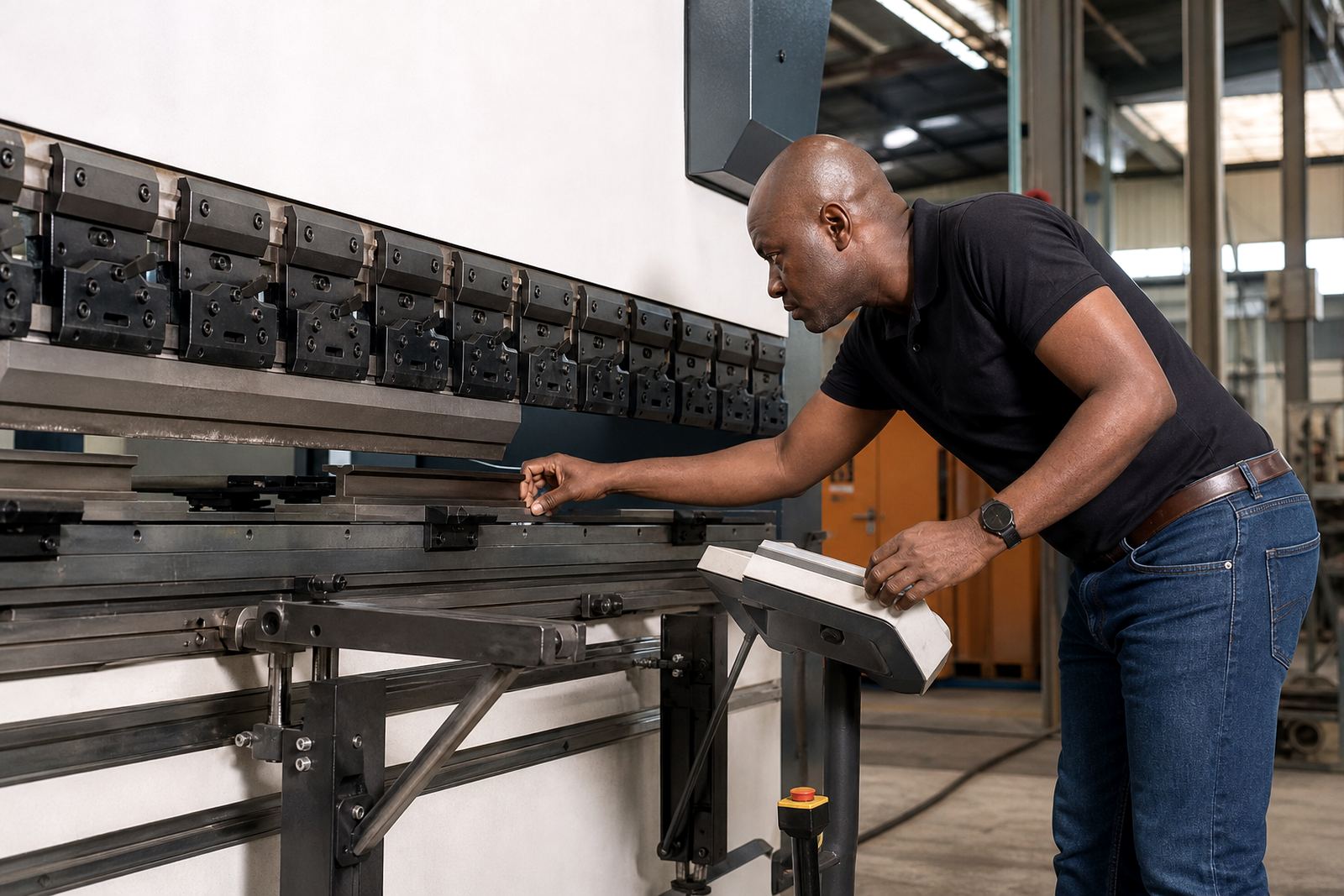
The frame is the heart of the machine. Look for cracks, repairs, weld marks and signs of overloading around the uprights, crown and side plates. On a used press brake, the bed and ram should move smoothly without visible twist. If the machine has been handled roughly during relocation, there may be hidden alignment issues, so inspect all mounting points and the floor fixings too.
Stand back and look along the bed and ram from both ends. Uneven gaps, worn guides or a visible lean can point to wear or a previous impact. Check the die area for scoring and the clamping system for damage. On older machines, a bent or worn bed can affect repeatability and the final bend angle, which matters if you are working to tight tolerances for a customer in Johannesburg or Pretoria. A machine can still be usable, but the condition should be reflected in your bid.
- Look for cracks, repairs and fresh paint that may be hiding old damage
- Check the bed for scoring, dents and uneven wear
- Inspect the ram movement from both ends of the machine
- Confirm that clamps, stops and guards are complete and serviceable
Inspect the Tooling, Clamps and Back Gauge
Tooling can make a big difference to the practical value of a press brake. Check the punches, dies and holders for chipping, mushrooming or heavy wear. If the tooling set is incomplete, that is often the first extra cost after purchase. Ask what tooling goes with the machine and whether it suits general fabrication, box work or specialist bends. A complete set in good condition can save a buyer time and money, especially when machine uptime matters and load shedding already interrupts production.
The back gauge needs a careful test. Move it through its full travel and watch for hesitation, uneven movement or noisy motors. Check the stops, fingers and scale marks, then confirm whether the gauge returns consistently to the same point. If the gauge is off by even a small amount, repeat work becomes difficult. Also inspect the crowning system if fitted, since this helps manage bend consistency across the full length of the bed. On many used machines, the tooling area tells you more than the paintwork ever will.
- Count all punches, dies and holders before bidding
- Check for chips, bends, rust and uneven wear on tooling faces
- Test the back gauge travel, return and repeatability
- Ask whether the crowning or compensation system is working
Test the Controls, Electricals and Safety Features
On a modern press brake, the control system is often where value is won or lost. Power up the machine and check whether the screen, buttons, selectors and foot pedal respond properly. Any missing display segments, unresponsive keys or error messages should be taken seriously. If the machine uses programmable bending sequences, test a simple cycle and make sure the memory holds settings correctly.
Look at the electrical cabinet for dust, loose wiring, heat marks and poor modifications. In South African workshops, a machine may have had a few ad hoc repairs over the years, so check that the wiring is tidy and that safety circuits have not been bypassed. Guards, light curtains, emergency stops and two-hand controls, where fitted, should all be in place and working. If a machine cannot be used safely from day one, the cost of getting it compliant can be higher than expected. That is especially important for buyers planning installation in busy plant rooms or municipal-controlled sites.
Look Closely at Hydraulics, Lubrication and Wear Points
Hydraulic systems need a practical inspection because leaks and pressure loss are common on older machines. Check hoses, seals, cylinders and fittings for oil weeping or staining. Listen for abnormal pump noise and watch for jerky movement when the ram cycles. A machine that hesitates or drifts under pressure may need attention before it is fit for regular production. Also inspect the oil condition if possible. Dark, foamy or burnt-smelling oil is a warning sign.
Do not forget the smaller wear points. Guide rails, bearings, pins and slides all matter. A press brake may look tidy outside but still have serious wear inside the moving parts. If the machine has stood in a coastal area like Gqeberha or Durban, check for corrosion around electrical fittings and exposed steel parts. If it has been kept in a hot, dusty workshop inland, look for dry lubrication and clogged vents. These details affect reliability and the final opinion of value.
Use a Simple Buyer Checklist Before You Bid
A structured checklist helps you compare machines fairly and avoid impulse buying. It also makes it easier to judge whether a press brake suits your current work or will need immediate repairs after collection. Take notes on condition, missing items and any uncertainty about operation. If you are viewing several machines at once, compare them on function first and appearance second.
- Confirm model, serial number and rated capacity
- Check frame, bed, ram and guides for straightness and wear
- Inspect tooling, clamps and back gauge function
- Test the controls, pedal, safety devices and electrical cabinet
- Check hydraulics, lubrication and oil condition
- Ask what spares, manuals or tooling come with the machine
- Confirm removal access, lifting points and transport needs
If you are buying through an auction, remember that a valuation is an opinion of value, not a guarantee of sale price. Final value still depends on condition, demand, timing and how the machine is presented. A clean, complete press brake with working controls and usable tooling will usually attract more interest than one that needs immediate attention, but each sale must be judged on its own facts.
Arrange Viewing and Valuation Support in Kempton Park
For sellers and buyers across South Africa, a proper inspection before sale or bid day makes the process easier. From our Kempton Park base, we assist with on-site valuations, auction planning, lotting, cataloguing, plant appraisals and viewing day preparation for machinery in Johannesburg, Pretoria, Germiston, Midrand, Durban, Cape Town and Gqeberha. That support helps keep the process transparent and organised, especially where multiple machines need to be assessed on one site.
Our team, led by Siyabonga Mthembu, works with sellers who want clear guidance on how a machine should be presented and grouped, and with buyers who need a practical view of condition before bidding. If you have a press brake to review, use the enquiry form on our contact page and request an inspection, auction guidance or a valuation opinion. The more detail you can provide on the machine, the better the assessment will be.