Start With the Flow, Not the Individual Machines
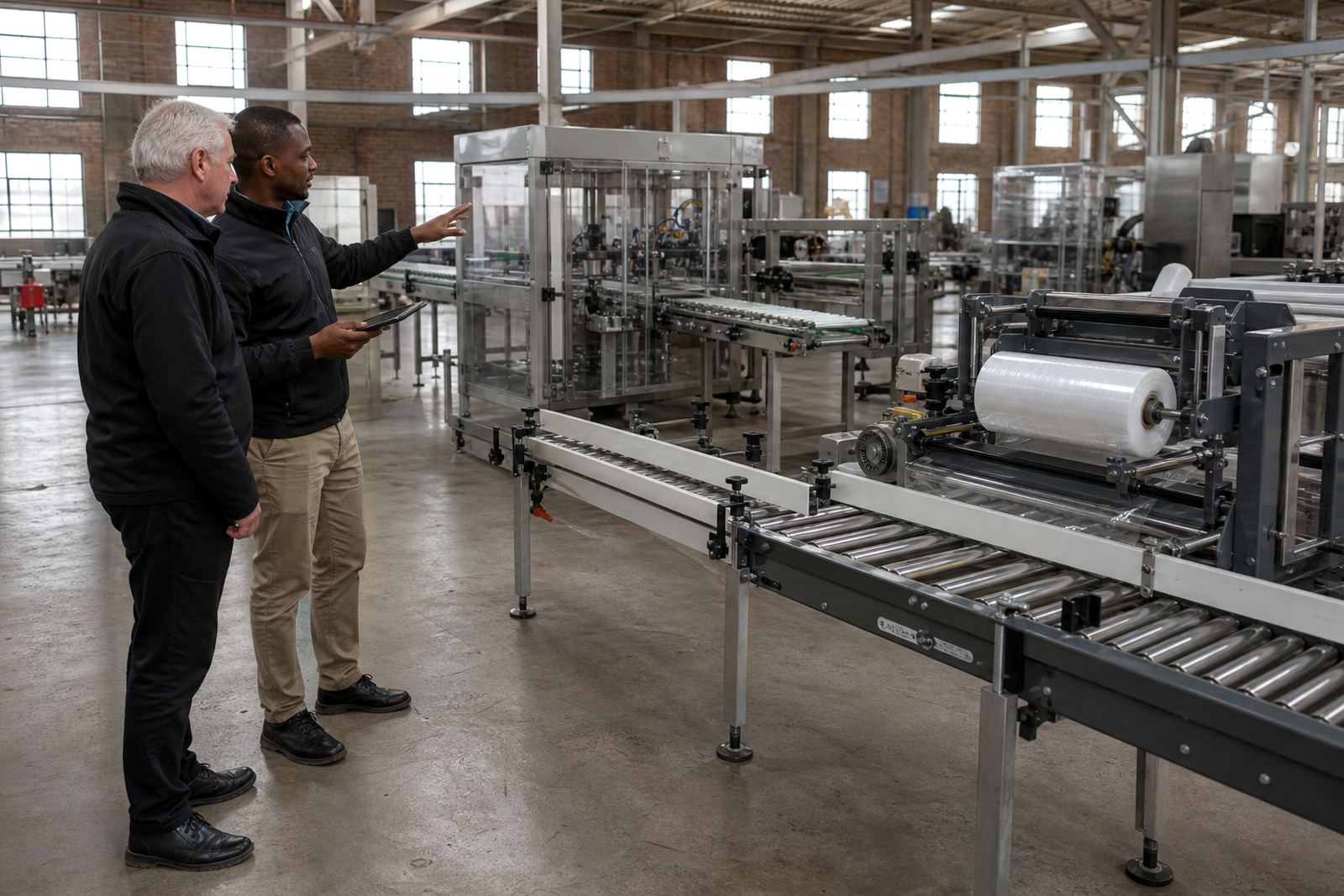
When a packaging line is assessed properly, the first question is simple: does product move through the line at the same pace, in the same condition, from one unit to the next? A filler, capper, label applicator and case sealer can all look sound on their own, but if one section runs slower or depends on manual correction the line value changes. In Kempton Park and other industrial areas across Gauteng, many buyers want to know whether a line will fit into an existing production schedule without expensive changes.
Begin by tracing the product path from infeed to palletising or dispatch. Note where product pauses, where operators intervene and where changeovers happen. For a valuation, this gives context. It also helps determine whether the line should be auctioned as one lot, split into sections, or offered with key support items such as conveyors, guards and control panels.
Check the Condition of the Critical Linked Parts
Look beyond paint and general appearance. The real question is whether the linked parts are aligned, powered correctly and suitable for the product being packed. A conveyor with worn belts can affect timing, a weak sensor can cause miscounts, and a poorly set guide rail can lead to jams. Coastal humidity in Durban or Gqeberha can also mean corrosion around frames, fasteners and electrical enclosures, while inland sites may show dust build-up and heat stress on drives.
- Inspect belts, chains, rollers and product guides for wear or uneven movement
- Check motors, gearboxes and drives for noise, overheating or leaks
- Review sensors, counters and stop-start controls for correct response
- Look at safety guards, interlocks and emergency stops for completeness
- Confirm that manuals, wiring notes and maintenance records are available where possible
If one section has been replaced or modified, record it clearly. Mixed-age equipment can still have value but buyers need to understand what is original and what has been adapted on site.
Test Utilities and Site Fit Before You Price the Line
Packaging machinery depends on more than the machines themselves. Power supply, air supply, floor space and drainage can all affect whether a line is usable at the next site. In South Africa, load-shedding and generator changeovers are a real consideration, especially where lines must restart cleanly after a power interruption. If the equipment has variable speed drives, heat sealing elements or air-driven components, note the supply requirements and any current limitations.
Measure the footprint of the full line, including access for operators and maintenance. Check ceiling height, doorway sizes and whether the machines can be lifted out in sections. If the plant is in Johannesburg, Pretoria or Midrand, access for trucks and rigging can matter just as much as machine condition. A line that is difficult to remove may need a different auction strategy from one that can be collected quickly.
Review Throughput, Product Type and Changeover Time
Buyers do not only purchase machinery, they buy a production outcome. The same line may be suitable for sachets, bottles, cartons or pouches depending on how it is set up. When assessing a packaging line, note what product it handled, the pack sizes, and how often the team changed formats. Frequent changeovers can reduce appeal if the line is being sold to a buyer who wants steady high-volume production.
- Record the pack formats the line has handled in practice
- Note the normal running speed stated by the operator or shown on controls
- Check how long setup, warm-up and changeover usually take
- List any extra tooling, format parts or guides supplied with the line
- Identify bottlenecks such as manual feeding, labelling or boxing
A clear record of these points helps with valuations because it shows how the line performs as a system. It also helps buyers compare the equipment to their own site, staff and output targets.
Use a Structured Inspection Checklist for Valuation and Auction Readiness
A proper inspection should be organised and repeatable. That keeps the review fair and transparent, which matters when sellers want guidance on reserve levels and buyers want a clear picture of what is being offered. A valuation is an opinion of value based on available information, not a guarantee of sale price. The final figure will depend on condition, market interest, timing and whether the line is complete.
- Identify every machine in the line and its role in the process
- Confirm power ratings, compressed air needs and control systems
- Check whether the line is complete or missing transfer sections
- List any faults, repairs, upgrades or missing safety parts
- Photograph nameplates, control panels, key wear points and the full layout
- Separate fixed assets from loose items, spares and consumables
Where possible, run the line briefly and observe product flow. Even a short live test can reveal issues that are not obvious when the equipment is standing still.
Prepare the Line for Sale Without Creating Risk
Before a packaging line goes to auction, the site should be cleared in a sensible order. Loose product, scrap, pallets and old packaging material should be removed so the equipment can be viewed properly. Electrical isolation, air release and safe access around the machines should be handled with care. If the line is in a food, beverage or pharmaceutical environment, cleaning and decontamination may be needed before viewing days or collection. That applies in facilities from Germiston to Cape Town, where compliance and site access rules can differ from one premises to another.
Good preparation supports better catalogue notes and fewer disputes later. It also reduces the chance of damage during removal. Where dismantling is required, plan for who will disconnect utilities, who will lift the machines and who will coordinate collection. Strong site planning makes closure easier and helps the auction process stay on track.
What Buyers Need to Ask Before They Bid
Buyers should treat a packaging line as a project, not a single purchase. Before bidding, ask whether the line matches your product, your floor space and your labour availability. A line may appear complete but still require new conveyors, guarding or controls to suit a different plant. That is why careful review matters before you commit.
- Is the line complete from infeed to final packout?
- Are all major components powered and in working order?
- What extra parts, setup work or transport will be needed?
- Can the line fit into your available floor space and power supply?
- Has the seller provided enough information for a practical decision?
For sellers, the same questions improve auction planning and reserve guidance. A line that is fully described and correctly lottted is usually easier to place with serious interest than a group of machines listed without context. If you need a review of a packaging line in Kempton Park, Johannesburg, Pretoria, Durban, Cape Town or Gqeberha, Machine Africa can assist with valuations, inspections and auction preparation through the enquiry form on our contact page.