Start With the Full Line, Not Just the Belt
When judging a used conveyor line, begin with the whole system. A line is only as useful as its least complete section, so the first step is to confirm what is actually present on site. Look for the conveyor frames, belts or chains, drive units, guards, supports, transfer points, controls and any attached sorting or loading equipment. If the line is split across a yard or storage bay, note each section carefully and match it to the original flow of product.
Missing parts do not always make a line worthless, but they do change the level of work needed to put it back into service. A buyer in Johannesburg may need a line that can run quickly after collection, while a buyer in Durban may accept more rebuild work if the frame and drive train are sound. For valuation purposes, completeness matters because it affects usability, transport, reinstallation and likely demand.
- Confirm the number of sections and their approximate lengths
- Check whether all drive motors, gearboxes and controls are present
- Note missing rollers, pulleys, chains, scrapers and guards
- Identify any attached platforms, chutes, bins or sorting points
- Record whether the line is free standing, floor mounted or suspended
Check Wear Where It Shows First
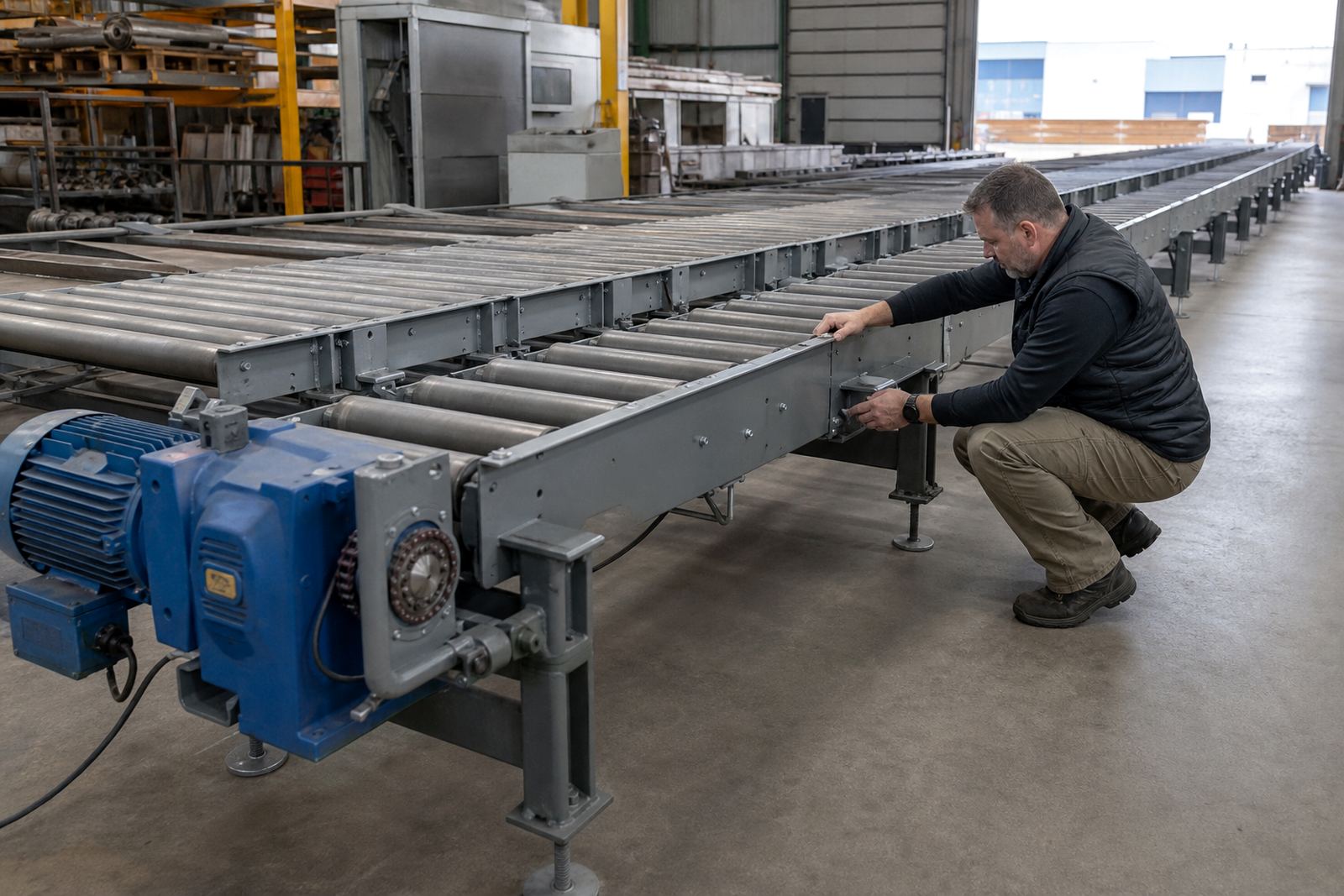
Wear on conveyor systems often shows up in the same places every time. Belts can crack, fray or glaze. Rollers may be seized or noisy. Chains can stretch. Bearings may run hot or show rust. On older lines, look closely at the underside of the belt and the return side, because damage there is easy to miss during a quick walk-through.
Pay attention to corrosion, especially on equipment that has sat near the coast or in damp storage. In Gqeberha or Cape Town, salt air and moisture can push corrosion into fasteners, frames and electrical enclosures faster than expected. In Gauteng, dust and intermittent power interruptions can mean motors were stopped and started often, so check the condition of starters, wiring and control panels too. If the line was used in a dusty plant or a quarry style setting, the rollers and bearings may be worn long before the frame looks tired.
- Look for belt damage, edge wear and uneven tracking marks
- Spin rollers by hand where safe and check for roughness or seizure
- Inspect chains for stretch, cracked links and poor alignment
- Check frame straightness, broken welds and bent supports
- Open control cabinets only if authorised and safe to do so
Read the Layout and See if It Will Fit Your Site
A conveyor line can be mechanically sound and still be a poor buy if the layout does not suit the new site. Measure the overall footprint, the transfer heights and the spacing between sections. Check whether the line runs straight, turns corners or moves between levels. Any incline, decline or change in direction affects installation and drive requirements. A buyer in Pretoria or Midrand may need a compact line that fits into a tight warehouse, while a plant outside Germiston may have room for a longer, simpler layout.
It is also worth checking how the line interacts with doors, loading points, mezzanines and vehicle access. If collection trucks cannot reach the sections easily, stripdown and loading costs rise. In auction settings, the cleaner the layout and the easier the access, the better the item usually presents to bidders. Good layout also reduces the risk of surprises on removal day, which matters when time windows are tight and site rules are strict.
- Measure total length, width, height and transfer elevations
- Check whether the line includes bends, merges or lifts
- Note access points for forklifts, cranes or telehandlers
- Identify any fixed anchors, wall brackets or floor cut-outs
- Confirm if the line can be removed in practical sections
Judge the Drives, Controls and Power Needs
The drive system often tells the real story of a conveyor line. A strong frame means very little if the motors, reducers or control gear are tired. Check the size and number of drives, the condition of couplings, belts or chains, and whether the motor bases are secure. On some lines, multiple drives share the load, so one weak unit can affect the whole system.
Controls should be neat, labelled and free from obvious damage. If the line has sensors, emergency stops, speed controls or interlocks, confirm that they are still fitted. You do not need to test every function on site to make a useful valuation, but you do need to know what is present and what is missing. Also note power requirements where visible, since buyers may need to match the line to their existing supply and municipal site conditions. A line that needs more electrical work than expected may still sell, but the opinion of value should reflect that reality.
Use a Simple Condition Checklist Before Valuation
A practical checklist helps keep the assessment consistent from one site to another. It also makes it easier to compare a conveyor line in Cape Town with one in Kempton Park or Durban. The aim is not to guess a sale price. The aim is to form an informed opinion of value based on condition, completeness, transport difficulty and likely demand.
Before a valuation or auction process, ask these basic questions and record the answers plainly. If the seller cannot supply operating history, service records or plant drawings, that is common enough, but the absence should be noted. Clear notes help with lotting and cataloguing later and reduce confusion for buyers viewing the equipment in person.
- Is the line complete, or are key parts missing?
- What is the visible wear on belts, rollers, chains and frames?
- Has the line been exposed to moisture, dust or corrosion?
- Will stripdown and transport be straightforward or difficult?
- Can the layout suit a new site without major changes?
- Are the drives and controls present, and in fair condition?
What Sellers and Buyers Should Expect at Auction
For sellers, a clean, honest description of the conveyor line helps the auction process. Include photos from both sides, close-ups of wear points and measurements that matter. If there are safety guards missing, say so. If the line has been idle for years, say that too. Transparency helps buyers decide whether they are looking at a working asset, a rebuild project or spare parts. For buyers, viewing days are the time to ask practical questions about access, dismantling and collection coordination.
At auction, value is shaped by what bidders can see and what they believe they can recover from the equipment. A conveyor line with complete sections, usable drives and a sensible layout usually attracts more interest than a line that is scattered, corroded or hard to remove. Even then, an auction outcome is not a guarantee of any particular sale price. Condition, timing and market demand all play a part.
A Final On-Site Check Before You Commit
Before a conveyor line changes hands, do one final walk-through with a steady eye on the details that cost money later. Make sure the lot description matches what is on the ground. Confirm the count of sections, the visible condition and the access plan for removal. If anything looks uncertain, put it in writing before the auction closes or the valuation is finalised. A careful check now saves problems later, especially where the line has to move through a busy industrial yard or a site with limited loading time.
Machine Africa works with sellers and buyers across South Africa from our Kempton Park base, supporting valuations, auction planning, inspections and collection coordination for used industrial machinery. For conveyor lines, the best assessment is always practical: complete, measurable and honest.