Start With the Plate, Hours and Basic Identity
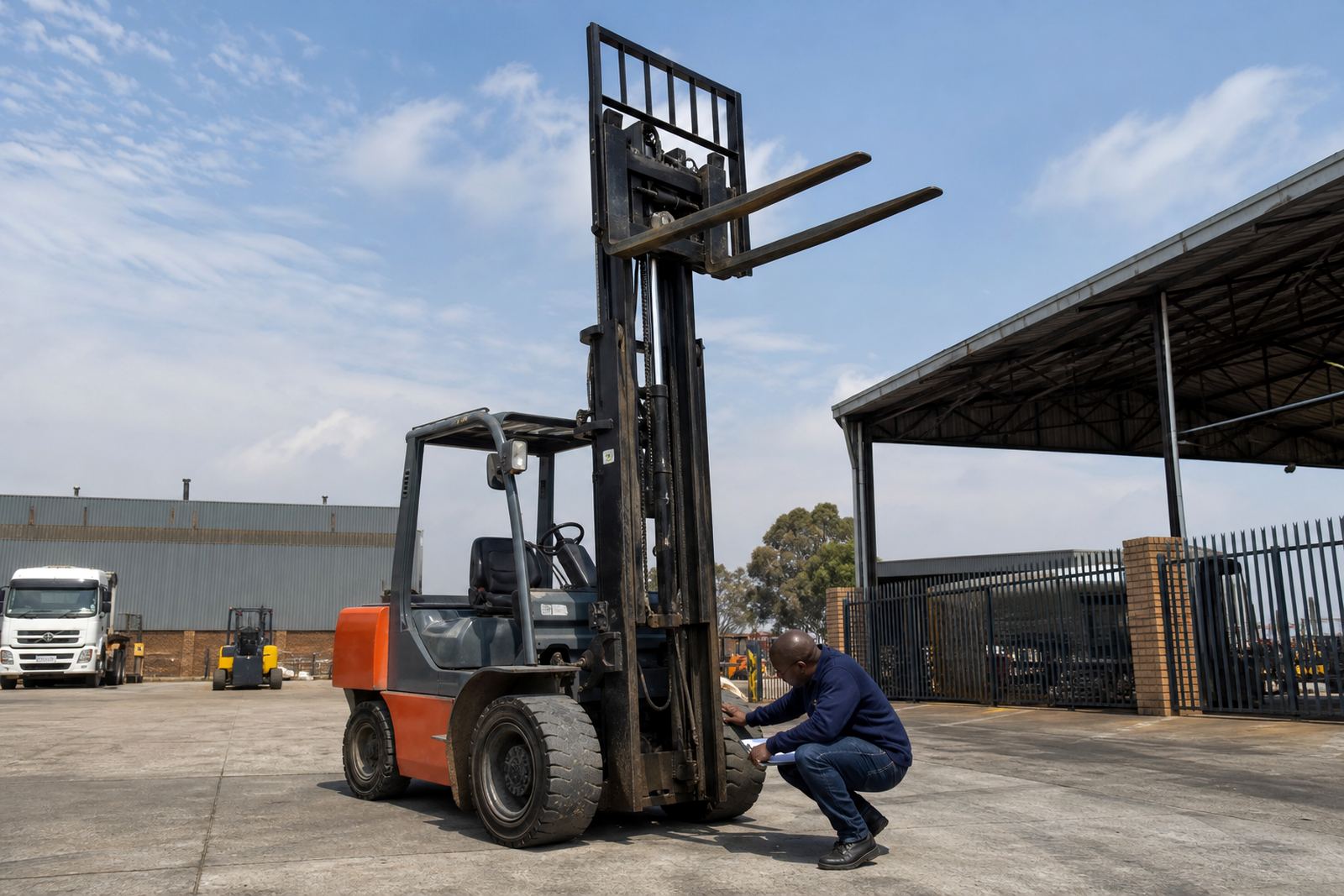
Begin with the maker plate and the machine’s visible identity details. Record the make, model, serial number, fuel type or battery type, lifting capacity, load centre and mast height. Those details shape the opinion of value because a 2.5 tonne unit with a standard mast is not judged the same way as a high mast machine or a rough terrain machine. If the plate is missing or hard to read, note that at once because it affects traceability and buyer confidence.
Check the hour metre and compare it with the machine’s overall condition. Hours alone do not tell the full story, but they do help when matched against tyres, chain stretch, hydraulic condition and general wear. A clean machine with very high hours may still need close review, while a lower-hour machine with poor servicing can present more risk. Ask whether the forklift worked indoors, in a yard, on docks or in a cold storage setting as the duty cycle matters.
Also note whether the machine has side shift, fork positioners, container mast features or other attachments. Extra fittings can add useful value but they also need testing. A simple inspection at this stage saves time later and helps the valuer separate original condition from added equipment.
Inspect the Mast, Chains and Carriage for Wear
The mast carries the load, so this is one of the most important areas to inspect. Look for bent rails, uneven roller wear, damaged welds, rust pitting and signs that the mast has been overloaded or used roughly. Raise and lower the mast slowly if possible, and listen for scraping, jerking or knocking. A smooth lift tells one story, while hesitation or uneven movement may point to hydraulic or structural issues.
Check the lift chains for rust, dry links and uneven elongation. Chains should sit evenly on both sides and move without sticking. If one chain looks more worn than the other, or the mast seems to tilt under load, the machine may need further inspection. Examine the carriage for cracks, worn bearings and play in the fork hooks. Forks should be checked for bending, heel wear and tip damage.
- Look for smooth mast travel with no sudden jumps
- Check chain tension and visible stretch on both sides
- Inspect rollers, pins and carriage wear points
- Confirm the forks are not bent, twisted or worn thin at the heel
Tyres, Steering and Brake Feel on the Ground
Tyres tell you a lot about the kind of work the forklift has done. Solid tyres may show chunking, cracking or flat spots, while pneumatic or cushion tyres can show sidewall damage, cord exposure or uneven wear. On a machine used around paved yards in places like Germiston or Midrand, uneven tyre wear can also point to steering alignment problems or hard cornering. For outdoor work, look for cuts and moisture damage too, especially on coastal jobs in Durban, Cape Town or Gqeberha where humidity can affect metal and rubber condition.
Turn the steering wheel through its full range and feel for stiffness, excessive play or hydraulic noise. The rear end of a forklift should track predictably. Any delay in response can be a sign of wear in the steering system. Test the foot brake and parking brake on level ground where safe to do so. The machine should stop cleanly without pulling to one side, and the parking brake should hold without creeping. If the tyres are poor, the brakes can seem worse than they are, so inspect both together.
Also look under the machine for oil drips, hydraulic seepage and damaged hoses. A forklift that leaves fresh marks after standing may need seals or hose work. In a valuation, these signs matter because repairs are often not one single item, they add up quickly.
Controls, Instruments and Operator Comfort Checks
Controls should move smoothly and return correctly. Test the lift, tilt and auxiliary levers or switches, then check that the machine responds without delay. Buttons, warning lamps and gauges must be readable and functioning. If the machine has a seat switch, horn, lights or reverse alarm, confirm they work because safety equipment affects both sale appeal and site readiness.
Look at the steering column, seat, floor plate and pedals for excessive wear. Heavy wear on the pedals or seat often suggests harder use than the hour metre alone shows. Wobbly controls, worn rubber boots and cracked switches can point to age and exposure. In hot inland areas like Pretoria and Johannesburg, sun damage and dust can be very visible, while coastal machines may show corrosion on connectors and mounting points.
- Test all lift and tilt controls for delay or sticking
- Check gauges, warning lights and the horn
- Confirm the seat, belts and operator switches are intact
- Inspect pedals, floor mat and steering movement for excess wear
Battery or Engine Condition: What to Look For
For electric forklifts, inspect the battery case, cables, terminals and connectors for corrosion, swelling or heat damage. Check whether the battery holds charge under normal use and whether the compartment is clean and dry. A battery that charges poorly or shows uneven cell condition can affect operating time and value. Load-shedding has also made battery condition more important for some buyers, because a machine that is not dependable during planned downtime is harder to place.
For diesel, petrol or LP gas machines, look at starting behaviour, exhaust smoke, engine noise and fluid leaks. Hard starting, white smoke, black smoke under light load or a rough idle may point to fuel, compression or injector issues. Check the radiator, fan belt, filters and coolant condition. Warm-up time, throttle response and vibration all help to show whether the power unit is healthy or under strain. A tired engine can still run but it will usually affect the valuation.
Do not forget the simple items. Check fuel caps, battery restraints, ventilation covers and access panels. Missing covers or exposed wiring are small issues that can become bigger in daily work. A good look at the power source gives a more honest view of what the machine is likely to need after purchase.
How We Use an Assessment for Auction or Sale
An assessment is not a promise of sale price. It is an informed opinion of value based on condition, specification, demand and the likely cost of getting the machine ready for the market. That is why the same forklift can be viewed differently by sellers and buyers. The seller wants a fair return, while the buyer wants confidence that the unit will perform without hidden trouble.
When we assist with auctions, the forklift is usually grouped, described and photographed after the main inspection. Clear notes on mast wear, tyre condition, controls and power source help buyers understand what they are looking at before viewing day. This makes the lotting process cleaner and reduces back and forth later. If a forklift is parked in a warehouse in Kempton Park, a yard in Durban or a plant in Cape Town, the same practical checks still apply.
Good records also help with seller representation and closure support. If you are preparing to sell, collect service notes, repair history and any known faults before the inspection. If you are buying, use the findings to decide whether the unit suits your site, your floor conditions and your daily lifting needs. A proper assessment saves time and helps both sides make a more informed decision.