Start With the Lathe Type and Basic Completeness
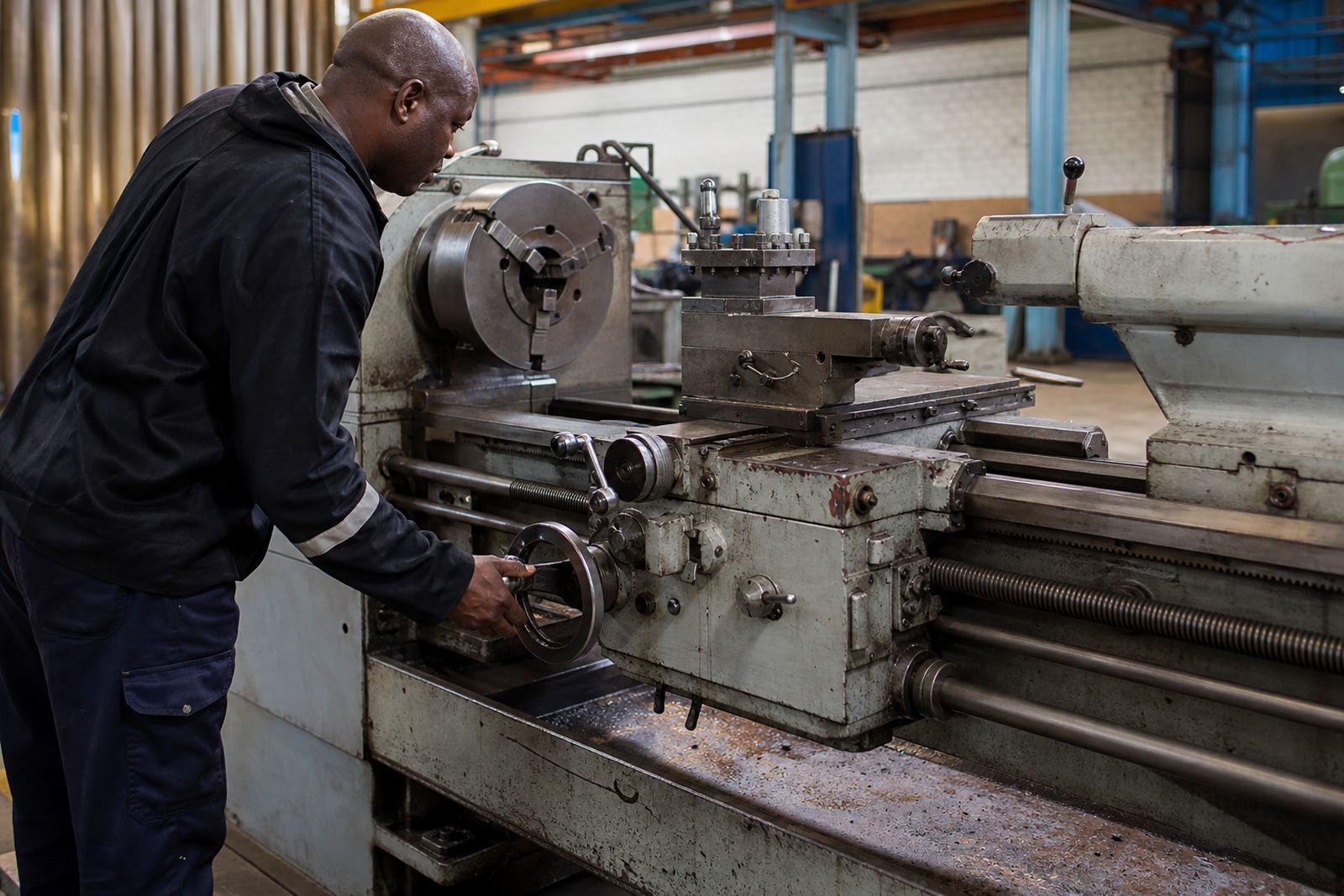
Before you start turning handles, identify what sort of lathe you are looking at. Check the swing over bed, distance between centres, spindle bore and motor size so you know whether the machine suits your work. In Gauteng workshops you will often find general purpose engine lathes, toolroom machines and heavier production models, each with different wear patterns.
Walk around the machine and note what is present and what is missing. A lathe with guards, chucks, steady rest, tailstock, toolposts and change gears is usually easier to put back into service than one with half the parts absent. Missing items are not always a deal breaker, but they affect value and the time needed to get the machine working again.
- Confirm the make, model and serial plate details if visible.
- Check that the main accessories are included and fit properly.
- Look for cracked covers, missing handles, broken guards or homemade modifications.
- Ask whether the machine was in production, in storage or in intermittent use.
Check Bed Wear and Carriage Movement
The bed tells you a lot about a used lathe. Look closely where the carriage travels most often, especially near the chuck end, because that is where wear usually shows first. Uneven wear can cause taper, poor finish and difficult setups on longer workpieces.
Move the carriage along the full length of the bed and feel for tight spots, free play or rough patches. A machine may still turn, but if the saddle rocks or the apron feels loose then the lathe may need more than routine servicing. On older machines, a little cosmetic rust is normal, but pitting on the ways or visible step wear should be treated carefully.
- Inspect the bed ways for scoring, rust pits and worn high spots.
- Look for rocking in the saddle when the gibs are adjusted correctly.
- Run the carriage from end to end and note any resistance.
- Check cross slide and top slide travel for smooth, even movement.
Assess Spindle, Chuck and Drive Condition
The spindle and drive system tell you how accurately the lathe will hold and rotate work. Check spindle play by feeling for movement in the nose and by listening for noise when the machine runs. Excessive end float, rumbling bearings or vibration can point to repair work ahead.
Examine the chuck jaws for wear, dings and poor grip. A worn chuck can mark material and hold poorly, especially on shorter jobs. Also look at belts, pulleys, gearbox controls and any back gear arrangement. In coastal areas such as Durban or Gqeberha, moisture can accelerate rust on exposed drive parts, so inspect carefully for corrosion as well as wear.
- Test spindle rotation by hand if the machine is isolated from power.
- Listen for bearing noise, chatter or humming under load.
- Check belts for cracking, glazing or uneven tension.
- Inspect chuck jaws, mounting threads and the nose for damage.
Test Tailstock Alignment and Slide Accuracy
A tailstock that does not align properly can make drilling and turning difficult. Bring the tailstock up to the headstock and check that it locks firmly and moves smoothly. If the quill sticks or has noticeable play, that can affect drilling accuracy and finish quality.
Check the cross slide and compound slide for backlash, then move each through its full range. Some backlash is common on used machines, but heavy slack or a very loose screw makes fine work harder. If possible, use a dial indicator to see whether movement is repeatable. For auction viewing days in Johannesburg or Pretoria, this is one of the most useful quick checks you can do without stripping the machine down.
- Confirm the tailstock locks in place without shifting.
- Measure or feel for excessive backlash on slide screws.
- Check handwheels, dials and graduations for clarity and wear.
- Look for signs of bent screws, broken nuts or repaired castings.
Review Electricals, Controls and Workshop Suitability
Electrical condition matters, especially where load-shedding and site power interruptions are part of daily life. Look at the control box, isolator, switches, cabling and motor connections for signs of overheating or poor repairs. A lathe that has been badly rewired may still run, but it needs proper attention before safe use.
Make sure the machine suits the space and supply available at your site. Check the footprint, mass, lifting points and access route through gates or workshop doors. If the machine is heading to a Germiston or Midrand plant with limited moving space, clearance matters as much as condition. Also think about floor strength, ventilation and whether the machine will sit in a dry indoor area or a more exposed workshop bay.
- Inspect switches, cabling, motor mounts and emergency stop controls.
- Check for exposed conductors, burnt terminals or damaged insulation.
- Measure the machine footprint against your available floor space.
- Consider how the lathe will be moved, lifted and installed.
Use a Simple Buying Checklist Before You Bid
When buying at auction or from a seller, the clearest approach is to separate what you can see from what still needs confirming. A visual inspection will not tell you everything, so ask direct questions about service history, known faults and whether the lathe has been idle for long periods. Valuation is an opinion of value based on condition and market demand, not a guarantee of the eventual sale price.
For buyers across South Africa, a practical checklist keeps emotions out of the process. It helps you compare one machine with another and decide whether to bid, negotiate or walk away. If the lathe needs transport from Cape Town to Gauteng or from a site in Durban to another province, factor in rigging, collection and recommissioning before you make your final decision.
- List the faults you can see, then estimate what each one means in time and cost.
- Decide whether the machine is ready to use, needs servicing or needs a full rebuild.
- Confirm what tooling and accessories are included in the sale.
- Leave room in your budget for transport, installation and initial maintenance.
At Machine Africa, our team in Kempton Park handles used industrial machinery valuations and auction planning for sellers and buyers across South Africa. From on-site valuations and plant appraisals to lotting, cataloguing and viewing days, we focus on clear information so you can make a practical decision.