Start With the Machine Type and Size
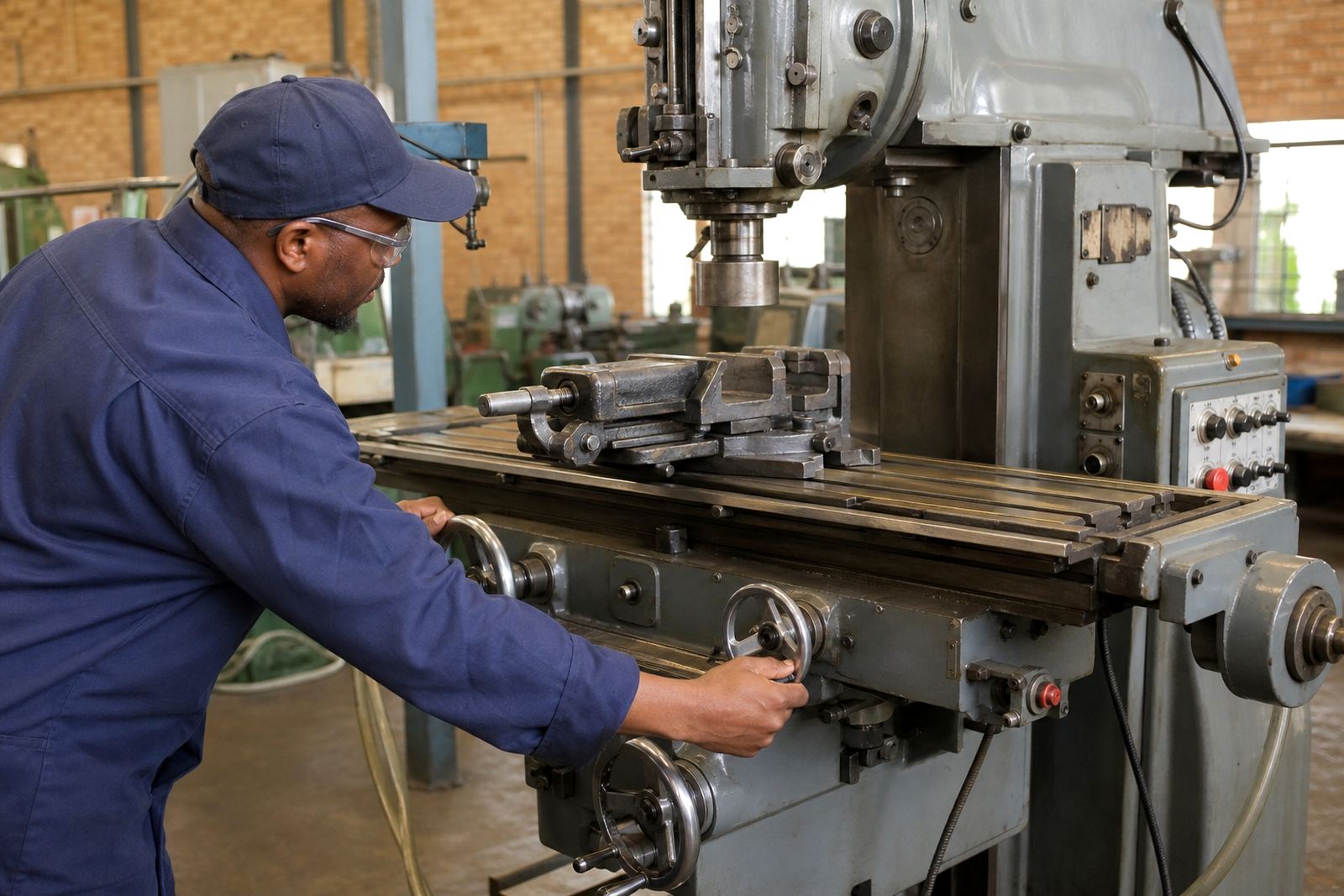
First confirm what kind of mill you are looking at and whether it suits the work you do. A small workshop in Germiston may need a compact manual mill for repair work, while a larger plant in Durban or Cape Town might want a heavier vertical machine with more table travel and better feed control. Check the table size, spindle taper, travel on each axis, motor rating and overall footprint before you think about bidding.
It also helps to match the machine to the space you have. Measure doorways, floor load limits, and the route for offloading at your premises. Some mills are easy enough to move with a forklift, others need rigging and proper planning. If a machine is too tall for your workshop or too heavy for your floor, the purchase can become expensive very quickly.
Inspect the Table, Ways and Slides
The table and guide ways tell you a lot about how a mill has been used. Look for heavy scoring, rust pitting, worn handwheel play and uneven movement on the slides. A small amount of wear is normal on older equipment, but deep grooves or loose movement can affect accuracy and finish quality. In humid coastal areas, especially near Cape Town or Gqeberha, surface rust can hide more serious wear so take time to look carefully.
- Move each axis through its full travel and listen for tight spots
- Check for backlash in the screws and feel for slack at the handles
- Look at the table edges for knocks, weld repairs or distortion
- Inspect the knee, saddle and column for cracks or signs of impact
- Confirm that lubrication points are clear and used
If the movement feels uneven or the machine binds in one area, that may point to worn components or poor maintenance. A practical inspection before auction day can save you from buying a unit that needs major reconditioning.
Check the Spindle, Head and Bearings
The spindle and head are the heart of the mill. Ask whether the machine runs smoothly at different speeds and whether the spindle has visible play. Any rumbling, vibration or heat build-up during operation is worth noting. If the head tilts or swivels, check that it locks firmly and returns square without drifting. Machines used in load-shedding heavy areas often have had stop-start use, so the drive system may have more wear than the outside suggests.
Bring a simple checklist with you and ask for a test run where possible. Listen to the motor, belts and gears. If the machine has power feed or variable speed control, test those settings too. Missing guards, damaged belts or oily leaks around the head should never be ignored because they can point to deeper service issues.
Look at Power, Controls and Safety Fittings
Electrical condition matters as much as mechanical condition. Check the starter cabinet, switches, cables and emergency stop functions if fitted. A machine may look ready for work, but a tired control panel or damaged wiring can delay commissioning and add cost. In South African workshops, it is wise to confirm whether the unit runs on the supply you have available and whether any changes will be needed for your site.
- Check the condition of the main isolator and push buttons
- Look for exposed wiring, poor repairs or overheating marks
- Confirm whether guards, covers and interlocks are present
- Ask when the machine was last serviced and who worked on it
- Verify if the manual, parts list or wiring diagram is available
Safety fittings should be complete and functional. Missing guards are common on older mills, but they are still important for safe operation. If you are buying for a production site in Pretoria or Midrand, factor in compliance checks before the machine goes back into use.
Review Tooling, Accessories and Change Parts
A mill is often sold with extras that affect its value and usefulness. Ask what comes with the machine, including vice, collets, cutters, arbors, holders, clamps, coolant equipment and any rotary table or dividing attachment. These items can add practical value, but only if they are usable and not badly worn.
Check that the tooling matches the spindle size and setup. Some accessories are mixed from different machines and may not fit properly. Missing change gears, handles, drawers or covers can slow down setup after purchase. At auction, note the lot details carefully because accessories may be split from the main machine and sold separately. That is why the catalogue and viewing notes matter so much.
Use the Auction Process to Make a Clear Bid Plan
Before bidding, read the lot information, viewing dates and any reserve guidance carefully. Valuations are opinions of value based on condition, age, completeness and market demand, not a guarantee of sale price. The same mill can attract different interest depending on location, transport cost, and whether buyers in Johannesburg, Durban, Cape Town or elsewhere need that exact size and configuration.
Set a ceiling before the sale starts. Include transport, offloading, cleaning, possible repairs and any electrical work you may need after collection. If the machine is on a site with limited access, think about rigging and clearance too. Auction buying works best when you are prepared and calm, rather than reacting in the room or online at the last moment.
- Read the catalogue entry line by line
- Inspect the machine in person where possible
- Confirm what is included in the lot
- Budget for collection and recommissioning
- Bid only within your planned limit
What Sellers Should Prepare Before the Valuation
If you are selling a mill, clear access around the machine and have the basics ready for inspection. Clean off excess oil and swarf so the condition can be seen properly. Switch it on if power is available and safe to do so. A valuer will look at condition, completeness, working status and the likely buyer pool, then form an opinion of value for auction planning or sale strategy.
At our Kempton Park base, we work with sellers and buyers across South Africa, including Germiston, Johannesburg, Pretoria, Durban, Cape Town and Gqeberha. For on-site valuations, lotting and cataloguing, photo listing prep, seller representation and closure support, the process should be direct and well documented. The better the machine is presented, the easier it is for buyers to understand what they are bidding on, and for you to move toward a proper sale.