Start With The Machine Plate And Basic Match-Up
Begin by checking the machine plate and the main specification details against the actual unit on site. Confirm clamping force, shot size, tie-bar spacing, screw diameter, power supply and the year or model information if it is available. On older machines, the plate may be worn or missing, so the physical setup becomes even more important.
Make sure the machine suits the type of parts it has been running. A small packaging mould and a thick-walled engineering part place very different demands on the barrel, screw and clamp. If the machine is being valued, that match-up matters because a machine that is complete but not well suited to its current role may need extra work before it can be put into production.
- Check the nameplate for power, voltage and serial details.
- Confirm clamp size and mould area match your intended tools.
- Look for missing guards, covers or safety labels.
- Note whether the machine is single phase, three phase or has any special supply needs.
Inspect The Clamp, Platens And Moving Parts
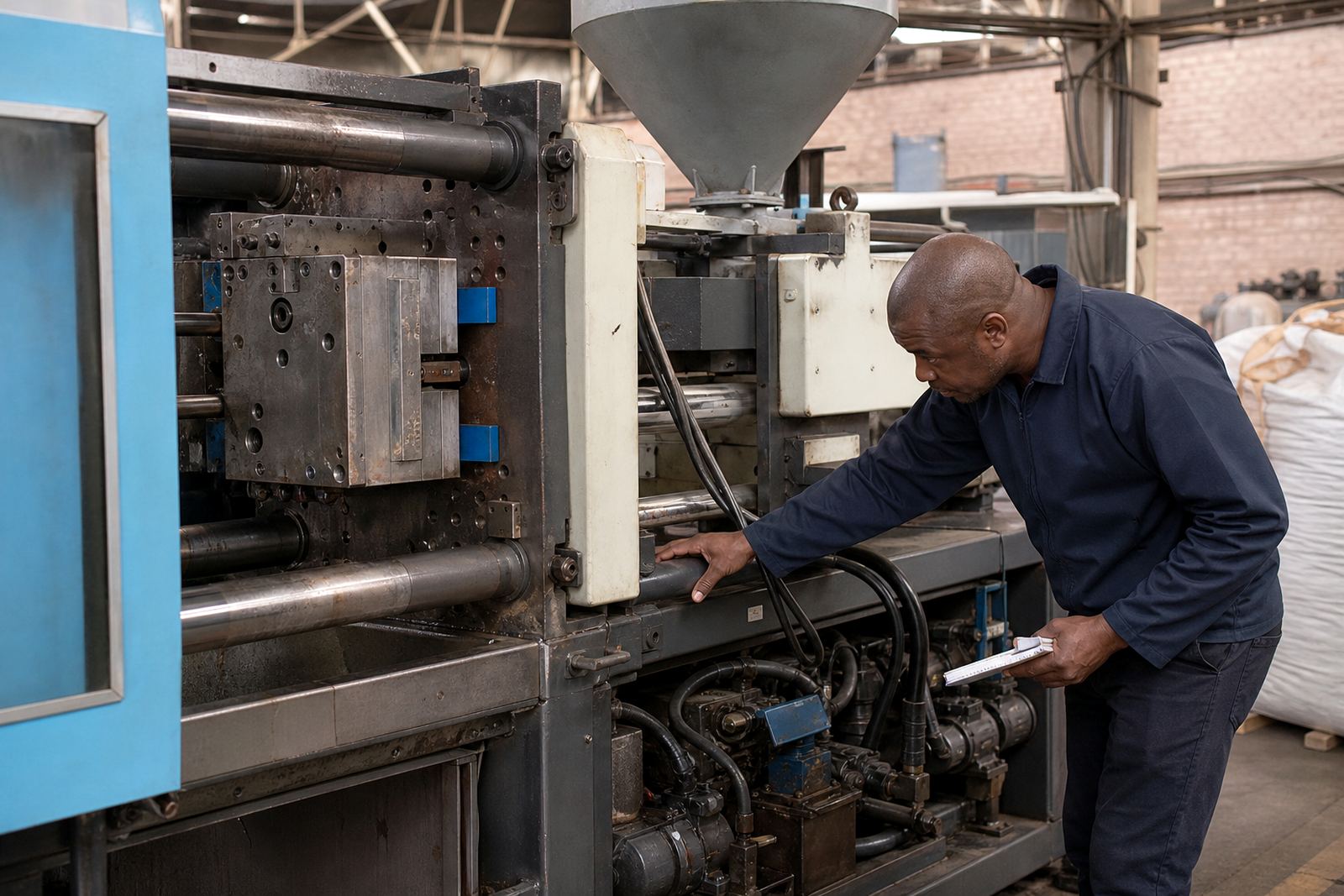
The clamp is one of the first areas to examine because wear here can affect both accuracy and safety. Open and close the unit several times if possible and watch for uneven movement, chatter, slow response or side loading on the tie bars. The platens should sit true and the mould mounting area should not show heavy gouging or obvious distortion.
Check for oil leaks around cylinders, seals and guide points. Look at the tie bars for scoring or rust pitting, and inspect the toggle or hydraulic clamp arrangement for looseness. A machine that has been stored near the coast may show more corrosion than one kept inland, and that can affect both appearance and long term use.
- Look for even platen travel from open to close.
- Check tie bars for scoring, corrosion and bent sections.
- Inspect mould mounting holes and platen faces for damage.
- Listen for knocking, hesitating or irregular clamp movement.
Check Barrel, Screw And Heating Condition
The barrel and screw tell you a lot about how the machine was used. Ask whether the machine has processed abrasive, glass-filled or recycled material, because those materials can wear the screw and barrel faster. If you can view the screw in a hot state, look for consistent plasticising, stable pressure and no obvious surging at the nozzle.
Inspect barrel heaters, thermocouples and insulation covers. Burn marks, broken heater bands and badly repaired wiring are all warning signs. If the machine has been standing idle during load-shedding periods or long shutdowns, a proper warm-up is still needed before any serious test, because cold checks can hide faults and a machine may seem fine until it is running under pressure.
- Ask when the screw and barrel were last replaced or reconditioned.
- Check nozzle alignment and signs of leakage or drool.
- Confirm heater zones heat evenly and hold temperature.
- Look for burnt wiring, loose terminals and damaged sensors.
Review Hydraulics, Motors And Power Systems
Hydraulic systems should run smoothly without excessive noise, foaming or overheating. Look at the oil level and colour, then inspect hoses, fittings and seals for seepage. A strong smell of burnt oil or a dark, dirty reservoir often points to poor maintenance. Motors and pumps should start cleanly and hold a steady running sound without strain.
For used machinery in South Africa, power stability is worth checking properly. Sudden stoppages from outages can affect control systems, heaters and starting components. Ask whether the machine has had recent electrical work, and whether any control boards, contactors or drives have been repaired. If there are signs of a bodged repair, get that noted during the inspection.
- Check hydraulic oil condition, level and visible contamination.
- Inspect hoses, couplings and cylinders for leaks.
- Listen for pump cavitation, grinding or excess vibration.
- Confirm electrical cabinets are clean, dry and properly closed.
Test Controls, Safety Devices And Cycle Stability
The control panel should be clear enough for an operator to set basic temperatures, speeds and cycle stages without guesswork. Test the emergency stop, door interlocks and any light curtains or guarding fitted to the machine. If safety devices are bypassed or not functioning, that is a serious concern and should be treated as such.
Run a short cycle if the site allows it. Watch fill consistency, clamp timing, ejector travel and whether the machine repeats the same sequence without drifting. Small faults can show up only after several cycles, so do not rely on a quick start-up alone. A machine that runs once and then trips may still need substantial work before it is ready for production.
- Test emergency stop buttons and guard interlocks.
- Check screen readability and menu response.
- Watch for alarm codes, resets and unexpected stoppages.
- Confirm ejectors, core pulls and auxiliaries operate in sequence.
Don't Forget The Auxiliaries And The Paper Trail
Auxiliary equipment can affect the value and usefulness of a moulding line just as much as the machine itself. Check material dryers, loaders, chillers, granulators, mixers and temperature control units where they are included. Missing auxiliaries do not always kill a sale, but they do affect what a buyer can do immediately after collection.
From a valuation point of view, the machine should be described clearly and honestly. A valuation is an opinion of value based on condition, age, market interest and completeness, not a guarantee of sale price. Keep service records, manuals, spare parts lists and any repair notes together. If the machine came from a factory in Germiston, Midrand or elsewhere, try to keep the asset history with it so the next buyer can assess it properly. That paper trail saves time later and makes the process less messy.
- List every auxiliary supplied with the machine.
- Note whether manuals, moulds or tools are included.
- Keep records of repairs, shutdowns and servicing.
- Record missing parts, mismatched fittings and non-standard changes.